Skip to content
In Stock CellCept
Immunosuppressants

CellCept

Patients who have received a kidney, heart or liver transplant may be prescribed CellCept alongside other anti-rejection medicines. CellCept contains mycophenolate mofetil, which lowers immune-cell…

Guaranteed quality Original product
Delivery: from 4 days Discreet delivery
24/7 Support Always available
Active ingredient: Mycophenolate mofetil
Select dosage:
Select pack Package Per tablet Price
€ 5.30 € 159.00
Free Standard Delivery € 4.05 € 318.00 € 243.00 Save 24%
Best value Free Express Delivery € 3.64 € 477.00 € 328.00 Save 31%
€ 13.10 € 131.00
€ 9.20 € 262.00 € 184.00 Save 30%
Best value Free Standard Delivery € 7.97 € 393.00 € 239.00 Save 39%

Free delivery on orders from € 200.00, free express delivery from € 300.00

Secure payment methods:
VISA AMEX JCB DISCOVER

Patients who have received a kidney, heart or liver transplant may be prescribed CellCept alongside other anti-rejection medicines. CellCept contains mycophenolate mofetil, which lowers immune-cell activity and helps reduce the risk of organ rejection. Treatment requires an individual dose, regular blood tests and close transplant-team supervision.

Overview

CellCept is the brand name for an oral formulation of mycophenolate mofetil. It belongs to the immunosuppressant group and is used with other medicines to prevent rejection after kidney, heart or liver transplantation.

Formulation

CellCept is the brand name for an oral formulation of mycophenolate mofetil. It belongs to the immunosuppressant group and is used with other medicines to prevent rejection after kidney, heart or liver transplantation. The tablets reduce selected immune responses rather than treating an infection.

Mycophenolate mofetil is converted in the body into mycophenolic acid. This active form limits the multiplication of immune cells involved in organ rejection. CellCept is prescription-only and should remain coordinated with the transplant team throughout treatment.

Mycophenolate mofetil as the active ingredient

CellCept tablets contain mycophenolate mofetil. Tablet and capsule formulations may exist in clinical practice, but the prescribed formulation should not be exchanged for another form without specific instructions.

The strength and number of tablets depend on the individual treatment plan, so there is no single amount that suits every patient. Patients should follow the strength and number of tablets selected for their transplant, kidney function, other medicines and blood-test results.

Keep CellCept in the same daily routine as the rest of the transplant treatment. A change in timing can make missed doses more likely, especially when several medicines are taken together.

Transplant rejection prevention

CellCept helps prevent the immune system from attacking a transplanted organ. It does not treat an established infection and does not replace medicines used to prevent or treat transplant-related infections.

Adherence remains a central part of transplant care. Feeling well does not mean that the immune system has stopped recognising the transplanted organ as foreign.

Therapeutic indications

CellCept is used with other medicines to prevent rejection after kidney, heart or liver transplantation.

Directions for use

CellCept dosing differs between strengths and between users. The transplant type, time since transplantation, kidney function, liver function, interacting medicines and adverse effects all influence the regimen.

The usual clinical principles are:

  • take CellCept exactly at the times selected by the transplant team;
  • swallow tablets whole with water;
  • take each dose consistently with regard to food;
  • do not crush, chew or alter the tablets unless the transplant pharmacist gives a specific instruction;
  • never double the next dose after a missed dose;
  • contact the transplant team when the correct action after a missed dose is unclear.

The strength and number of tablets in a CellCept regimen vary between users, so there is no single amount that suits everyone. Do not calculate the daily amount from the tablet strength alone.

If vomiting occurs soon after a dose, do not automatically repeat it. The decision depends on how much medicine may have been absorbed and should come from the transplant team.

Administration by prescribed strength

CellCept tablets are taken by mouth. The tablet should remain intact because altering the dosage form can interfere with predictable administration.

Take doses at consistent times each day. A written medicine schedule can help when CellCept is taken with corticosteroids, calcineurin inhibitors or infection-prevention medicines.

Missed dose and safe handling

Take a missed dose when remembered unless the next scheduled dose is close. In that situation, the missed dose is generally omitted rather than doubled, but the transplant team should confirm the appropriate plan for the individual regimen.

Accidental double dosing requires prompt professional advice. Do not skip several later doses to compensate.

Pregnant people should avoid contact with crushed or broken CellCept tablets. Anyone who routinely handles tablets for another person should receive specific instructions from a pharmacist.

When not to use it

CellCept is not suitable for people with a known serious allergy to mycophenolate mofetil or another ingredient in the prescribed formulation. A history of severe reaction requires specialist review before another dose is taken.

This medication is not for you if:

  • you have had a serious allergic reaction to mycophenolate mofetil;
  • you are pregnant, unless a transplant specialist has determined that no suitable alternative exists;
  • you are planning pregnancy and have not completed the required specialist discussion;
  • you are breastfeeding without an agreed treatment plan;
  • you have severe infection, major blood-count abnormalities or serious gastrointestinal symptoms requiring urgent assessment.

Severe infection, low blood counts and gastrointestinal disease may require treatment adjustment rather than permanent exclusion. The transplant team makes that decision.

When this is not for you

Do not stop CellCept abruptly because rejection risk can rise. Suspected allergy with facial swelling, breathing difficulty, widespread blistering rash or collapse requires emergency care.

Unwanted effects

CellCept can cause digestive and general symptoms, while some reactions reflect infection or reduced blood-cell production. The Irish and European product information lists diarrhoea, vomiting, nausea, abdominal pain, headache and fatigue among recognised adverse effects [2].

More common effects Urgent symptoms
Diarrhoea, nausea, vomiting, abdominal discomfort, headache or tiredness Fever, chills, breathlessness, persistent cough or rapidly worsening illness
Reduced appetite or sleep disturbance Unusual bruising, bleeding, marked paleness or severe weakness
Mild stomach upset after a dose Severe abdominal pain, black stools, blood in stools or persistent vomiting

Common gastrointestinal and general effects

Diarrhoea is more than a comfort issue. Severe or prolonged diarrhoea can cause dehydration and may alter the absorption of oral medicines. It can also signal infection, inflammatory bowel injury or another condition requiring assessment.

Persistent vomiting can make the transplant regimen unreliable. Report ongoing gastrointestinal symptoms rather than reducing or stopping CellCept independently.

Headache and fatigue may occur, although fatigue can also indicate anaemia, infection or poor kidney function. A blood test helps distinguish a tolerability problem from a clinically significant change.

Serious infection, bleeding and gastrointestinal warning signs

Seek urgent medical assessment for fever, shaking chills, shortness of breath, new confusion, severe weakness or a cough that is worsening. Reduced immune activity can allow infections to become serious before typical symptoms appear.

Unusual bruising, nosebleeds, bleeding gums, dark stools or small red-purple skin spots may indicate low platelets or another blood abnormality. Severe sore throat, mouth ulcers and fever can occur with low white-cell counts.

CellCept is also associated with an increased risk of certain malignancies during long-term immunosuppression, including skin cancers and lymphoproliferative disorders. Use sun protection and arrange medical review for a changing mole, a persistent skin lesion or an unexplained lump.

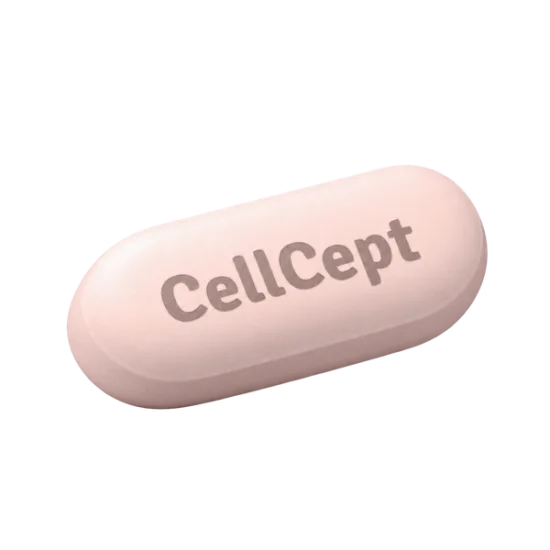
How it affects the body

After oral administration, mycophenolate mofetil becomes mycophenolic acid. Mycophenolic acid blocks inosine monophosphate dehydrogenase, an enzyme needed to produce certain building blocks for lymphocyte growth.

Lymphocytes are white blood cells involved in immune defence. Activated T lymphocytes and B lymphocytes depend heavily on this pathway when they multiply. By restricting that process, CellCept reduces the immune response directed towards a transplanted kidney, heart or liver.

The same mechanism explains several treatment risks:

  • fewer immune cells may make infections harder to control;
  • reduced bone-marrow activity may lower white cells, red cells or platelets;
  • intestinal irritation may cause diarrhoea, nausea or abdominal discomfort;
  • prolonged immune suppression increases the need for skin protection and medical review of unusual skin changes.

The European Medicines Agency describes mycophenolate mofetil as an immunosuppressive medicine used in combination regimens after solid-organ transplantation [1].

Common mistakes

Common errors include:

  • stopping CellCept after feeling well;
  • doubling a dose after forgetting one;
  • taking a new antibiotic without mentioning the transplant;
  • accepting a live vaccine without prior review;
  • assuming herbal products cannot interact;
  • ignoring diarrhoea for several days;
  • missing CBC appointments because the dose feels unchanged;
  • switching between mycophenolate formulations without confirmation.

A simple written routine can reduce missed doses. Keep the medicine schedule separate from assumptions about meals, because the transplant team may specify whether the dose should be taken with or without food.

If another clinician prescribes an antibiotic, mention CellCept and the transplant before the first dose. The interaction risk often relates to blood counts or absorption rather than an immediate sensation.

Symptoms that should not wait include fever, breathlessness, severe sore throat, unexplained bruising, blood in stools, severe abdominal pain, repeated vomiting and a rapidly worsening skin lesion.

Comparison

CellCept contains mycophenolate mofetil. Mycophenolate sodium contains a different salt of the same active moiety and may use a different release formulation.

These formulations are not interchangeable tablet-for-tablet. Strength, release characteristics and the way the body absorbs the medicine can differ.

Formulation Clinical point Interchangeability
Mycophenolate mofetil tablet Used in CellCept and related mofetil formulations Requires a prescribed regimen
Mycophenolate sodium Different salt and release characteristics Do not substitute tablet-for-tablet
Capsule or other oral formulation May have different handling instructions Change only through the transplant team

What doctors say

Transplant-pharmacy practice places three issues at the centre of CellCept counselling: consistent dosing, early reporting of illness and attendance at blood-test appointments.

A transplant clinician would usually explain that the absence of symptoms is not evidence that treatment can be reduced. Rejection may develop before the patient feels unwell, while infection can progress rapidly under immune suppression.

Another practical point is that diarrhoea should not be hidden. It can change medicine absorption and may point to infection or intestinal injury. The transplant team may need to assess hydration, blood tests and the full medicine regimen.

The WHO describes organ-transplant immunosuppression as a long-term balance between preventing rejection and reducing treatment-related harm [3].

Common questions

Can CellCept be taken with antibiotics, antivirals or supplements?

CellCept may be used with some antibiotics and antivirals, but combinations can affect blood counts, kidney function or medicine exposure. Cyclosporine, valganciclovir, ganciclovir, trimethoprim-sulfamethoxazole, ciprofloxacin and metronidazole all require clinical review in transplant care. HPRA product information available in 2025 supports checking the full regimen before a new medicine is added. Do not stop prophylaxis or self-treat an infection.

What should happen if the expected result does not come?

CellCept is intended to reduce rejection risk, not to produce a noticeable feeling of improvement. Rejection, infection and medicine intolerance are assessed through symptoms, examination and blood tests rather than by waiting for a subjective result. The EMA product information reviewed in 2025 supports contacting the transplant team when symptoms, laboratory results or organ-function concerns change. Do not increase the dose independently.

What happens when CellCept is stopped, and does it need tapering?

CellCept should not be stopped suddenly unless the transplant team gives that instruction. Interruption can increase the risk of rejection, and the need for replacement treatment depends on the organ transplanted and the reason for stopping. EMA safety guidance from 2025 supports specialist management of mycophenolate treatment changes. Tapering is not a routine self-directed process.

Can CellCept tablets be split, crushed or chewed?

CellCept tablets should be swallowed whole unless a pharmacist or transplant clinician gives specific handling instructions. Crushing or chewing can create handling exposure and may make administration less predictable. The FDA CellCept prescribing information updated before 2026 advises careful handling of broken tablets and avoidance of powder contact. Do not open or alter an oral formulation to create a different dose.

Which symptoms mean that CellCept should be stopped and a doctor contacted urgently?

Fever, chills, breathlessness, severe sore throat, unusual bleeding, extensive bruising, severe abdominal pain, black stools, blood in stools or repeated vomiting need urgent medical contact. Facial swelling, breathing difficulty or a widespread blistering rash may indicate a severe allergic reaction and requires emergency care. HPRA safety information available in 2025 links mycophenolate treatment with infection, blood-count and gastrointestinal warnings. Do not stop treatment without urgent clinical instructions unless emergency services direct you to do so.

What is the best time of day to take CellCept?

The best time is the schedule prescribed by the transplant team, taken consistently each day. Some patients use morning and evening routines, but the correct interval depends on the full immunosuppressive regimen and food instructions. The EMA product information current before 2026 supports consistent administration and attention to food-related instructions. A change in timing should be agreed before it becomes part of the daily routine.

Do you offer anonymous delivery?

Your order will be securely packed and shipped within 24 hours. This is exactly what your package will look like (images of an actual item sent). It has the size and look of a regular private letter (24x11x0.7 cm) and its contents cannot be seen.

Sources

  1. European Medicines Agency (2025). CellCept: European Public Assessment Report and product information.
  2. Health Products Regulatory Authority (2025). CellCept 500 mg film-coated tablets: Summary of Product Characteristics.
  3. World Health Organization (2010). WHO Guiding Principles on Human Cell, Tissue and Organ Transplantation.

How Buyers Rate CellCept

Based on 3 reviews

Steven, 49 Verified
Rating: 4 out of 5

I took CellCept after a kidney transplant and found the routine manageable once the doses were tied to breakfast and the evening meal. Diarrhoea bothered me during the first weeks, and reporting it led to blood tests rather than simply changing the tablets myself.

The first weeks 21 Nov 2026
Jack, 33 Verified
Rating: 3.5 out of 5

My blood counts needed extra monitoring after another medicine was added. I had felt mostly normal, so I was surprised that the clinic wanted repeat tests. I found the extra monitoring frustrating, and the difficult part was remembering that feeling well did not mean the transplant medicines could be adjusted.

26 Oct 2026
Stephen, 54 Verified
Rating: 5 out of 5

I missed a dose during a busy morning and nearly doubled the next one. The transplant team told me not to correct it independently and explained what to do next time. That conversation was more useful than trying to work it out from memory.

9 Nov 2026
Get our free app Shop faster and track your orders 3.8 · 471 reviews Install