I used the 0.1% ointment on recurring eczema around my neck and eyelids. The first three applications felt hot for about half an hour, but the itching was much calmer after several days. I found it easier to apply a very thin layer at night rather than rubbing on more when the skin felt tight.
3 Nov 2026
Protopic
Tacrolimus monohydrate, the active ingredient of Protopic, is a topical calcineurin inhibitor for inflammatory skin disease such as atopic dermatitis. Protopic 0.1% ointment is applied to affected…
Tacrolimus monohydrate, the active ingredient of Protopic, is a topical calcineurin inhibitor for inflammatory skin disease such as atopic dermatitis. Protopic 0.1% ointment is applied to affected skin when prescribed for moderate-to-severe eczema, reducing local T-cell signalling and inflammation.
Overview
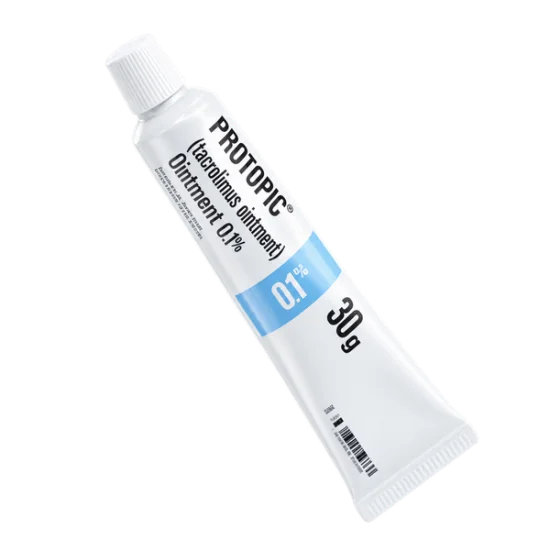
Protopic 0.1% Ointment contains tacrolimus monohydrate at a concentration equivalent to 0.1% tacrolimus. It belongs to the topical calcineurin inhibitor class and acts as a locally applied immunosuppressant. The product is supplied as an ointment in a 30 g tube for topical administration.
Formulation
Tacrolimus is the pharmacologically active substance. Tacrolimus monohydrate is the hydrate form used in the formulation. The ointment base contains substances such as white soft paraffin, hard paraffin, mineral oil, propylene carbonate and white beeswax. These excipients give the product its semi-solid texture and help it remain in contact with the skin after application.
Active ingredient and excipient profile
The key pharmaceutical facts are:
- Active substance: tacrolimus monohydrate
- Strength: 0.1%
- Drug class: topical calcineurin inhibitor
- Pharmacological action: local suppression of inflammatory T-cell activity
- Route: topical application to affected skin
- Product form: ointment
- Tube size: 30 g
The ointment base is not an additional treatment for eczema. Its role is physical: it carries tacrolimus across the skin surface and supports contact with the affected area.
Therapeutic indications
Protopic is prescribed for atopic dermatitis, a chronic inflammatory skin disorder associated with itching, dryness, redness and impaired skin-barrier function. The 0.1% strength is generally used in adults and appropriate older patients when the prescriber considers this concentration suitable.
Clinical use focuses on areas with active inflammation rather than unaffected skin. Protopic may be selected when topical corticosteroids have not provided sufficient control, when repeated steroid exposure is undesirable, or when a steroid-sparing approach is needed for sensitive areas.
Atopic dermatitis commonly follows a relapsing pattern. A treatment plan may therefore include active treatment during a flare and a separate maintenance strategy for patients with frequent recurrences. NICE guidance describes topical calcineurin inhibitors as options for selected people with atopic eczema, especially when corticosteroid-related concerns influence treatment selection [2].
Protopic is not a general moisturiser. Emollients remain useful for dry skin, but they serve a different purpose from tacrolimus ointment.
Directions for use
Product strength and tube format
The product described here is Protopic 0.1% ointment supplied in a 30 g tube. The 0.1% concentration should not be treated as interchangeable with a lower-strength tacrolimus formulation. Strength selection depends on age, the severity and location of eczema, previous treatment response and the prescriber’s assessment.
The regimen for this strength should be confirmed with a healthcare professional before starting. The ointment is used on affected areas by the topical route, not swallowed, injected or applied inside the eyes, mouth or other mucous membranes.
Do not apply it to infected skin unless a clinician has assessed the infection and provided a treatment plan. Bacterial, viral or fungal infection can require separate management.
Dosage and administration
The exact regimen for Protopic 0.1% should be confirmed with a healthcare professional before treatment begins. Use is topical and limited to areas affected by atopic dermatitis.
Practical administration points include:
- Wash and dry the affected skin gently before application.
- Apply a thin layer to the eczema-affected area.
- Avoid the eyes, lips, inside of the nose and other mucous membranes.
- Wash hands after application unless the hands are the treated area.
- Do not cover treated skin with airtight dressings unless specifically instructed.
- Avoid bathing, showering or swimming immediately after application because this can remove the ointment.
- Do not apply the ointment to visibly infected lesions without medical direction.
- If a dose is missed, apply the next scheduled application when appropriate rather than applying a thick compensatory layer.
A common mistake is using Protopic on every dry patch, including skin without active eczema. This increases exposure without adding a clear treatment benefit. Another is rubbing the ointment into the skin aggressively; gentle spreading is sufficient.
Sun protection is relevant during treatment. Avoid deliberate tanning and limit unnecessary exposure to strong sunlight because tacrolimus-treated skin should not be exposed to ultraviolet light more than necessary. The product information also advises caution with phototherapy .
When not to use it
- A known allergy to tacrolimus or any ingredient in the ointment.
- An active untreated skin infection at the area requiring treatment.
- A history of severe reaction to topical macrolide immunosuppressants.
- A condition causing significant immune suppression unless a specialist has directed treatment.
- A suspected malignant or pre-malignant skin lesion that has not been assessed.
Combining multiple immune-suppressing treatments can increase infection risk.
Do not use it on mucosal surfaces or under airtight coverings.
Pregnancy and breastfeeding require an individual risk assessment. Topical exposure is lower than systemic tacrolimus exposure, but treatment decisions should account for the treatment area, skin condition and alternatives. The EMA product information provides guidance on pregnancy and lactation considerations .
When this is not for you
Protopic is not suitable for everyone. The medication is not for you if you have:
- A known allergy to tacrolimus or any ingredient in the ointment.
- An active untreated skin infection at the area requiring treatment.
- A history of severe reaction to topical macrolide immunosuppressants.
- A condition causing significant immune suppression unless a specialist has directed treatment.
- A suspected malignant or pre-malignant skin lesion that has not been assessed.
Tell the prescriber about current medicines that suppress the immune system, treatment for serious infections, phototherapy and any history of recurrent herpes infections. Avoid applying Protopic to the eyes. If accidental contact occurs, rinse with clean water.
Alcohol is not a direct cause of tacrolimus toxicity when Protopic is used topically, but some people experience more facial flushing, warmth or irritation after drinking. Avoiding alcohol during the early treatment period can make it easier to judge whether symptoms come from the ointment or from the drink.
Unwanted effects
The most frequent early reactions are local burning, warmth, stinging, redness, itching or increased skin sensitivity. They are usually most noticeable during the first few applications and may lessen as the eczema improves. Alcohol can make facial flushing or warmth feel stronger in some people.
Other possible reactions include folliculitis, acne, herpes simplex infection, cold sores, superficial skin infection and swollen lymph nodes. Seek prompt clinical assessment for spreading redness, pus, painful blisters, fever, extensive cold sores or rapidly worsening inflammation.
Serious allergic reactions are uncommon but require urgent attention. Warning signs include swelling of the face or throat, breathing difficulty, widespread hives or collapse.
Tacrolimus absorption through intact skin is generally low, though absorption can increase when the skin barrier is severely damaged, when large areas are treated or when occlusive dressings are used. The European product information recommends avoiding prolonged continuous use and reviewing treatment when eczema is controlled .
Another is the sensation of heat after application. Applying the ointment straight after a hot shower may intensify stinging, so cooler, fully dry skin is often more comfortable.
How it affects the body
Tacrolimus enters immune cells in the skin and binds to an intracellular protein called FKBP-12. This complex inhibits calcineurin, an enzyme needed for activating nuclear factor of activated T-cells, often abbreviated as NFAT. When this pathway is reduced, T-cells produce fewer inflammatory cytokines.
The result is lower local immune activation in areas affected by atopic dermatitis and eczema. Redness, itching and inflammatory skin changes can gradually settle as cytokine signalling decreases. The action is targeted to the skin rather than based on broad suppression of the entire immune system. Treatment response varies between patients. A prescriber can assess whether the approach is suitable.
The European Medicines Agency describes topical tacrolimus as a calcineurin inhibitor used for atopic dermatitis when conventional topical treatment is unsuitable or insufficient [1]. This mechanism differs from topical corticosteroids, which act through glucocorticoid receptors and influence a wider range of inflammatory and immune pathways.
Tacrolimus ointment does not thin the skin in the same pharmacological way as prolonged topical corticosteroid exposure. It can still cause burning, warmth or itching at the application site, especially during the first days of treatment. Those sensations often improve as the skin barrier recovers.
Common mistakes
Several practical errors reduce the benefit of topical tacrolimus:
- Applying it only to the most itchy spot while leaving nearby active eczema untreated.
- Using a thick layer because the skin feels severely inflamed.
- Applying it immediately after a hot shower.
- Covering the area with plastic or airtight material.
- Using it on an infected rash without assessment.
- Stopping after one or two applications because of temporary stinging.
- Applying cosmetics or fragranced products directly over the ointment before it has settled.
- Using strong sunlight, tanning beds or phototherapy without discussing it with the prescriber.
- Sharing the tube with another person who has a different rash.
- Assuming that a moisturiser can replace the anti-inflammatory treatment during a flare.
The tube should not be passed between household members. Different rashes can have different causes, including infection or allergic contact dermatitis.
Comparison
Protopic and topical corticosteroids can both reduce eczema inflammation, but they work through different cellular pathways. A topical calcineurin inhibitor suppresses calcineurin-dependent T-cell activation. A topical corticosteroid activates glucocorticoid receptors and changes the expression of multiple inflammatory proteins.
| Treatment category | Main role and key limitation |
|---|---|
| Protopic 0.1% ointment | Steroid-sparing treatment for selected inflammatory eczema; burning or warmth may occur after application |
| Topical corticosteroids | Often used for rapid control of flares; prolonged or inappropriate use can cause skin thinning and other local effects |
| Emollient therapy | Supports the skin barrier and reduces dryness; does not replace anti-inflammatory treatment during an active flare |
The best choice depends on the body site and the pattern of disease. Calcineurin inhibitors are often considered for delicate areas such as the face, eyelids, neck or skin folds, where repeated corticosteroid exposure may require extra caution. Corticosteroids may be chosen for short courses when inflammation is intense and rapid suppression is needed.
A topical calcineurin inhibitor may sting more during the first applications. This does not mean that it has failed, but persistent severe burning, swelling or worsening rash needs clinical review.
What doctors say
Dermatologists generally view Protopic as a steroid-sparing option for selected atopic dermatitis patients rather than a universal first choice for every rash. The clinical decision depends on the diagnosis, body site, disease severity, age and previous treatment response.
A doctor will usually expect improvement in itching and inflammation over time, not an instant change after one application. Poor response can result from applying the ointment too infrequently, treating only part of the active area, stopping immediately after the first improvement or continuing to expose the skin to irritants.
The National Institute for Health and Care Excellence supports treatment plans that combine anti-inflammatory therapy with regular emollient care and attention to triggers . That approach reflects clinical practice: Protopic controls immune inflammation, while moisturising supports the damaged skin barrier.
Persistent eczema despite correct use may indicate infection, contact allergy, incorrect diagnosis or a need to revise the treatment plan. A clinician may need to examine the rash rather than simply increase the amount applied.
Common questions
Can cosmetics, sunscreen or other topical products be used with Protopic?
Cosmetics and emollients may be used as part of eczema care, but applying several products at exactly the same time can spread the ointment away from the inflamed skin. Allow Protopic to settle before applying another topical product, unless the prescriber has given a different sequence. Sunscreen should be used on exposed skin, while deliberate ultraviolet exposure and tanning beds should be avoided. NICE guidance in 2024 supports regular moisturising as part of atopic eczema management.
How does Protopic differ from topical corticosteroids?
Protopic contains tacrolimus, a topical calcineurin inhibitor, while corticosteroids act through glucocorticoid receptors. Tacrolimus is often selected as a steroid-sparing option for sensitive sites or recurrent eczema where repeated steroid courses are a concern. It may cause more initial burning, while corticosteroids can cause skin thinning and other local effects when used excessively or for prolonged periods. A Cochrane review published in 2016 found that topical calcineurin inhibitors are useful treatments for atopic dermatitis, with benefits and tolerability considerations that vary by patient [3].
What should I do if the expected improvement does not come?
Do not compensate by applying a thicker layer or using the ointment more often than prescribed. Persistent symptoms may reflect incorrect application, infection, contact allergy, severe disease or a diagnosis that needs reassessment. The clinician may review the treated area, check adherence and decide whether another anti-inflammatory strategy is needed. HPRA product information from 2024 supports clinical review when symptoms worsen or do not respond as expected [4].
Does Protopic cause skin burning?
Burning, warmth, stinging and itching are recognised local effects, especially during the first days of treatment. They often become less troublesome as the skin inflammation improves. Severe or persistent burning, swelling, blistering or rapidly worsening redness requires prompt assessment because these symptoms can indicate infection or an allergic reaction. The EMA product information, updated in 2023, identifies application-site reactions among the expected adverse effects.
Can alcohol be consumed while using Protopic?
There is no general instruction that alcohol must be completely avoided with topical tacrolimus. Some patients experience increased facial flushing, warmth or irritation after drinking alcohol during treatment. Avoiding alcohol during the first few applications can help identify whether these sensations are related to the ointment. The British Association of Dermatologists’ 2023 patient guidance on topical calcineurin inhibitors also recognises alcohol-related flushing as a practical issue for some users [5].
Which condition rules out Protopic?
An untreated active skin infection at the intended application site rules out self-directed use until the infection has been assessed. Protopic should also be avoided by anyone with a known allergy to tacrolimus or an ingredient in the ointment. Suspicious lesions, unexplained ulcers or rapidly changing skin require examination before an anti-inflammatory ointment is applied. HPRA product information from 2024 lists infection, hypersensitivity and relevant skin conditions among the factors requiring clinical caution.
Do you offer anonymous delivery?
Your order will be securely packed and shipped within 24 hours. This is exactly what your package will look like (images of an actual item sent). It has the size and look of a regular private letter (24x11x0.7 cm) and its contents cannot be seen.
Sources
- European Medicines Agency (2023). Summary of Product Characteristics (SmPC) — Protopic.
- National Institute for Health and Care Excellence (2024). Atopic eczema in under 12s: diagnosis and management.
- Cochrane (2016). Topical calcineurin inhibitors for atopic dermatitis.
- Health Products Regulatory Authority (2024). Public product information for Protopic ointment.
- British Association of Dermatologists (2023). Topical calcineurin inhibitors patient information leaflet.
How Buyers Rate Protopic
Based on 3 reviews
Protopic reduced a flare on my hands after steroid creams had become difficult to use repeatedly. I still needed an emollient because the skin remained dry, and the ointment alone did not prevent every recurrence. The initial stinging was annoying but settled during the first week.
10 Nov 2026I stopped after a few applications because the treated area felt warm and itchy. The rash returned, so my dermatologist reviewed the technique and the diagnosis. Restarting was more manageable when I used less ointment and avoided applying it straight after bathing.
14 Oct 2026