Skip to content
In Stock Spiriva
Chronic Obstructive Pulmonary Disease

Spiriva

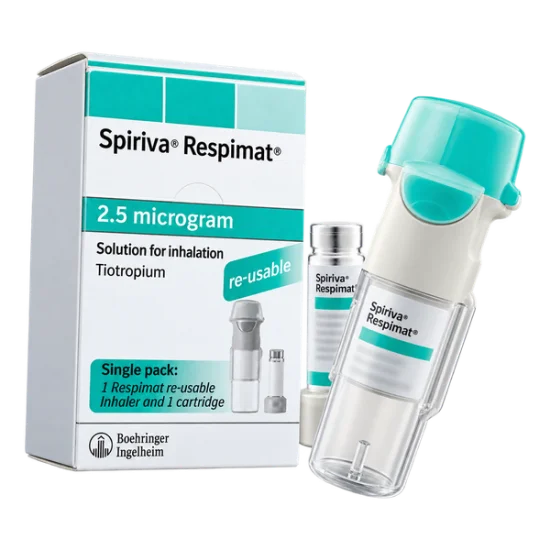
Spiriva Respimat is inhaled through a reusable device, with or without food, for long-term control of COPD symptoms. It contains tiotropium, a long-acting bronchodilator that helps keep narrowed…

Guaranteed quality Original product
Delivery: from 4 days Discreet delivery
24/7 Support Always available
Active ingredient: Tiotropium
Select pack Package Per tablet Price
€ 3.00 € 90.00
€ 2.40 € 180.00 € 144.00 Save 20%
Free Standard Delivery € 2.18 € 360.00 € 261.00 Save 28%
Free Express Delivery € 2.12 € 540.00 € 381.00 Save 29%
Best value Free Express Delivery € 1.74 € 810.00 € 470.00 Save 42%

Free delivery on orders from € 200.00, free express delivery from € 300.00

Secure payment methods:
VISA AMEX JCB DISCOVER

Spiriva Respimat is inhaled through a reusable device, with or without food, for long-term control of COPD symptoms. It contains tiotropium, a long-acting bronchodilator that helps keep narrowed airways open and supports easier breathing.

Overview

Spiriva Respimat is a maintenance inhalation medicine for COPD. Its active ingredient is tiotropium, a long-acting muscarinic antagonist and bronchodilator.

Formulation

Spiriva Respimat contains tiotropium and is supplied as a solution for inhalation. The stated strength is 2.5 micrograms per actuation. Tiotropium belongs to the long-acting muscarinic antagonist class, also called an antimuscarinic bronchodilator.

Medicine summary

  • Active ingredient: Tiotropium
  • Strength: 2.5 micrograms per actuation
  • Form: Inhalation spray
  • Device: Reusable Respimat inhaler with cartridge
  • Main role: Long-term maintenance treatment for COPD
  • Emergency role: Not intended to replace a prescribed reliever inhaler

Tiotropium formulations and indications

Tiotropium is available in more than one inhaler system. Spiriva Respimat is an inhalation spray, while other tiotropium products may use different devices and instructions. The device determines how the medicine is prepared, inhaled and cleaned.

Maintenance treatment role in COPD

Regular bronchodilation can make routine activities easier, such as walking, washing or climbing stairs. It may also reduce the burden of daily symptoms and the need for rescue medication in some patients, though it does not remove the underlying lung disease.

Therapeutic indications

The main indication is maintenance treatment for chronic obstructive pulmonary disease, including persistent breathlessness, wheezing and limited airflow. COPD includes conditions such as chronic bronchitis and emphysema. Spiriva helps reduce day-to-day respiratory symptoms, although the amount of improvement differs between patients.[1]

Tiotropium provides long-acting bronchodilation without being an inhaled corticosteroid. Its benefits depend on the pattern of symptoms, lung function, exacerbation history, other illnesses and the patient’s inhaler technique.

Potential benefits include:

  • Less day-to-day breathlessness.
  • Improved ability to perform physical activity.
  • Reduced airway narrowing during the dosing period.
  • Fewer symptoms for some people with stable COPD.
  • A convenient maintenance option when the device is used correctly.

GOLD guidance places long-acting bronchodilators within an individualised treatment plan rather than treating one inhaler as suitable for every patient.[3]

Directions for use

Spiriva Respimat is inhaled through a reusable device, with or without food, for long-term control of COPD symptoms. The prescribed regimen for this strength should be confirmed with a healthcare professional before starting. Do not transfer instructions from a tiotropium capsule device to the Respimat inhaler.

Spiriva Respimat administration and daily use

Use the Respimat inhaler only with the tiotropium cartridge supplied for that device. The precise regimen for the chosen strength must be confirmed with a healthcare professional before treatment begins.

  1. Prepare the reusable Respimat device according to the device instructions provided for this product.
  2. Insert the tiotropium cartridge into the inhaler as instructed.
  3. Keep the inhaler upright while preparing it.
  4. Turn the base until it clicks.
  5. Open the cap fully.
  6. Breathe out away from the mouthpiece.
  7. Seal your lips around the mouthpiece without covering the air vents.
  8. Begin a slow, deep breath while pressing the dose-release button.
  9. Continue breathing in slowly, then hold your breath briefly if comfortable.
  10. Close the cap after use.
Do not spray the inhaler into the mouth without inhaling at the same time. The aerosol can escape into the air, leaving less medicine available for the lungs.

Inhalation technique and device care

The mouthpiece should remain clean and dry. Wipe it with a damp cloth or tissue when needed, then allow it to dry fully. Do not submerge the inhaler in water, because moisture can interfere with the device mechanism.

Missed dose and reliever boundaries

If a dose is missed, do not take extra inhalations to compensate unless a healthcare professional has specifically instructed this. Resume the prescribed schedule and seek advice if repeated missed doses are affecting symptom control.

When not to use it

Tell the prescriber about:

  • Previous reactions to tiotropium, atropine-like medicines or inhaled products.
  • Narrow-angle glaucoma or recent eye symptoms.
  • Difficulty passing urine or prostate-related urinary symptoms.
  • Kidney disease.
  • Pregnancy or breastfeeding.
  • Other inhalers or medicines with anticholinergic effects.

Spiriva should not be used in children unless it has been specifically prescribed for that patient.

When this is not for you

Spiriva may not be suitable for you if you have had a reaction to tiotropium, atropine-like medicines or inhaled products, or if you have narrow-angle glaucoma, urinary difficulty, kidney disease, or pregnancy or breastfeeding concerns. Tell your prescriber about other inhalers or medicines with anticholinergic effects before starting treatment.

Unwanted effects

Dry mouth is a recognised anticholinergic effect of tiotropium. Other possible reactions include throat irritation, cough, constipation, blurred vision, palpitations or difficulty passing urine. The official product information classifies adverse effects by frequency and describes additional uncommon or rare reactions.

Effect group Examples and response
Common or manageable Dry mouth, throat irritation or cough; sip water, maintain dental hygiene and discuss persistent symptoms
Clinically significant Constipation, urinary difficulty, blurred vision or eye discomfort; arrange medical review
Urgent Facial swelling, severe wheezing after inhalation, eye pain with coloured halos or inability to pass urine; seek prompt care

Small, frequent sips of water may ease dry mouth. Sugar-free gum can stimulate saliva, but persistent dryness raises the risk of dental discomfort and should not simply be ignored.

Common anticholinergic effects

Tiotropium acts mainly in the airways, but anticholinergic effects can occur elsewhere. Blurred vision may be more concerning if the spray reaches the eyes. Wash the eye and seek urgent assessment for eye pain, halos around lights or sudden visual change.

Constipation can become more troublesome in people who already have slow bowel movements. Urinary difficulty deserves prompt attention, especially in men with a history of bladder-outflow problems.

Serious reactions requiring prompt care

Stop relying on the inhaler as a routine treatment plan and seek urgent care if breathing becomes suddenly worse immediately after inhalation. This may indicate paradoxical bronchospasm, an uncommon reaction in which the airways tighten rather than open.

Urgent assessment is also appropriate for swelling of the lips, tongue or throat, widespread rash, faintness or severe difficulty breathing. These symptoms may indicate a serious allergic reaction.

How it affects the body

Tiotropium blocks muscarinic signalling in the smooth muscle surrounding the airways. This reduces the nerve-driven tendency of those muscles to tighten, allowing the bronchial tubes to remain more open.

An anticholinergic medicine reduces the effects of acetylcholine, a nerve-signalling chemical. A bronchodilator relaxes airway muscle and increases the space available for airflow.

M1 and M3 receptor effects

M1 and M3 receptors are muscarinic receptors involved in airway nerve signalling. Activation of these receptors can contribute to bronchial muscle contraction and mucus secretion. Tiotropium binds to muscarinic receptors and limits this constricting signal, with prolonged activity in the airways.[2]

Common mistakes

The most consequential mistakes are practical rather than pharmacological. They can make a suitable treatment appear ineffective.

  • Using Spiriva only on difficult days instead of following the prescribed maintenance regimen.
  • Taking extra inhalations after a missed dose.
  • Spraying the dose into the mouth without inhaling.
  • Failing to prepare the reusable device correctly.
  • Covering the air vents with the lips or fingers.
  • Allowing the mouthpiece to collect residue.
  • Confusing a Respimat inhaler with a capsule-based tiotropium device.
  • Continuing to rely on a reliever while ignoring steadily worsening symptoms.
If the inhaler feels empty or fails to release a mist, do not keep pressing the button repeatedly. Pause and arrange a device check so that a mechanical problem is not mistaken for treatment failure.

Comparison

The main difference between inhalers is their active ingredient, duration and treatment role. Spiriva contains tiotropium, while Atrovent contains ipratropium. Both are antimuscarinic bronchodilators, but they have different duration and dosing characteristics.

Inhaler or category Active ingredient and role
Spiriva Tiotropium; long-acting maintenance bronchodilator for COPD
Atrovent Ipratropium; shorter-acting antimuscarinic bronchodilator
Reliever inhaler Salbutamol, also called albuterol; short-acting beta-agonist for rapid symptom relief

Atrovent and Spiriva are not interchangeable without clinical direction. A person should not convert one regimen into the other by matching the number of inhalations.

Salbutamol, known internationally as albuterol, relaxes airway muscle through a different receptor pathway and is commonly used as a reliever. Frequent reliance on it can signal poor control, worsening COPD or a technique problem.

Salmeterol with fluticasone is also different. Salmeterol is a long-acting bronchodilator, while fluticasone is an inhaled corticosteroid. That combination may be considered when the clinical profile supports an inhaled corticosteroid, such as selected exacerbation patterns, but it is not a direct equivalent to tiotropium.

What doctors say

In clinical practice, persistent breathlessness does not automatically mean that tiotropium has failed. The first checks often include device technique, regular use, smoking exposure, rescue-inhaler frequency and whether another condition is contributing to the symptoms.

A patient can inhale every planned dose and still receive little medicine if the spray is released after breathing in, rather than during the inhalation. The same problem can occur when the mouthpiece is not sealed properly.

Doctors also review whether symptoms have changed since the treatment was started. Worsening cough, fever, sputum changes, swelling, chest pain or a marked fall in exercise tolerance may require assessment for an exacerbation or another medical problem.

Treatment response checkpoints

Useful review points include:

  • How often rescue medication is needed.
  • Whether walking distance has changed.
  • Whether night-time symptoms are present.
  • Whether the device is prepared correctly.
  • Whether dry mouth or urinary symptoms are limiting use.
  • Whether exacerbations have become more frequent.

The aim is not simply to continue an inhaler indefinitely without review. COPD treatment is adjusted when symptoms, lung function, exacerbation risk or adverse effects change.

Inhaler technique review

A technique demonstration is often more useful than repeating written instructions. Ask a pharmacist, nurse or prescriber to watch the complete process, including device preparation, inhalation speed and breath timing.

The Respimat device produces a fine aerosol. Breathing in too forcefully can reduce coordination, while failing to breathe in during actuation wastes part of the dose.

Common questions

What should I do after a missed Spiriva dose?

Do not take extra inhalations to compensate for a missed dose unless a healthcare professional has given that specific instruction. Resume the prescribed regimen and seek advice if missed doses are happening regularly. The EMA product information for tiotropium (2024) supports using the inhaler according to its defined dosing schedule rather than doubling doses.

Can Spiriva be used with food or on an empty stomach?

Spiriva Respimat is inhaled, so food does not determine how the dose reaches the lungs. It can generally be used regardless of meals, provided the prescribed timing is followed. NHS respiratory guidance and the EMA product information from 2024 focus on inhaler technique and regular administration rather than a required meal relationship.

What should I do if the expected breathing improvement does not come?

Arrange a clinical review rather than taking extra Spiriva. Poor inhaler technique, ongoing smoking exposure, an exacerbation, disease progression or another cause of breathlessness can explain limited improvement. GOLD guidance used in 2026 supports reassessing symptoms, technique, adherence and exacerbation risk when COPD remains uncontrolled.

Which condition rules Spiriva out?

A previous serious reaction to tiotropium or a related atropine-like medicine rules out routine use unless a specialist determines otherwise. Narrow-angle glaucoma, urinary retention and significant kidney impairment require specific assessment before treatment. The HPRA product information from 2024 identifies these issues as precautions or contraindication-related concerns for tiotropium inhalation products.[4]

Which diet, exercise or habits can help Spiriva work better?

Pulmonary rehabilitation, suitable physical activity and stopping smoking can support COPD management alongside prescribed inhalers. Avoiding smoke exposure and keeping vaccinations up to date may also reduce respiratory stress, although these measures do not replace maintenance treatment. WHO COPD guidance published in 2023 describes physical activity and risk-factor reduction as important parts of long-term respiratory care.[5]

Do you offer anonymous delivery?

Your order will be securely packed and shipped within 24 hours. This is exactly what your package will look like (images of an actual item sent). It has the size and look of a regular private letter (24x11x0.7 cm) and its contents cannot be seen.

Long-acting bronchodilation

The long duration of tiotropium allows maintenance treatment through a planned daily regimen. The aim is steadier airway relaxation rather than a quick response to one episode of wheezing.

A common practical problem is expecting a maintenance inhaler to produce an immediate sensation of relief. If symptoms suddenly worsen, use the prescribed reliever plan and seek urgent help when symptoms are severe.

Keep the prescribed reliever inhaler available if one has been supplied. Spiriva should not be used as a substitute during sudden breathing difficulty.

Sources

  1. European Medicines Agency (2024). Spiriva Respimat — Summary of Product Characteristics and Product Information.
  2. European Medicines Agency (2024). Spiriva Respimat — Summary of Product Characteristics (SmPC).
  3. Global Initiative for Chronic Obstructive Lung Disease (2025). Global Strategy for Prevention, Diagnosis and Management of COPD.
  4. Health Products Regulatory Authority (2024). Spiriva Respimat — Irish Summary of Product Characteristics.
  5. World Health Organization (2023). Chronic obstructive pulmonary disease: fact sheet.

How Buyers Rate Spiriva

Based on 3 reviews

Jack, 56 Verified
Rating: 3.5 out of 5

I had used the inhaler for about four weeks before walking uphill felt less difficult. The dry mouth was annoying during the first fortnight, so I kept water nearby and used sugar-free gum. The improvement was useful, but I still needed my reliever during flare-ups.

About four weeks 10 Nov 2026
Stephen A., 49 Verified
Rating: 4 out of 5

The first device did not seem to help. A pharmacist watched me use it and noticed I was pressing the button before starting to breathe in. My technique improved after that, although the inhaler did not remove all of my morning wheeze.

15 Oct 2026
Adam, 63 Verified
Rating: 5 out of 5

I used Spiriva for several months and found daily breathing steadier. Constipation became troublesome after another medicine was added, so my prescriber reviewed the full list. The treatment stayed in place, but the other medicine needed attention.

Several months 28 Oct 2026
Get our free app Shop faster and track your orders 3.8 · 371 reviews Install