I used Propecia for about seven months. The crown looked less transparent in photographs, although I did not see a dramatic new hairline. I noticed lower sexual interest during the second month, so I discussed it with my prescriber and decided to stop.
About seven months 3 Nov 2026
Propecia
Propecia lowers the scalp hormone linked to male pattern hair loss by inhibiting the conversion of testosterone into dihydrotestosterone (DHT). It is an oral prescription treatment for adult men with…
Propecia lowers the scalp hormone linked to male pattern hair loss by inhibiting the conversion of testosterone into dihydrotestosterone (DHT). It is an oral prescription treatment for adult men with androgenetic alopecia and may slow thinning while supporting the growth of new hair.
Overview
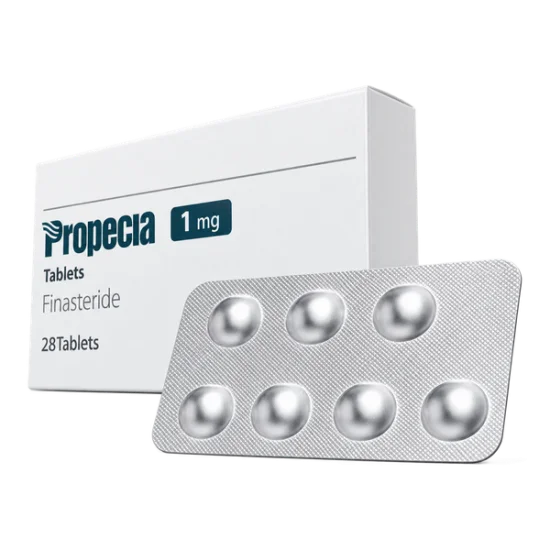
Propecia is an oral tablet used as a hair loss treatment for adult men with male pattern hair loss. Each tablet contains finasteride, a type II 5-alpha-reductase inhibitor. This strength is intended for androgenetic alopecia; higher finasteride strengths are used for different medical indications and should not be substituted for the hair-loss dose.
Active Pharmaceutical Ingredient
The active pharmaceutical ingredient is finasteride. Propecia belongs to the 5-alpha-reductase inhibitor class rather than the topical treatment class. It is taken by mouth and is designed for continuous treatment, because the hormonal effect fades after treatment stops.
Propecia is intended for adult men. It is not a supplement, and its action depends on changing DHT exposure around genetically sensitive hair follicles.
Formulation
Propecia is an oral tablet used as a hair loss treatment for adult men with male pattern hair loss. Each tablet contains finasteride, a type II 5-alpha-reductase inhibitor. This strength is intended for androgenetic alopecia; higher finasteride strengths are used for different medical indications and should not be substituted for the hair-loss dose.
Active Pharmaceutical Ingredient
The active pharmaceutical ingredient is finasteride. Propecia belongs to the 5-alpha-reductase inhibitor class rather than the topical treatment class. It is taken by mouth and is designed for continuous treatment, because the hormonal effect fades after treatment stops.
Propecia is intended for adult men. It is not a supplement, and its action depends on changing DHT exposure around genetically sensitive hair follicles.
Therapeutic indications
Androgenetic alopecia is the clinical term for male pattern hair loss. It develops through an interaction between inherited follicle sensitivity and circulating androgens. The condition is not limited to one age group, although it becomes more common with increasing age.
Hair follicles affected by DHT gradually produce finer, shorter hairs. The growth phase may become shorter, while the resting phase becomes more prominent. Over time, the hairline can recede and the crown can appear thinner.
Propecia treats male pattern hair loss linked to this androgen-sensitive process. It does not address every cause of shedding. Sudden diffuse loss, patchy bald areas, scalp inflammation, or hair loss accompanied by systemic symptoms may indicate a different condition requiring separate assessment.
Typical Pattern of Hair Loss
The frontal hairline and vertex are common sites of androgenetic alopecia. Some men mainly notice temple recession, while others first see thinning at the crown. A receding hairline can continue even when crown density appears stable.
Finasteride may preserve hair that is still miniaturised but viable. It cannot reliably restore follicles that have been absent for a long period. This is why treatment expectations should focus on slowing progression and improving density where follicles remain active.
Directions for use
The standard Propecia regimen for adult male pattern hair loss is one tablet taken orally once daily. It may be taken with or without food. The dose is not increased to speed up results, because taking more finasteride does not provide a proven hair-growth advantage and may increase exposure to adverse effects.
- Swallow the tablet whole with water.
- Take it once daily.
- Maintain the regimen over the long term.
- If a dose is missed, take the next scheduled dose at the usual time.
- Do not take two tablets together to compensate for a missed dose.
- Do not crush or break the tablet.
The amount taken at each intake is determined individually for each person rather than being one fixed amount. Propecia is a prescription treatment, so the prescribing clinician determines whether it is suitable for the individual patient and how treatment should be monitored.
A broken tablet requires special handling. Women who are pregnant or may become pregnant should not handle crushed or broken finasteride tablets because the active ingredient can be absorbed through the skin and may harm the development of a male fetus. Intact tablets have a protective coating.
When not to use it
Propecia is intended for adult men with androgenetic alopecia. It is not suitable for everyone.
Propecia is not for you if:
- You are a woman who is pregnant or may become pregnant.
- You have had an allergic reaction to finasteride or any tablet ingredient.
- You are under 18 years of age.
- You are taking finasteride or another medicine that contains a 5-alpha-reductase inhibitor without a clear prescribing plan.
- You have developed serious mood symptoms associated with finasteride and have not received a clinical review.
When this is not for you
Women who are pregnant or may become pregnant must not handle crushed or broken tablets. Finasteride can interfere with the development of male external genitalia in a fetus. If contact occurs with powder from a broken tablet, wash the affected skin promptly with soap and water.
Children and adolescents should not use Propecia for hair loss. Its safety and effectiveness have not been established for this population, and male pattern hair loss treatment is intended for adult men.
The product should not be used casually alongside other finasteride-containing treatment. Combining products can increase total exposure without creating a proven additional benefit.
Unwanted effects
Finasteride was generally well tolerated in clinical trials, but sexual adverse effects can occur. Reported reactions include reduced libido, erectile dysfunction, and reduced ejaculate volume. In trials for male pattern hair loss, each sexual adverse effect was reported by a small proportion of men, generally around one to two percent, with rates close to those reported with placebo in the study data [2].
Sexual symptoms may improve during continued treatment or after stopping, although persistent sexual symptoms have been reported after discontinuation. The regulatory product information also describes mood changes, including depressed mood, and advises prompt clinical attention if severe depression or suicidal thoughts develop.
Other reported effects include:
- Reduced sexual desire.
- Difficulty achieving or maintaining an erection.
- Reduced volume of ejaculate.
- Breast tenderness or enlargement.
- Testicular discomfort.
- Allergic reactions such as rash, itching, swelling of the lips, or facial swelling.
- Depressed mood or other significant psychological changes.
A small number of men may notice changes in semen parameters. These changes are usually reversible after stopping, though individual responses differ. Tell the prescriber about fertility concerns before treatment begins, especially when conception is being planned.
PSA Test Interaction
Finasteride lowers serum prostate-specific antigen, or PSA. PSA is a blood marker used in prostate assessment, and finasteride can reduce the measured value even when prostate disease is present. Anyone taking Propecia should tell the clinician ordering a PSA test, so the result can be interpreted in the context of finasteride use.
This effect does not mean Propecia treats prostate disease. The 1 mg hair-loss dose and higher-dose finasteride treatment for benign prostatic enlargement have different licensed purposes. The HPRA product information describes the need to account for finasteride-related PSA suppression during clinical interpretation [3].

How it affects the body
Testosterone can be converted into DHT by the enzyme 5-alpha-reductase type II. In men with androgenetic alopecia, genetically sensitive follicles may respond to DHT by becoming progressively smaller. The active ingredient in Propecia blocks part of this conversion pathway, reducing DHT in the scalp and lowering serum DHT as well.
Finasteride does not work by stimulating follicles in the same way as a topical growth-promoting treatment. Its role is hormonal: it reduces the androgen signal that contributes to male pattern hair loss. The European Medicines Agency and national medicine regulators describe finasteride through this 5-alpha-reductase mechanism and its associated reproductive and sexual safety warnings [1].
DHT and Follicle Miniaturisation
Finasteride is more likely to preserve vulnerable follicles when treatment begins before extensive, long-standing miniaturisation has occurred.
Common mistakes
Poor results often follow practical mistakes rather than a lack of biological response.
- Stopping after four to eight weeks because visible regrowth has not appeared.
- Taking extra tablets after missing a dose.
- Switching between daily use and occasional use.
- Comparing hair density under different lighting conditions.
- Failing to mention Propecia before a PSA blood test.
- Continuing despite severe depression or suicidal thoughts without seeking urgent clinical help.
- Allowing a pregnant partner to handle a crushed or broken tablet.
- Assuming that more finasteride will produce faster hair growth.
- Treating sudden patchy or inflamed hair loss as ordinary male pattern hair loss.
Do not use a missed-dose correction as a catch-up dose. Extra finasteride does not restore a missed treatment day and may increase the chance of adverse effects.
Another common error is judging treatment by hair in the shower alone. Daily shedding changes with washing frequency, hair length, and seasonal variation. A consistent photographic record provides a more useful long-term comparison.
Comparison
Different treatments act at different stages of the hair-growth process. Propecia reduces DHT through an oral hormonal mechanism, while topical approaches work locally on the scalp. The choice depends on the diagnosis, treatment goals, medical history, and tolerance.
| Approach | Main action |
|---|---|
| Propecia | Oral finasteride reduces DHT formation through type II 5-alpha-reductase inhibition |
| Topical growth-promoting treatment | Acts locally on the scalp to support follicle activity and prolong the growth phase |
| Hair restoration procedure | Redistributes or replaces hair in selected areas but does not remove the underlying hormonal sensitivity |
Propecia may suit an adult man seeking an oral treatment aimed at slowing androgen-driven follicle miniaturisation. A topical approach may be considered when local treatment is preferred or when systemic exposure is a concern. A procedure addresses selected areas of visible loss but does not prevent untreated follicles from continuing to thin.
Combining approaches requires clinical planning. Using more than one treatment does not guarantee a better result, and each option has its own adverse effects and practical requirements.
What doctors say
In clinical practice, doctors usually set the first treatment goal as stabilising hair loss rather than promising rapid regrowth. A patient who keeps the same hair density over several months may be responding, even when the change is subtle.
Prescribers also assess whether the pattern truly resembles androgenetic alopecia. Diffuse shedding after illness, iron deficiency, thyroid disease, scalp inflammation, and patchy autoimmune hair loss require different evaluation. Finasteride is not a universal treatment for every form of hair shedding.
A sensible review often considers treatment response, sexual symptoms, mood, fertility plans, and any planned PSA testing. Patients should report new erectile problems, libido changes, breast symptoms, or depression rather than silently stopping or changing the dose.
One practical point is often missed: hairline photographs are less reliable than crown photographs because hair direction and styling can conceal frontal changes. A clinician may compare standardised images with the baseline assessment instead of relying only on the patient’s impression.
The EMA recognises finasteride’s benefit-risk considerations alongside specific warnings about sexual function, mood, pregnancy exposure, and PSA interpretation [4].
Common questions
Does Propecia cause erectile dysfunction?
Erectile dysfunction is a recognised adverse effect of finasteride, although it affected a small proportion of men in clinical trials. The FDA product information from 2014 reports sexual adverse events, including erectile dysfunction and reduced libido, with rates close to placebo in the main trial data [5]. A clinician can assess whether new symptoms may be related to treatment. Symptoms may improve during treatment or after discontinuation, but persistent symptoms have also been reported. A new or continuing sexual problem should be discussed with the prescriber rather than managed by changing the dose independently.
Can anyone under 18 use Propecia?
Propecia is intended for adult men and should not be used by children or adolescents for hair loss. The HPRA product information available in 2025 describes the lack of an established role for finasteride 1 mg in this age group. A young person with hair loss needs assessment for other causes rather than unsupervised use of an adult treatment. Tablets should also be kept away from children.
How soon can the effect become noticeable?
Early stabilisation may appear after about three months, while visible improvement often requires three to six months of daily treatment. The EMA’s finasteride information from 2017 explains that a meaningful assessment generally requires continued use over a longer period, with results commonly reviewed around six to twelve months. Some men mainly preserve existing hair rather than seeing obvious regrowth. Stopping early can remove a potential benefit before the hair cycle has had time to respond.
Can alcohol be used while taking Propecia?
Alcohol does not have a recognised direct interaction with finasteride in the EMA product information. Alcohol can still worsen sleep, mood, judgement, and sexual performance, which may make it harder to judge whether a symptom is related to Propecia. The NHS alcohol guidance in 2025 also links heavier drinking with sexual difficulties that can resemble medicine-related effects. If erectile problems, low mood, or dizziness develop, record the timing and discuss the pattern with the prescriber.
Do you offer anonymous delivery?
Your order will be securely packed and shipped within 24 hours. This is exactly what your package will look like (images of an actual item sent). It has the size and look of a regular private letter (24x11x0.7 cm) and its contents cannot be seen.
Comparison
Sources
- European Medicines Agency (2017). Finasteride-containing medicinal products: referral information and product safety information.
- U.S. Food and Drug Administration (2014). PROPECIA (finasteride) tablets: prescribing information.
- Health Products Regulatory Authority (2025). Finasteride 1 mg film-coated tablets: Summary of Product Characteristics.
- European Medicines Agency (2019). Finasteride: European public assessment and safety information.
- U.S. Food and Drug Administration (2014). PROPECIA (finasteride) tablets: clinical studies and adverse reactions.
How Buyers Rate Propecia
Based on 3 reviews
After three months, shedding seemed calmer, and by month eight my barber commented that the crown looked fuller. I had mild difficulty maintaining an erection during the first weeks, which settled without changing the prescribed dose. The daily tablet was easy to remember when I took it with breakfast.
Eight months 9 Nov 2026I took it for five months and stopped because I expected faster regrowth. Looking back, the main benefit may have been slower thinning rather than obvious new coverage. I also missed doses during work trips, so my routine was not as consistent as it should have been.
Five months 14 Oct 2026