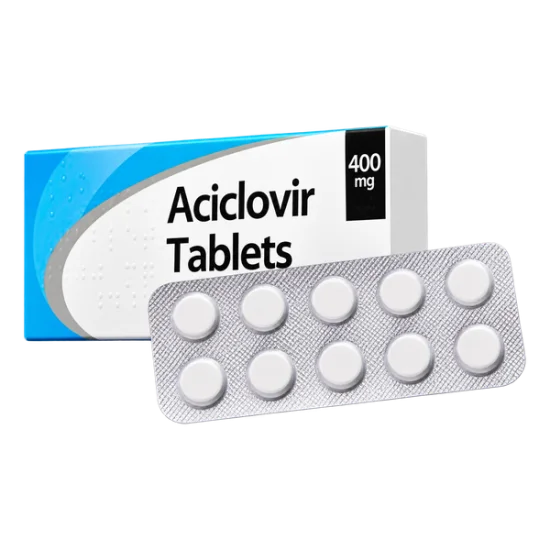
I started the 400 mg tablets early during a genital herpes recurrence after the familiar tingling began. The outbreak settled more quickly than the previous episode, although I had mild nausea during the first day.
3 Nov 2026
Aciclovir
Aciclovir tablets are oral antiviral medicines for selected herpes simplex and varicella-zoster virus infections. They help reduce viral multiplication, and the regimen for the chosen strength should…
Aciclovir tablets are oral antiviral medicines for selected herpes simplex and varicella-zoster virus infections. They help reduce viral multiplication, and the regimen for the chosen strength should be confirmed with a healthcare professional before starting.
Overview
Aciclovir is a synthetic nucleoside analogue antiviral. The active ingredient is aciclovir, also written as acyclovir in some clinical references. The regimen for the chosen strength should be confirmed with a healthcare professional before starting.
Formulation
The product form is an oral tablet containing aciclovir. The regimen for the chosen strength should be confirmed with a healthcare professional before starting. Oral tablets are used when systemic antiviral treatment is appropriate for the diagnosed infection.
Aciclovir is also available in other pharmaceutical forms in clinical practice, including topical preparations and intravenous formulations. These forms are not interchangeable with tablets. A cream applied to the skin does not provide the same systemic exposure as oral treatment, while intravenous therapy is reserved for serious infections or situations requiring hospital-based care.
Therapeutic indications
Aciclovir tablets are used for selected infections caused by herpes simplex virus and varicella-zoster virus. The treatment plan depends on the infection, immune status, kidney function, age, and whether the episode is a first occurrence or a recurrence.
The main clinical uses include:
| Infection | Typical presentation | Treatment focus |
|---|---|---|
| Herpes simplex | Cold sores or genital herpes lesions | Reduce viral multiplication and shorten the active episode |
| Varicella-zoster | Shingles with a painful one-sided rash | Limit viral activity and reduce the duration of new lesion formation |
| Recurrent herpes | Repeated oral or genital outbreaks | Episodic treatment or planned suppression in selected patients |
The UK and Irish clinical approach recognises that prompt antiviral therapy is most useful when started early, especially for shingles and significant herpes simplex episodes. The WHO and CDC describe herpes simplex and varicella-zoster as persistent viruses that can reactivate after periods of latency [2].
Management of herpes simplex outbreaks
Cold sores commonly affect the lips or nearby facial skin. Genital herpes can cause painful blisters, shallow ulcers, itching, burning, and discomfort during urination. Aciclovir may be prescribed for a first episode, a severe recurrence, or repeated outbreaks requiring suppressive treatment.
Treatment of varicella-zoster virus infections
Shingles develops when varicella-zoster virus reactivates in a sensory nerve and spreads to the skin supplied by that nerve. Pain, tingling, or hypersensitivity can precede the rash. The rash often appears in a band on one side of the body.
Directions for use
- Take Aciclovir 400 mg tablets by mouth with water.
- Confirm the exact dose in milligrams with a healthcare professional before starting.
- Confirm how many times per day to take the tablets with a healthcare professional before starting.
- Confirm the treatment duration with a healthcare professional before starting.
- Confirm whether to take the tablets before or after meals with a healthcare professional before starting.
- Do not crush, chew, or split the tablets unless a prescriber or dispensing pharmacist confirms that this is suitable for the specific tablet.
- Ask the prescribing team about another formulation or administration method if swallowing tablets is difficult.
When not to use it
This treatment may be unsuitable or require dose adjustment when a person has:
- Significant kidney impairment.
- Severe dehydration.
- A history of neurological toxicity with antiviral medicines.
- A weakened immune system requiring specialist management.
- Pregnancy or breastfeeding where the prescriber has not assessed the clinical need.
- Difficulty swallowing or a condition that prevents reliable oral treatment.
Aciclovir is cleared mainly through the kidneys. Medicines that can affect renal function may increase the need for monitoring. Examples include some nephrotoxic immunosuppressants, certain intravenous antibiotics, and other medicines eliminated through renal tubular secretion. A complete medication review is needed before treatment begins.
When this is not for you
Aciclovir is NOT for you if you have a known serious allergy to aciclovir, valacyclovir, or a tablet ingredient; seek specialist advice before use. A history of a mild, non-specific rash does not automatically prove allergy, but a previous severe reaction requires careful assessment.
Unwanted effects
Aciclovir is tolerated by many patients, though adverse effects can occur. Common effects include headache, nausea, vomiting, diarrhoea, abdominal discomfort, dizziness, and fatigue. Skin rash or itching may also occur.
Most mild digestive symptoms improve during or shortly after treatment. Taking the tablet with food may help if it causes stomach discomfort, although food is not required for absorption.
Less common but clinically significant reactions include confusion, hallucinations, tremor, agitation, seizures, severe drowsiness, and problems with coordination. These effects are more likely when kidney function is reduced or the dose is not adjusted appropriately. Acute kidney injury can present with flank discomfort, swelling, marked fatigue, or a clear reduction in urination.
A practical point: confusion during an antiviral course is not simply a normal sign of being unwell. In an older adult or anyone with kidney disease, it deserves prompt medical attention.
How it affects the body
After entering an infected cell, aciclovir is converted into its active triphosphate form through several phosphorylation steps. The first step depends largely on viral thymidine kinase. This gives aciclovir a degree of selectivity for cells infected with herpes simplex virus or varicella-zoster virus.
The active compound then competes with natural nucleotides needed for viral DNA production. Once incorporated into the growing viral DNA chain, it prevents further extension. Viral replication slows, so new lesions may develop less extensively and existing lesions can resolve sooner. Aciclovir does not remove herpes viruses from the body, because these viruses remain latent in nerve tissue between episodes. The pharmacological pathway is described in regulatory antiviral guidance from the EMA [1].
Inhibition of viral DNA replication
Aciclovir acts mainly during active viral multiplication. It has limited activity against viruses that are dormant and producing no new DNA.
Common mistakes
Several habits can reduce the benefit of treatment or increase avoidable risk:
- Waiting until blisters have been present for several days before seeking advice.
- Taking doses close together after forgetting one, rather than following missed-dose instructions from the prescribing team.
- Reusing tablets prescribed for an earlier outbreak without confirming the current diagnosis.
- Stopping after the first improvement when a complete prescribed course remains.
- Taking extra tablets to compensate for a missed dose.
- Continuing sexual contact during genital symptoms because lesions look almost healed.
- Failing to mention kidney disease or medicines that affect renal function.
- Crushing tablets without confirming that the dosage form can be altered.
- Ignoring reduced urine output, confusion, or severe rash.
One useful detail is that a missed dose does not usually justify doubling the next dose. The correct action depends on how close the next scheduled dose is, so the prescriber or dispensing pharmacist should provide the specific instruction for the regimen.
Comparison
Valacyclovir is a prodrug that the body converts into aciclovir. Both medicines target herpes simplex virus and varicella-zoster virus, but their absorption and dosing patterns differ. Valacyclovir generally produces higher aciclovir exposure after oral administration, which can allow less frequent dosing in some indications. The FDA prescribing information describes these pharmacokinetic differences [3].
| Feature | Aciclovir | Valacyclovir |
|---|---|---|
| Active antiviral | Aciclovir itself | Converted to aciclovir after absorption |
| Oral absorption | Lower and more variable | Higher aciclovir exposure |
| Dosing pattern | Often requires several doses daily | May allow fewer daily doses for selected indications |
Aciclovir remains a clinically established option when its prescribed schedule suits the infection and the patient. Valacyclovir may be selected when fewer daily doses could improve adherence. The choice also depends on renal function, previous treatment response, age, immune status, and local prescribing practice.
Neither medicine cures latent herpes infection. Both work against active viral replication, so recurrences can still occur after treatment ends.
What doctors say
Clinicians generally focus on timing, diagnosis, renal function, and adherence. A tablet course works best when the illness is genuinely caused by a susceptible herpes virus and treatment begins before the outbreak becomes extensive.
Doctors also distinguish episodic treatment from suppressive treatment. Episodic therapy is used during an outbreak. Suppressive therapy involves planned daily treatment for selected people with frequent or severe recurrences. The goals are different, so a previous prescription should not automatically be reused for a new episode.
In clinical practice, the most common avoidable problems are late treatment and inadequate hydration. Another frequent issue is using a previous course for a new rash without confirming the diagnosis. Shingles, bacterial skin infection, eczema, and allergic reactions can resemble one another during the early stages.
Aciclovir also does not replace assessment for complications. Facial or eye involvement, severe pain, extensive genital lesions, neurological symptoms, and immunosuppression change the urgency of care.
Common questions
How should Aciclovir be stored at home and while travelling?
Keep Aciclovir tablets in a dry place at ordinary room temperature, away from excessive heat and moisture. The HPRA advises that medicines should remain in their intended container and be kept away from children; this remains relevant in 2026. During travel, carry the tablets in hand luggage where possible and avoid leaving them in a hot car or damp bathroom. Keep the dosing schedule consistent when crossing time zones by following the interval provided by the prescribing team.
Can Aciclovir be taken with food or on an empty stomach?
Aciclovir tablets can generally be taken with food or on an empty stomach. Food may be useful when nausea or stomach discomfort occurs, while water supports swallowing and hydration. The HPRA product information approach in 2026 continues to prioritise the prescribed dose interval rather than a special meal requirement. Avoid changing the frequency because a dose was taken with food.
Do you offer anonymous delivery?
Your order will be securely packed and shipped within 24 hours. This is exactly what your package will look like (images of an actual item sent). It has the size and look of a regular private letter (24x11x0.7 cm) and its contents cannot be seen.
Comparison
Aciclovir Current
Famvir
Sources
- European Medicines Agency (2016). Guideline on the clinical evaluation of medicinal products indicated for treatment of herpes virus infections.
- World Health Organization (2023). Herpes simplex virus: fact sheet.
- FDA (2021). Valtrex (valacyclovir) Prescribing Information.
How Buyers Rate Aciclovir
Based on 3 reviews
The tablets were straightforward to swallow, and the cold sore stopped getting larger after a few days. I had expected the redness to disappear immediately, so the gradual improvement was slower than I had imagined.
7 Oct 2026I used Aciclovir for shingles after pain and a rash appeared on my side. The pain still needed separate treatment, and I was tired during the course, but new blisters reduced after treatment began.
21 Oct 2026