used a thin layer on an elbow flare for several days: “The itching settled first, and the redness followed. I had to remind myself not to keep applying it after the skin looked better.”
Several days 27 Oct 2026
Elocon
Adults and children with inflammatory skin conditions such as eczema, dermatitis or psoriasis may be prescribed Elocon when redness, itching and scaling require topical corticosteroid treatment…
Adults and children with inflammatory skin conditions such as eczema, dermatitis or psoriasis may be prescribed Elocon when redness, itching and scaling require topical corticosteroid treatment. Elocon cream contains mometasone furoate 0.1%, which acts locally in the skin to reduce inflammation.
Overview
Elocon is a prescription-strength topical corticosteroid cream containing mometasone furoate. Corticosteroids are anti-inflammatory medicines applied to the skin.
Formulation
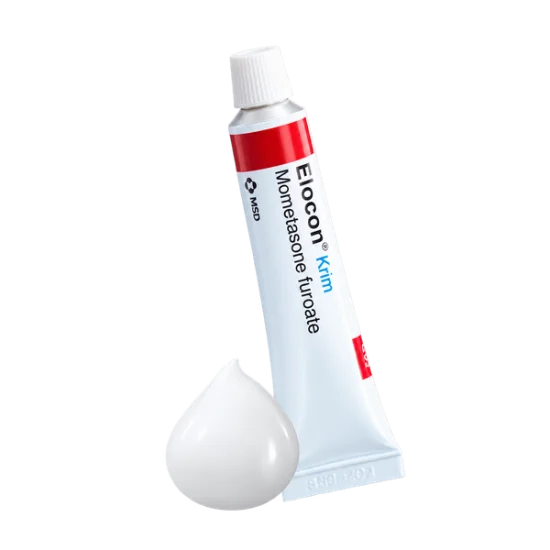
Elocon is supplied here as a cream in a tube. The cream contains mometasone furoate 0.1% and is designed for application to affected skin.
Creams generally spread more easily than ointments and may feel more comfortable during the day. They can be useful when the skin is inflamed but not markedly dry or cracked. An ointment is greasier and more occlusive, while a lotion can spread through hair-bearing areas more readily when that formulation has been prescribed.
| Formulation | Practical characteristics |
|---|---|
| Cream | Easier spreading and less greasy; commonly convenient for daytime use |
| Ointment | Greasier and more occlusive; may suit very dry skin but can transfer to clothing |
| Lotion | Spreads through hair-bearing areas; directions depend on the specific product |
Cream is not automatically weaker than ointment when both contain the same mometasone concentration. The formulation changes texture, moisture retention and ease of application.
Cream Formulation
Elocon cream is applied as a thin layer to affected skin. It should not be spread over unaffected areas unless a prescriber has specifically directed this.
A fingertip unit can help estimate the amount: a strip of cream from the fingertip to the first crease is commonly used as a rough guide for covering an area of skin. It is an estimating tool, not a universal prescription, because the required amount depends on the body site and extent of inflammation.
Ointment Formulation
An ointment formulation is more occlusive and may retain more moisture on dry, thickened skin. It can also feel greasy and transfer to clothing or bedding.
Do not substitute an ointment for the Elocon cream unless the prescribed formulation is clear. Covering treated skin with a dressing can substantially increase absorption.
Lotion Formulation
A lotion may be easier to distribute through hair-bearing skin or over a larger area when prescribed. Its application instructions may differ from those for cream or ointment.
Avoid contact with the eyes. Wash the hands after application unless the hands are the treated area.
Therapeutic indications
Elocon may be prescribed for inflammatory conditions such as eczema, dermatitis and psoriasis. Psoriasis commonly produces itchy, scaly or pink plaques on areas such as the elbows, knees or scalp. Treatment depends on the diagnosis, body site and severity of the flare. The Irish Health Products Regulatory Authority (HPRA) recognises topical corticosteroids as medicines requiring careful use according to the approved product information [1].
Elocon controls symptoms during an inflammatory flare. It does not remove the underlying tendency to develop eczema or psoriasis, so symptoms may return after treatment stops.
Conditions Commonly Treated with Elocon
Elocon may be used for:
- Atopic eczema with redness, itching and inflamed patches
- Contact dermatitis after the trigger has been identified and removed
- Other steroid-responsive inflammatory skin conditions
- Localised psoriasis when a clinician considers a potent topical corticosteroid appropriate
An undiagnosed rash should not automatically be treated with Elocon. Ring-shaped scaling, pus, crusting, marked warmth or rapidly spreading redness can indicate infection or another condition requiring a different treatment.
Treatment Limits of Elocon
Elocon may worsen acne, rosacea, perioral dermatitis or untreated skin infections. Applying a corticosteroid to a fungal or bacterial infection can reduce visible inflammation while allowing the infection to spread.
The face, groin, armpits, eyelids and skin folds absorb topical corticosteroids more readily than thicker skin. These areas need specific professional direction.
Directions for use
The amount and frequency depend on the purpose of treatment and are agreed with a doctor or pharmacist. Elocon should be used only on the areas and for the duration specified for the individual condition.
- Clean the affected skin gently if needed, then pat it dry.
- Apply a thin layer of Elocon cream to the affected skin.
- Spread it gently until the cream is absorbed.
- Wash the hands afterwards unless the hands are being treated.
- Keep the cream away from the eyes, mouth and mucous membranes.
- Follow the prescribed frequency and duration.
- Do not apply extra cream to speed up improvement.
Moisturisers may be used alongside a topical corticosteroid. A prescriber or pharmacist can advise on spacing applications so that the moisturiser does not immediately spread the steroid beyond the intended area.
Thin-Layer Application Technique
The treated area should look lightly covered rather than coated. Rubbing vigorously can irritate inflamed skin, while applying a large amount can increase transfer to clothing.
One common mistake is using the same tube on several people. This can spread infection and makes it harder to follow each person’s treatment plan.
Body Areas Requiring Extra Care
Use extra caution on:
- The face and eyelids
- The groin and genitals
- The armpits and skin folds
- Children’s skin
- Areas covered by dressings or tight clothing
- Broken, ulcerated or infected skin
Seek specific advice before using Elocon near the eyes. Facial skin is thinner and more vulnerable to steroid-related changes.
Missed Applications and Treatment Duration
Apply a missed dose when remembered unless it is nearly time for the next scheduled application. Do not apply twice as much to compensate.
Repeatedly stopping and restarting without review can hide an untreated infection or another diagnosis. If the rash repeatedly returns soon after treatment stops, the flare pattern should be reviewed rather than managed by indefinite self-treatment.
When not to use it
Elocon is not suitable for you if:
- You have a known allergy to mometasone or an ingredient in the cream
- The treatment area has an untreated fungal, bacterial or viral infection
- You have acne, rosacea or perioral dermatitis at the proposed site
- You plan to apply it near the eyes without specific medical advice
- You intend to use it under a dressing without professional direction
- The rash has not been diagnosed and is rapidly changing, painful or spreading
Pregnancy and breastfeeding require a product-specific discussion, especially when treatment involves large areas, prolonged use or covered skin. Do not apply Elocon to the breast immediately before breastfeeding.
When this is not for you
Elocon may not be right for you if you are allergic to mometasone or another ingredient, if the rash could be an untreated infection, or if you have acne, rosacea or perioral dermatitis where you plan to apply it. Ask a clinician before using it near the eyes, under a dressing, during pregnancy or breastfeeding, or on a child.
Unwanted effects
Elocon may cause local skin irritation, burning, dryness or itching. These effects can be mild and temporary, but persistent or worsening symptoms need assessment.
Topical corticosteroid risks increase with higher potency, prolonged use, large treatment areas, damaged skin and occlusion. The U.S. Food and Drug Administration (FDA) prescribing information describes these factors when discussing topical corticosteroid absorption and adverse effects [2].
Common Local Reactions
Possible reactions include:
- Burning or stinging after application
- Dryness or irritation
- Folliculitis, which means inflamed hair follicles
- Changes in skin colour
- Increased sensitivity
- A new or worsening rash
Do not dismiss persistent burning as a normal sign that the cream is working. A new rash may reflect contact allergy, infection or an incorrect diagnosis.
Risks from Excessive or Prolonged Use
Long-term or excessive use may cause skin thinning, visible small blood vessels, stretch marks, easy bruising or changes in pigmentation. These effects are more likely on thin skin and under coverings.
Children can absorb proportionally more topical corticosteroid because of their smaller body size. Prolonged use over large areas can rarely affect the body’s adrenal response, which helps regulate stress hormones.
Urgent medical assessment is needed for facial swelling, breathing difficulty, severe blistering, rapidly spreading redness, pus, marked warmth, vision changes or severe eye pain.

How it affects the body
Mometasone furoate is the active ingredient in Elocon and belongs to the topical corticosteroid class. It enters skin cells and reduces the release of inflammatory substances. This lowers the activity responsible for itching, redness, swelling and scaling.
Inflammation is the skin’s response to immune irritation or injury. In eczema and psoriasis, this response can remain active after the original trigger has passed. Mometasone reduces that local response rather than producing a whole-body steroid effect like an oral corticosteroid.
Elocon works locally when applied to affected skin.
Common mistakes
The mistakes seen most often include:
- Applying a thick layer because the rash is very itchy
- Using Elocon on acne, rosacea or an undiagnosed facial rash
- Continuing treatment after the agreed course has ended
- Applying it more frequently than prescribed
- Covering the area with a dressing without advice
- Sharing the tube with another person
- Applying it to infected skin without assessment
- Treating every recurrence without checking the diagnosis
- Applying it immediately before washing the area off
- Forgetting that steroid-treated skin can still need moisturising
A treatment review is sensible when the rash spreads, returns repeatedly, becomes painful, develops discharge or affects the eyes. A GP, dermatologist or pharmacist can help determine whether the problem is inadequate treatment, incorrect application, infection or a different skin condition.
Comparison
Treatment selection depends on the diagnosis, body site, age, severity and previous response. A label such as “Eczema & Psoriasis Cream” or “Psoriasis Cream” does not establish that a product is suitable for a particular rash.
| Treatment category | Typical role and limitation |
|---|---|
| Emollients | Support the skin barrier and reduce dryness; may not control a significant inflammatory flare alone |
| Lower-potency corticosteroid | May suit mild inflammation or sensitive body sites; prolonged use still requires care |
| Vitamin D analogue or calcineurin inhibitor | May be selected for psoriasis or eczema in specific situations; use depends on diagnosis and site |
Emollients and Barrier Repair
Fragrance-free emollients help reduce dryness and support the skin barrier. They are often applied regularly, including after washing, because eczema-prone skin loses moisture easily.
An emollient does not always replace a prescribed corticosteroid during a significant flare. Treatment plans often use both, with different application times where needed.
Other Prescription Topical Options
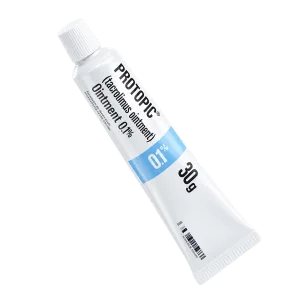
A lower-potency corticosteroid may be chosen for thin skin or a mild flare. A vitamin D analogue may be considered for psoriasis. A topical calcineurin inhibitor may be used for selected eczema areas where repeated steroid exposure is undesirable.
These categories work differently from mometasone. Choice should follow the diagnosis rather than the appearance of the cream.
When Antifungal or Antimicrobial Treatment Is Relevant
Antifungal treatment is appropriate when a fungal infection has been diagnosed. Antibacterial treatment is reserved for situations where bacterial infection is supported by clinical findings.
Pain, pus, yellow crusting, spreading warmth, increasing swelling, fever or ring-shaped scaling should prompt medical assessment. Elocon alone may worsen an untreated infection.
What doctors say
In clinical practice, doctors usually aim for the smallest amount of topical corticosteroid that controls the flare for the shortest suitable period. The treatment area matters as much as the cream’s strength. A small patch on an elbow presents a different absorption issue from widespread eczema, eyelid inflammation or treatment beneath a dressing.
A dermatologist or GP may use a flare plan that combines Elocon for active inflammation with regular emollient use between flares. The plan may change when the same rash returns repeatedly, spreads to a new area or responds only briefly.
The World Health Organization (WHO) describes rational medicine use as matching treatment to the patient’s clinical need, dose and duration [3]. For Elocon, this means avoiding both extremes: applying too much for too long, or stopping and restarting without reassessing the skin.
Common questions
How long does one Elocon application keep working?
One application is intended to provide local anti-inflammatory treatment over the period specified by the prescriber, rather than immediate or permanent control. The needed frequency depends on the condition and body site. Severity also affects the schedule. Product information reviewed by the HPRA in 2024 supports using topical corticosteroids according to the prescribed schedule rather than repeating applications whenever itching returns. Reapplying extra cream does not extend the benefit safely.
How does Elocon differ from a lower-potency corticosteroid?
Elocon contains mometasone furoate, a potent topical corticosteroid. A lower-potency corticosteroid may be selected for mild inflammation, children, the face or other thin-skin areas, while Elocon may be chosen for more substantial inflammation on suitable skin. FDA prescribing information from 2019 links topical corticosteroid risk to potency, treatment duration, surface area and absorption conditions. The more potent option is not automatically the best choice for every rash.
Can alcohol be used while applying Elocon?
Alcohol does not usually create the same direct interaction with topical mometasone as it can with some oral medicines. The greater concern is alcohol-containing skin products, which may sting or dry inflamed skin. NHS topical corticosteroid guidance reviewed in 2025 advises applying these medicines only to the intended skin and avoiding irritants that aggravate the treated area [4]. Heavy drinking can also make it harder to follow a treatment schedule or notice worsening infection.
Can Elocon affect driving, concentration or work with machinery?
Elocon applied to the skin is not expected to impair concentration, coordination or the ability to drive. It should not cause drowsiness in the way some oral antihistamines can. Information from the HPRA in 2024 does not identify routine driving impairment as an expected effect of topical mometasone. Severe allergic symptoms, facial swelling or visual symptoms require urgent assessment, and driving should be avoided if those symptoms occur.
Can Elocon be used by anyone under 18?
Children may use topical corticosteroids only when the treatment has been selected for them and the application plan is clear. Their skin and smaller body size can increase absorption, especially when large areas, damaged skin or coverings are involved. NICE guidance reviewed in 2024 advises careful management of topical corticosteroids in children with eczema, including attention to potency, site and duration [5]. Do not use an adult’s tube as a substitute for an individual paediatric treatment plan.
What should be discussed with a doctor before starting Elocon?
Discuss the diagnosis, the location of the rash, previous reactions to corticosteroids and any possibility of infection before starting. Mention pregnancy, breastfeeding, treatment near the eyes, use on a child and any plan to cover the area with a dressing. The FDA’s 2019 prescribing information highlights the importance of considering absorption and treatment area when topical corticosteroids are used. Prompt advice is needed for pus, spreading redness, increasing warmth, severe pain, fever or changes in vision.
Do you offer anonymous delivery?
Your order will be securely packed and shipped within 24 hours. This is exactly what your package will look like (images of an actual item sent). It has the size and look of a regular private letter (24x11x0.7 cm) and its contents cannot be seen.
Comparison
Sources
- Health Products Regulatory Authority (HPRA) (2024). Elocon 0.1% w/w Cream: Summary of Product Characteristics (SmPC).
- U.S. Food and Drug Administration (FDA) (2019). ELOCON (mometasone furoate) cream, ointment, and lotion: Prescribing Information.
- World Health Organization (WHO) (1994). Guide to Good Prescribing.
- NHS (2025). Topical corticosteroids.
- National Institute for Health and Care Excellence (NICE) (2024). Atopic eczema in under 12s: diagnosis and management.
How Buyers Rate Elocon
Based on 5 reviews
applied it to a dry patch on his hand: “It helped the cracking, but the cream felt uncomfortable under gloves. The rash came back later, so I needed a proper review rather than repeating the same course.”
6 Nov 2026used Elocon for a diagnosed dermatitis flare: “The improvement was noticeable after regular applications. I initially put on too much because I thought a thicker layer would work faster, but it only made the area greasy.”
9 Nov 2026treated an inflamed patch under medical direction: “The redness reduced, although I noticed stinging after one application. I stopped applying more and had the reaction checked.”
18 Nov 2026used the cream on a psoriasis plaque: “It reduced the scale and itch, but it did not prevent future flares. Keeping up with moisturiser made the skin less dry between treatments.”
24 Nov 2026