Skip to content
In Stock Fluoxetine
Antidepressants

Fluoxetine

Fluoxetine is an SSRI antidepressant supplied as oral capsules. It is used in mental health care for conditions including major depressive disorder, obsessive-compulsive disorder, and bulimia…

Guaranteed quality Original product
Delivery: from 4 days Discreet delivery
24/7 Support Always available
Active ingredient: Fluoxetine
Select dosage:
Select pack Package Per tablet Price
€ 0.62 € 111.00
Best value € 0.55 € 222.00 € 199.00 Save 10%
€ 1.45 € 87.00
€ 1.32 € 130.50 € 119.00 Save 9%
€ 1.23 € 174.00 € 147.00 Save 16%
Free Standard Delivery € 1.16 € 261.00 € 208.00 Save 20%
Free Standard Delivery € 1.11 € 391.50 € 299.00 Save 24%
Best value Free Express Delivery € 1.08 € 522.00 € 390.00 Save 25%

Free delivery on orders from € 200.00, free express delivery from € 300.00

Secure payment methods:
VISA AMEX JCB DISCOVER

Fluoxetine is an SSRI antidepressant supplied as oral capsules. It is used in mental health care for conditions including major depressive disorder, obsessive-compulsive disorder, and bulimia nervosa, helping increase serotonin availability in the brain. Dosing differs between strengths and between users, so there is no single amount that suits everyone.

Overview

Fluoxetine is a selective serotonin reuptake inhibitor (SSRI) antidepressant. The active substance is fluoxetine hydrochloride, supplied here as capsules. Dosing differs between strengths and between users, so there is no single amount that suits everyone.

Formulation

Fluoxetine hydrochloride is the hydrochloride salt of fluoxetine used to produce a consistent oral dosage form. The capsule releases the active substance after swallowing, allowing systemic absorption through the gastrointestinal tract.

Fluoxetine and fluoxetine hydrochloride refer to related parts of the same pharmacological product. Fluoxetine is the active antidepressant molecule; fluoxetine hydrochloride is its salt form used in the capsule.

Therapeutic indications

Fluoxetine is used in mental health care for conditions in which persistent low mood, intrusive thoughts, compulsive behaviour, panic symptoms, or disordered eating affect daily life. Regulatory information from the FDA and EMA supports its use in major depressive disorder, obsessive-compulsive disorder, and bulimia nervosa [1].

Approved indications in clinical practice

The main clinical uses include:

  • Major depressive disorder: persistent sadness, loss of interest, low energy, sleep changes, and impaired concentration.
  • Obsessive-compulsive disorder: intrusive thoughts and repetitive behaviours that are difficult to control.
  • Bulimia nervosa: recurrent binge eating followed by compensatory behaviours.
  • Panic symptoms: fluoxetine may be used in selected patients when panic attacks occur within a broader diagnosed condition.
  • Other psychiatric uses: clinicians may prescribe it outside the core licensed indications for selected patients with anxiety disorders, post-traumatic stress disorder (PTSD), or generalized anxiety disorder.

Off-label prescribing requires a patient-specific assessment. The dose, treatment duration, and monitoring plan depend on diagnosis, age, previous antidepressant response, other medicines, and the presence of bipolar symptoms.

Fluoxetine can feel activating during the first days of treatment. Taking it early in the day may be more comfortable if it causes restlessness or difficulty sleeping.

Directions for use

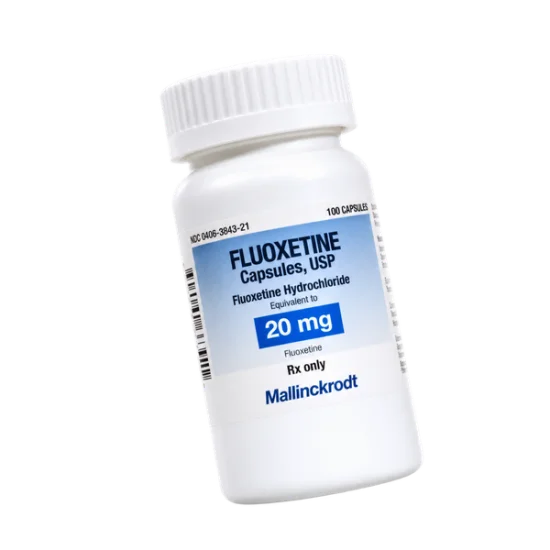
  • Dose: The marked product is a 20 mg fluoxetine hydrochloride capsule; the appropriate dose differs between strengths and users.
  • Frequency: Take the prescribed number of capsules at the prescribed frequency; no single schedule suits everyone.
  • Timing: Take by mouth; whether to take it before or after meals and the time of day depend on the prescribed instructions.
  • Duration: Continue for the duration prescribed by a healthcare professional.
  • Route: Swallow the capsule orally with water.

When not to use it

Fluoxetine strongly inhibits CYP2D6, a liver enzyme involved in the metabolism of several medicines. This can raise concentrations of some antipsychotics, antiarrhythmics, beta blockers, and other medicines processed through CYP2D6.

Combining fluoxetine with MAOIs is contraindicated because of the risk of severe serotonin toxicity. Caution also applies to tramadol, linezolid, lithium, triptans, St John’s wort, other SSRIs, SNRIs, and medicines that affect platelet function.

Non-steroidal anti-inflammatory drugs and anticoagulants can increase bleeding risk when combined with an SSRI. Alcohol may worsen sleep disruption, impaired judgement, dizziness, or depressive symptoms, so avoiding it is the safer clinical choice during treatment.

When this is not for you

Fluoxetine is not for you if

  • You are taking an MAOI, including phenelzine, tranylcypromine, or selegiline, unless a prescriber has planned the required washout period.
  • You have had a serious allergic reaction to fluoxetine or one of its capsule components.
  • You have untreated bipolar mania or a current manic episode.
  • You have a condition that substantially increases seizure risk without specialist assessment.
  • You are taking medicines with a serious risk of interacting through serotonin toxicity or cardiac effects.
  • You have recently taken another long-acting serotonergic antidepressant and have not completed the clinically required transition period.
Tell the prescriber about tramadol, migraine medicines, lithium, anticoagulants, herbal products, and medicines for heart rhythm before starting fluoxetine. The interaction may come from a medicine used only occasionally.

Unwanted effects

Common adverse effects include nausea, loose stools, headache, dry mouth, tremor, sweating, nervousness, fatigue, insomnia, and reduced appetite. Many are most noticeable during the first one to two weeks and may lessen as the body adapts.

Sexual dysfunction can include reduced libido, delayed orgasm, or difficulty reaching orgasm. These symptoms may continue during treatment and, in some patients, after the medicine is discontinued. Post-SSRI sexual dysfunction (PSSD) is uncommon but clinically recognised as a possible persistent problem.

Fluoxetine can increase agitation or suicidal thinking in some younger patients, especially after starting treatment or changing the dose. The risk requires close observation in children, adolescents, and young adults. New impulsivity, severe restlessness, marked mood change, or thoughts of self-harm require urgent medical attention.

Rare but serious reactions include serotonin syndrome, seizures, severe allergic reactions, abnormal bleeding, mania, and hyponatraemia. Serotonin syndrome may involve agitation, confusion, fever, sweating, diarrhoea, muscle rigidity, tremor, or rapid changes in heart rate.

A practical detail is easy to miss: insomnia may respond better to changing the dosing time than to stopping treatment immediately. Persistent symptoms still require a prescribing review.

Avoid driving until you know how fluoxetine affects concentration and alertness. Early restlessness, dizziness, or sleep loss can make routine tasks more difficult even when the medicine is otherwise tolerated.

How it affects the body

Fluoxetine blocks the serotonin transporter on the presynaptic nerve cell. This transporter normally removes serotonin from the synaptic cleft, the small space between two nerve cells. By slowing that removal, fluoxetine increases serotonin signalling in relevant brain circuits.

Serotonin affects mood, fear responses, sleep, appetite, pain processing, and impulse control. The drug does not simply correct a single measurable “serotonin imbalance”. Its clinical effect develops through gradual changes in receptor sensitivity and neural network function.

The SSRI mechanism explains both its benefits and limitations. Fluoxetine can reduce depressive and obsessive symptoms without the dependence pattern associated with benzodiazepines, yet it may cause sexual dysfunction, gastrointestinal symptoms, or activation.

Common mistakes

  • Taking capsules at irregular times and then compensating with an extra dose.
  • Stopping after a few days because mood has not improved.
  • Taking the capsule late at night despite activation or insomnia.
  • Adding St John’s wort, tramadol, or a migraine medicine without checking for serotonergic interaction.
  • Starting an MAOI too soon after stopping fluoxetine.
  • Assuming nausea means the treatment must be abandoned immediately, when a prescriber could adjust timing or review the dose.
  • Failing to report new agitation, impulsivity, hypomania, or suicidal thoughts.
  • Sharing capsules with someone who has similar symptoms.

One subtle error involves switching antidepressants too quickly. Fluoxetine can remain pharmacologically active for weeks, so a standard SSRI-to-SSRI timetable may not apply.

Keep a simple daily record of sleep, anxiety, appetite, mood, and adverse effects during the first weeks. Patterns are more useful to a prescriber than remembering only the worst day.

Comparison

Fluoxetine belongs to the SSRI group. Other antidepressant approaches include different SSRIs, serotonin-norepinephrine reuptake inhibitors (SNRIs), noradrenergic and specific serotonergic antidepressants (NASSAs), and atypical antidepressants.

Treatment approach Pharmacological profile Practical distinction
Fluoxetine SSRI with a long-lived active metabolite Useful when a gradual decline after missed doses is helpful; activation and insomnia can occur
Other SSRIs, such as sertraline or citalopram Primarily increase serotonin signalling Choice depends on symptoms, interactions, cardiac risk, sexual effects, and previous response
SNRIs, NASSAs, or atypical antidepressants Affect noradrenaline, serotonin, histamine, or other pathways May suit different symptom patterns, but each has its own adverse-effect and interaction profile

Fluoxetine’s long half-life is a practical advantage for some patients. It also creates a limitation: side effects can persist after stopping, and interactions may remain clinically relevant for several weeks.

Sertraline is often considered when anxiety or cardiovascular considerations influence selection. Citalopram requires attention to dose-related QT interval prolongation. SNRIs may help when pain symptoms accompany depression, while NASSAs can be more sedating and may increase appetite.

The choice of antidepressant is not determined by class alone. Previous response, family history, sleep pattern, sexual symptoms, seizure risk, bipolar history, liver function, and concurrent medicines all influence prescribing.

What doctors say

In clinical practice, prescribers usually set expectations before the first capsule: sleep, appetite, anxiety, and energy may change at different speeds, and mood improvement is rarely immediate.

Doctors also look for a history of bipolar disorder before prescribing an antidepressant. A previous episode of unusually high energy, very little need for sleep, impulsive spending, or rapid speech may indicate that an SSRI requires specialist assessment rather than routine escalation.

Treatment response is judged across several weeks, not by one difficult day. Persistent nausea, severe agitation, emotional flattening, or sexual dysfunction may justify a dose review or a change in treatment.

A prescriber may continue fluoxetine after symptoms improve to reduce relapse risk. Stopping suddenly is not always necessary with fluoxetine because of its long half-life, yet planned discontinuation remains preferable to unsupervised changes.

Common questions

Does Fluoxetine cause sexual dysfunction?

Yes, reduced libido, delayed orgasm, or difficulty reaching orgasm can occur with fluoxetine. Symptoms may emerge after treatment starts and can continue while the medicine is taken. EMA safety information reviewed in 2024 recognises sexual dysfunction as a possible SSRI adverse effect. Report persistent symptoms rather than stopping abruptly, because a prescriber may review the dose or treatment choice.

What is the best time of day to take Fluoxetine?

Morning is often suitable when fluoxetine causes alertness, restlessness, or insomnia. Some patients feel tired instead, making another scheduled time more practical. HPRA medicine-safety information current before 2026 supports consistent daily administration according to the prescribed regimen. Changing the time should not involve taking two capsules close together.

Can Fluoxetine be used during pregnancy or breastfeeding?

Fluoxetine may be continued during pregnancy when treating maternal depression provides greater expected benefit than changing treatment. Newborn adaptation symptoms and breastfeeding exposure require consideration, especially near delivery. NICE guidance updated in 2022 recommends an individualised discussion of maternal illness, previous response, pregnancy stage, and neonatal factors. Infants receiving breast milk should be observed for feeding or sleep changes.

Which symptoms require stopping Fluoxetine and seeking urgent medical help?

Urgent assessment is needed for suicidal thoughts, severe agitation, mania, seizure, facial or throat swelling, difficulty breathing, fainting, or signs of serotonin syndrome. Serotonin syndrome may include fever, confusion, sweating, diarrhoea, tremor, and muscle stiffness. WHO pharmacovigilance guidance published in 2002 supports prompt reporting and assessment of suspected serious adverse reactions. Do not take another dose while seeking urgent advice if a severe reaction is suspected.

Can people under 18 use Fluoxetine?

Fluoxetine may be prescribed to some children or adolescents for specific conditions, with close monitoring. The treatment decision considers diagnosis, severity, family history, suicide risk, and previous psychological or drug treatment. NICE guidance for depression in children and young people, reviewed in 2024, emphasises monitoring for suicidal thinking and behavioural change. A capsule dose intended for an adult should not be given to a child without a paediatric prescription.

Do you offer anonymous delivery?

Your order will be securely packed and shipped within 24 hours. This is exactly what your package will look like (images of an actual item sent). It has the size and look of a regular private letter (24x11x0.7 cm) and its contents cannot be seen.

Sources

  1. U.S. Food and Drug Administration (FDA) (2023). Prozac (fluoxetine hydrochloride) Prescribing Information

How Buyers Rate Fluoxetine

Based on 3 reviews

Jonathan P., 55 Verified
Rating: 3 out of 5

I used the 20 mg capsule for depression. The first week brought nausea and restless sleep, so I took it earlier in the morning. By the fifth week my concentration and interest in normal activities had improved, although sexual side effects remained frustrating.

By the fifth week 3 Nov 2026
Oliver, 58 Verified
Rating: 3 out of 5

Fluoxetine helped my mood after about a month, and missing one morning did not cause a noticeable change. I did feel more anxious at the beginning and needed a review because the initial dose timing made sleep difficult.

About a month 7 Oct 2026
Daniel T., 61 Verified
Rating: 3 out of 5

I took it for several weeks and found the appetite reduction useful, but the benefit for low mood was limited. My doctor changed the plan rather than increasing it repeatedly, which suited me better.

Several weeks 26 Oct 2026
Get our free app Shop faster and track your orders Install