I took it in the morning for three months. The first week brought nausea and a strange wired feeling, but that settled. By the sixth week I was getting through ordinary errands without feeling overwhelmed.
3 months 8 Oct 2026
Lexapro
Depression and generalised anxiety disorder can affect sleep, concentration, energy, and daily functioning. Lexapro contains escitalopram, a selective serotonin reuptake inhibitor (SSRI) for adults…
Depression and generalised anxiety disorder can affect sleep, concentration, energy, and daily functioning. Lexapro contains escitalopram, a selective serotonin reuptake inhibitor (SSRI) for adults and adolescents when clinically appropriate, which raises serotonin signalling in the brain to ease depressive and anxiety symptoms over time.
Overview
Lexapro is an antidepressant tablet containing escitalopram. The amount per intake is set individually for each person rather than being one fixed number. It belongs to the SSRI class, a group of medicines used in the treatment of depression and anxiety disorders.
Doctors prescribe escitalopram for major depressive disorder and generalised anxiety disorder when symptoms are persistent, impairing, or both. Improvement is gradual. The first change may be better sleep, less physical tension, or fewer repetitive worries before mood and interest start to lift.
Primary medical indications
Major depressive disorder involves more than a difficult week. Symptoms may include low mood, loss of interest, altered sleep or appetite, slowed thinking, guilt, fatigue, and thoughts of self-harm. Generalised anxiety disorder commonly causes hard-to-control worry alongside restlessness, muscle tension, irritability, or poor sleep.
Escitalopram works best when taken consistently rather than only on difficult days. The WHO identifies depression as a major cause of disability, while evidence-based treatment may include antidepressant therapy, psychological therapy, or both, depending on symptom severity and personal history [1].
Formulation
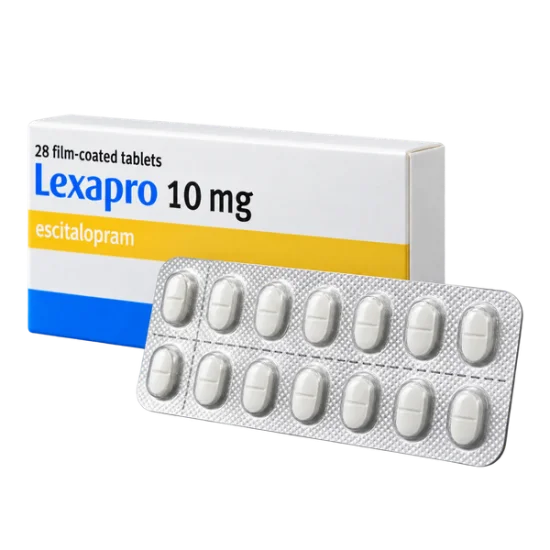
This Lexapro presentation contains 28 film-coated tablets, each containing escitalopram. The amount taken at each intake is set individually for each person rather than being one fixed amount. Film coating makes the tablet easier to swallow and protects the tablet surface during handling.
The tablet should be swallowed whole unless a prescriber has specifically advised tablet splitting. Crushing or chewing changes the intended administration and can leave an unpleasant taste, even though this is not a modified-release formulation.
Therapeutic indications
Doctors prescribe escitalopram for major depressive disorder and generalised anxiety disorder when symptoms are persistent, impairing, or both.
Directions for use
Lexapro is supplied as film-coated tablets. The amount per intake is set individually for each person rather than being one fixed number. Escitalopram is taken by mouth once daily, at a consistent time, with or without food.
For adults, the amount taken is determined individually. Some people need a lower starting amount, while a prescriber may adjust the regimen after assessing response and tolerability. The Irish HPRA-approved escitalopram product information sets dose limits and adjustments according to indication, age, liver function, and interacting medicines [2].
- Take the tablet once a day at the same time.
- Swallow it with water.
- Take it with food if nausea occurs.
- Morning dosing may suit people who feel activated or have insomnia.
- Evening dosing may suit people who feel sleepy after their dose.
- Do not stop suddenly after regular use unless a prescriber has planned a reduction.
Do not double a missed dose. Take it when remembered unless the next planned dose is close; then resume the normal schedule.
When not to use it
Lexapro is not for you if you are taking a monoamine oxidase inhibitor, known as an MAOI, or have taken one within the required washout period. Combining an MAOI with an SSRI can cause dangerous serotonin toxicity.
It is also unsuitable for people with known hypersensitivity to escitalopram or its ingredients. A clinician must assess use in people with a history of bipolar disorder, seizures, glaucoma, heart-rhythm problems, low sodium, liver impairment, or previous antidepressant-induced mania.
Key interactions include:
- MAOIs: contraindicated because of serotonin syndrome risk.
- Other serotonergic medicines: triptans, tramadol, linezolid, lithium, some migraine treatments, and St John’s wort can increase serotonin toxicity risk.
- NSAIDs and anticoagulants: ibuprofen, naproxen, aspirin, warfarin, and similar medicines may increase bleeding risk.
- Medicines that affect heart rhythm: combinations can increase QT-interval risk in susceptible people.
When this is not for you
Alcohol may worsen dizziness, impaired judgement, sleep problems, and low mood.
Pregnancy, breastfeeding, and plans to conceive require a personalised benefit-risk discussion. Stopping an established antidepressant abruptly during pregnancy can also carry risks, so decisions should be individualised.
Unwanted effects
Nausea, headache, tiredness, sleep disturbance, increased sweating, dry mouth, and changes in sexual function are among the better-known SSRI effects. They are often most noticeable during the first one to two weeks.
Sexual side effects deserve a direct conversation. Reduced libido, delayed orgasm, or erectile difficulty can persist even when mood improves. They are treatable concerns, not something a person should feel obliged to silently tolerate.
| Common or early effects | Serious symptoms needing urgent assessment |
|---|---|
| Nausea, headache, tiredness, dry mouth, sweating | Severe agitation, fever, tremor, confusion, rigid muscles |
| Insomnia or sleepiness, diarrhoea, reduced libido | Fainting, a fast irregular heartbeat, seizure |
| Temporary anxiety or restlessness | New suicidal thoughts, self-harm thoughts, facial swelling or breathing difficulty |
Serotonin syndrome is uncommon, though it can occur when several serotonin-raising medicines or substances are combined. The FDA prescribing information also highlights the need to monitor for clinical worsening or suicidal thoughts, especially early in treatment and after dose changes [3].
How it affects the body
Escitalopram selectively blocks the serotonin transporter. This transporter normally returns serotonin from the gap between nerve cells back into the releasing cell. When reuptake is reduced, serotonin remains available for longer at the nerve connection.
The brain adapts gradually. Changes in serotonin signalling occur quickly, while the downstream adjustment of nerve circuits involved in mood and threat processing takes longer.
Serotonin regulation
SSRIs act mainly on serotonin rather than directly increasing dopamine or noradrenaline. This selectivity helps distinguish escitalopram from older tricyclic antidepressants, which affect several receptor systems and can cause more anticholinergic effects such as constipation, dry mouth, blurred vision, and marked drowsiness.
Lexapro may reduce anxiety and depressive symptoms, but it does not create an artificial high or change personality. A real limitation is that some people feel temporarily more restless, nauseated, or sleep-disrupted before the therapeutic benefit becomes clear.
Common mistakes
Several avoidable patterns make Lexapro harder to assess.
- Stopping after a few days because nausea or restlessness appeared before benefit.
- Taking tablets at random times, then attributing sleep changes to the medicine alone.
- Doubling a dose after forgetting one.
- Adding St John’s wort, 5-HTP, or tramadol without discussing the interaction risk.
- Stopping suddenly after months of treatment and mistaking discontinuation symptoms for a relapse.
- Ignoring new agitation, impulsivity, or suicidal thoughts during the first weeks.
Discontinuation symptoms can include dizziness, vivid dreams, nausea, electric-shock sensations, anxiety, and irritability. They do not mean addiction; they reflect the nervous system adjusting to a rapid fall in SSRI exposure.
Comparison
Escitalopram has a defined active substance, a standardised tablet dose, and clinical evidence for diagnosed depressive and anxiety disorders. Dietary supplements marketed for mood support, including 5-HTP, are not interchangeable with prescription SSRI treatment.
| Approach | Main feature | Key limitation |
|---|---|---|
| Escitalopram in Lexapro | SSRI treatment for depression and anxiety disorders | May cause nausea, sleep changes, and sexual side effects |
| 5-HTP dietary supplement | Serotonin precursor used for mood support | Does not have the same evidence base for major depression or generalised anxiety disorder |
| Psychological therapy | Builds coping and behavioural skills | Requires time, engagement, and access to structured sessions |
5-HTP can increase serotonin activity. It should not be added to Lexapro without prescriber approval because the combination may raise the risk of serotonin toxicity. NICE guidance supports SSRIs and psychological therapies as established treatment options for depression, with the choice guided by symptom severity, previous response, and patient preference [4].
What doctors say
In clinical practice, doctors often explain that Lexapro is not judged after a handful of tablets. Early side effects and early improvement may occur together, which can be confusing. A person who feels mildly nauseated but sleeps more steadily and worries less may still be moving in the right direction.
Prescribers also look beyond mood alone. Sleep, appetite, panic symptoms, agitation, sexual function, alcohol use, other medicines, and suicidal thoughts all influence whether escitalopram is a good fit.
The dose should not be increased simply because the first few days felt difficult. A measured review after adequate time at a tolerable dose gives a more useful answer.
Common questions
Can older adults use Lexapro?
Older adults can use escitalopram, though dosing often starts more cautiously because the body may clear medicines more slowly and sensitivity to side effects can be greater. Falls, low sodium, dizziness, heart-rhythm history, and concurrent medicines deserve attention. The HPRA product information for escitalopram includes specific dose considerations for older people [5]. The HPRA updated relevant escitalopram product information in 2024. A medicine review is valuable when several regular medicines are already being used.
Can Lexapro tablets be split, crushed, or chewed?
Lexapro tablets should usually be swallowed whole with water. Do not crush or chew them, since this can make administration unpleasant and may affect accurate dosing. Tablet splitting should only be done when the tablet design and prescribed regimen allow it. The FDA Lexapro prescribing information was current in 2023. A prescriber can choose a more suitable strength or strategy if swallowing or dose adjustment is difficult.
Can people with bipolar disorder use Lexapro?
A history of bipolar disorder requires careful assessment before Lexapro is started. An SSRI can trigger mania or hypomania in a susceptible person, causing reduced need for sleep, racing thoughts, unusually high energy, impulsive spending, or risky behaviour. This risk was recognised in regulatory prescribing information before 2026 and remains clinically relevant. The FDA prescribing information for Lexapro describes this risk. Escitalopram should not be started for depressive symptoms without considering past manic or hypomanic episodes.
What should be discussed before starting treatment?
Before starting Lexapro, discuss all prescription medicines, non-prescription pain medicines, herbal products, alcohol intake, previous antidepressant response, seizure history, heart conditions, glaucoma, pregnancy plans, and any personal or family history of bipolar disorder. Mention past episodes of low sodium or unusual bleeding. The EMA guideline published in 2013 advises careful clinical assessment when selecting an SSRI. National regulators also advise prescribers to assess interaction risks and individual vulnerability. New suicidal thoughts, marked agitation, or signs of mania need prompt medical contact after treatment begins.
How long should Lexapro treatment continue?
A course often continues for months after symptoms improve because stopping immediately after feeling better can increase relapse risk. Long-term use can be appropriate when depression or anxiety has recurred, been severe, or returned after earlier treatment ended. Treatment length should be reviewed periodically with attention to benefits, adverse effects, and whether a gradual reduction is appropriate. WHO guidance published in 2023 supports continuing effective care according to symptom pattern and individual needs rather than applying one fixed duration to everyone.
Do you offer anonymous delivery?
Your order will be securely packed and shipped within 24 hours. This is exactly what your package will look like (images of an actual item sent). It has the size and look of a regular private letter (24x11x0.7 cm) and its contents cannot be seen.
Comparison
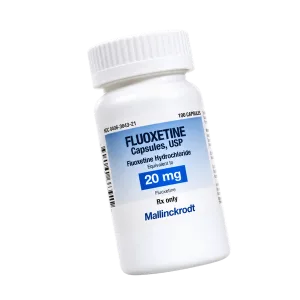
Fluoxetine
Lexapro Current
Sources
- World Health Organization (2023). Depressive disorder (depression).
- Health Products Regulatory Authority (2024). Summary of Product Characteristics (SmPC) — escitalopram.
- U.S. Food and Drug Administration (2023). Lexapro (escitalopram) prescribing information.
- National Institute for Health and Care Excellence (2022). Depression in adults: treatment and management.
- European Medicines Agency (2013). Guideline on clinical investigation of medicinal products in the treatment of depression.
How Buyers Rate Lexapro
Based on 5 reviews
My stomach was less tied in knots after about a month, and I slept through more nights. I did have delayed orgasm, which was frustrating, so my prescriber and I discussed options rather than pretending it was nothing.
1 month 17 Oct 2026I felt sleepy when I took it before work, so I moved it to the evening after getting advice. It did not solve every problem, but I stopped cancelling plans as often after two months.
2 months 23 Oct 2026The nausea eased, but the sweating and reduced libido did not improve enough for me. I tapered off with a plan instead of stopping suddenly, which made the change manageable.
28 Oct 2026The first two weeks were uncomfortable because my anxiety briefly felt louder. I stayed in contact with my GP and by week five the constant background worry had eased. Missing doses on weekends made me feel off, so I started using a phone reminder.
5 weeks 3 Nov 2026