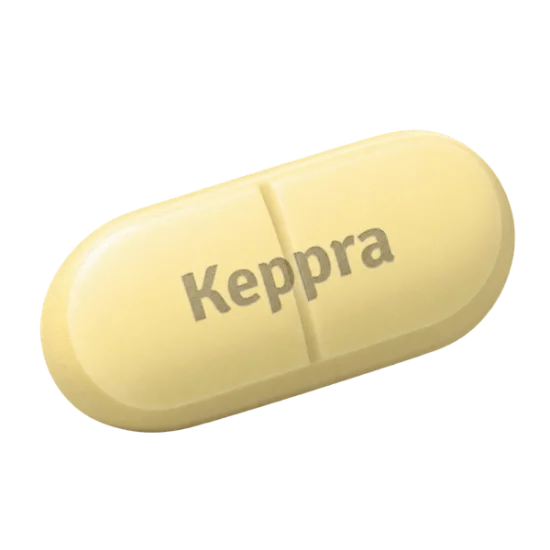
I had been taking Keppra for several weeks before the seizures became less frequent. The first fortnight brought more tiredness than I expected, so I stopped driving until I knew how I reacted. Keeping the same morning and evening times helped me avoid missed doses.
Several weeks 8 Oct 2026
Keppra
Epilepsy treatment aims to reduce recurrent seizures and protect daily functioning. Keppra contains levetiracetam, an anticonvulsant used in adults and children for selected seizure disorders.
Overview
An anticonvulsant is a medicine that lowers abnormal electrical activity in the brain. Keppra helps control seizures; it does not remove the underlying tendency to epilepsy or guarantee that every seizure will stop.
Formulation
Levetiracetam Composition and Anticonvulsant Classification
The active ingredient in Keppra is levetiracetam. It belongs to a newer group of antiseizure medicines and is available as tablets, with oral solution formulations also used when swallowing tablets is unsuitable.
Levetiracetam is used in seizure disorders such as focal seizures, myoclonic seizures associated with juvenile myoclonic epilepsy, and primary generalised tonic-clonic seizures when the clinical indication fits the patient’s diagnosis. The European Medicines Agency describes its use in adults, adolescents, children, and infants according to the specific seizure type and age group [1].
Therapeutic indications
Keppra contains levetiracetam, an anticonvulsant used in adults and children for selected seizure disorders. It may be prescribed alone or as adjunct treatment with another antiseizure medicine, depending on seizure type and specialist assessment.
Epilepsy and Seizure Control
Seizure control depends on the diagnosis, treatment schedule, kidney function, age, other medicines, and adherence. A person may still experience seizures after starting Keppra, especially during dose adjustment or when another trigger is present.
Keep an individual seizure action plan. Urgent medical help is needed if a seizure lasts five minutes or longer, if repeated seizures occur without recovery, or if breathing does not return normally after the event.
Adjunct Treatment and Juvenile Myoclonic Epilepsy
Keppra can be used as an adjunct in seizures when one medicine does not provide sufficient control or when the specialist considers combined treatment appropriate. Juvenile myoclonic epilepsy is one condition in which levetiracetam may be considered, but treatment depends on the confirmed syndrome, age, seizure pattern, and reproductive considerations.
Do not change antiseizure treatment because seizures have been absent for a period of time. Seizure-free periods can reflect successful treatment rather than resolution of epilepsy.
Directions for use
The amount of Keppra per intake is set individually rather than using one fixed dose for every person. The prescriber considers seizure type, age, body weight in children, kidney function, other medicines, and response to treatment.
Oral Solution and Tablet Administration
Keppra tablets should be swallowed as directed and taken at consistent times each day. An oral solution may be selected for people who cannot swallow tablets, but the liquid formulation and tablets must not be treated as interchangeable without confirming the prescribed strength and volume.
- Take doses at the same times each day.
- Swallow tablets with water unless the prescriber gives different instructions.
- Measure oral solution with an oral syringe or the supplied measuring device.
- Do not use a household teaspoon for liquid doses.
- Do not alter the schedule when changing between tablets and oral solution.
The Irish product information and HPRA medicine records provide the regulatory dosing framework for levetiracetam formulations [2].
Dose Adjustment and Kidney Function
Levetiracetam is cleared mainly through the kidneys. Reduced kidney function can increase exposure to the medicine, so renal assessment may be needed before treatment and during follow-up.
Older adults are more likely to have reduced renal function even when they feel well. A clinician may review kidney blood tests before changing the dose. Dose changes should be gradual and prescribed rather than calculated independently.
Missed Doses and Discontinuation
Take a missed dose when remembered unless it is nearly time for the next scheduled dose. If the next dose is due soon, skip the missed dose and resume the usual schedule. Never double the next dose without specific instructions.
Stopping Keppra suddenly can increase seizure risk. A prescriber normally reduces treatment gradually when discontinuation is appropriate, with the taper depending on the current regimen and clinical circumstances.
When this is not for you
Keppra requires extra care in people with kidney disease, a history of depression or suicidal thoughts, previous psychiatric symptoms, severe medication allergies, or frequent falls. Dizziness and sleepiness can increase injury risk.
Pregnancy Planning and Pregnancy
Pregnancy planning should be discussed early with a neurologist or obstetric clinician. Uncontrolled seizures can also harm the pregnant person and developing baby, so stopping treatment abruptly is not a safe response to pregnancy.
The benefits and risks of levetiracetam are assessed individually. Folic acid planning is also a clinician-guided topic before conception and during pregnancy; the appropriate plan depends on the person’s medical history and other treatment.
Breastfeeding Considerations
Levetiracetam passes into breast milk. Some infants may become sleepy, irritable, or feed less effectively, so infant behaviour and feeding should be observed when breastfeeding continues.
Do not stop breastfeeding or Keppra suddenly without clinical advice. A clinician can balance seizure control, maternal wellbeing, infant observations, and the need for ongoing treatment.
Psychiatric History and Safety Precautions
Tell the prescriber about previous depression, psychosis, self-harm, suicidal thoughts, or severe anger. Keppra may not be for you if behavioural symptoms have been significant; a clinician should assess whether closer monitoring or another treatment is appropriate.
Falls, dizziness, and sleepiness deserve practical planning. Rising slowly from bed, avoiding ladders during dose changes, and arranging help with bathing may reduce injury risk for people who feel unsteady.
Unwanted effects
Common side effects of levetiracetam include sleepiness, dizziness, headache, fatigue, irritability, agitation, and reduced appetite. These effects may be more noticeable during the first part of treatment or after a dose increase.
Frequent Neurological and Physical Effects
Sleepiness and dizziness can affect driving, cycling, working at height, and operating machinery. Avoid these activities until you know how Keppra affects alertness and coordination.
Fatigue may be mistaken for poor sleep or the effects of epilepsy itself. Keeping a short record of the timing of tiredness can help identify whether symptoms follow a morning or evening dose.
| Symptom pattern | Practical response |
|---|---|
| Sleepiness, dizziness, or slowed reactions | Avoid driving and machinery until alertness is reliable; report persistent symptoms |
| Headache or fatigue | Record timing, hydration, sleep, and dose changes; seek review if severe or persistent |
| Reduced appetite or nausea | Maintain fluids and regular meals; report weight loss or ongoing difficulty eating |
Mood and Behaviour Changes
Irritability, agitation, anxiety, low mood, aggression, or unusual behaviour can occur even when seizure control improves. Family members may notice a change before the person taking Keppra recognises it.
Suicidal thoughts, severe depression, hallucinations, or marked aggression require urgent clinical attention. Do not wait for the next routine review if behaviour changes are sudden or severe.
Serious Reactions Requiring Medical Attention
Seek urgent help for facial swelling, breathing difficulty, widespread blistering rash, skin peeling, severe rash with fever, or profound confusion. These symptoms can indicate a serious hypersensitivity or skin reaction.
Severe weakness, persistent vomiting, unusual bruising, or a major change in consciousness also warrants prompt medical assessment. Do not restart or increase Keppra after a suspected serious reaction without medical direction.

How it affects the body
Levetiracetam binds to synaptic vesicle protein 2A, known as SV2A, in nerve cells. SV2A is a protein involved in the release of chemical signals from one nerve cell to another. By influencing this process, levetiracetam helps reduce excessive neuronal signalling linked with seizures.
The precise clinical mechanism is not fully understood. Keppra does not repair damaged brain tissue or permanently remove the cause of epilepsy.
Synaptic Vesicle Protein 2A Binding
Most antiseizure medicines work by modifying ion channels, neurotransmitter systems, or enzyme activity. Levetiracetam’s prominent interaction with SV2A gives it a different pharmacological profile from many older anticonvulsants.
A useful simplification is to think of SV2A as part of the nerve cell’s release system. Levetiracetam helps moderate the release of excitatory signals when neuronal activity becomes excessively synchronised.
Seizure Threshold and Clinical Effect
The clinical result is a lower tendency for abnormal electrical activity to spread through brain networks. This can reduce seizure frequency, though the response varies between individuals and seizure types.
Improvement may be seen before the full treatment plan has been stabilised. A single seizure or a short period without seizures does not establish whether the long-term regimen is suitable.
Common mistakes
Several practical errors can reduce seizure protection or increase adverse effects:
- Stopping Keppra suddenly because seizures have been absent.
- Doubling the next dose after forgetting one.
- Using a kitchen spoon for oral solution.
- Assuming levetiracetam has no interactions because it has fewer than some older medicines.
- Treating a change in tablet appearance as proof that the medicine is different or ineffective.
- Failing to report irritability because seizure control has improved.
- Crushing a modified-release tablet.
- Forgetting to mention non-prescription sleep aids, antihistamines, or supplements.
- Driving before knowing whether dizziness or sleepiness occurs.
- Treating one seizure-free week as proof that treatment can end.
A family member may notice irritability before the patient does. Liquid dosing errors can be small at each intake yet significant across several days. These details are worth reporting without blame.
Comparison
Alternatives and Generic Forms of Keppra
Generic levetiracetam products contain the same active ingredient as Keppra, but tablets may differ in excipients, appearance, strength, and release characteristics. Modified-release products are not automatically interchangeable with immediate-release tablets.
| Formulation category | Main consideration | Switching point |
|---|---|---|
| Immediate-release levetiracetam | Taken according to the prescribed daily schedule | Confirm strength and dosing frequency |
| Modified-release levetiracetam | Release pattern changes how the dose is delivered | Do not substitute without prescriber confirmation |
| Oral solution | Requires accurate volume measurement | Confirm concentration and measuring device |
A change in manufacturer or formulation should be recorded. If seizures, dizziness, sleepiness, or mood symptoms change after a switch, contact the prescriber promptly.
Do not crush or chew a modified-release tablet unless its product information specifically permits this. Altering the tablet can change how levetiracetam is released.
Keppra Compared with Other Antiepileptic Medicines
Levetiracetam is one option among several anticonvulsants. Selection depends on seizure type, kidney function, age, pregnancy plans, psychiatric history, other medicines, and the person’s previous response.
| Treatment category | Potential advantage | Main limitation |
|---|---|---|
| Levetiracetam | Relatively low enzyme-related interaction burden | Irritability, agitation, and mood changes can limit use |
| Enzyme-inducing antiseizure medicines | Useful for selected seizure patterns and clinical circumstances | More interaction management may be required |
| Other non-enzyme-inducing anticonvulsants | May suit particular seizure syndromes or comorbidities | Each has its own adverse effects and monitoring needs |
Renal clearance makes kidney function relevant to levetiracetam dosing. Enzyme-inducing antiseizure medicines may create more complex interactions with hormonal contraception and other treatments, although the exact issue depends on the individual medicine.
There is no universal winner. A medicine that controls seizures well may still be unsuitable because of mood effects, sedation, pregnancy considerations, or interaction burden.
What doctors say
In clinical practice, doctors often focus first on seizure classification rather than choosing a medicine by brand name. The same anticonvulsant may be appropriate for one seizure syndrome and unsuitable for another. A neurologist will usually ask about missed doses, sleep deprivation, alcohol, illness, menstrual patterns, mood, and changes in other medicines. A seizure diary can show whether events cluster after a missed dose, a formulation change, or a disrupted sleep pattern. Prescribers also review kidney function when the clinical situation changes. This is relevant after dehydration, hospital admission, a new kidney diagnosis, or substantial weight and health changes.
The World Health Organization emphasises continuity of antiseizure treatment and access to appropriate care for people with epilepsy [3]. Keppra should be judged by seizure control and tolerability together, not by seizure frequency alone.
Common questions
What happens when Keppra is stopped, and does it need to be tapered?
Stopping Keppra suddenly can increase the risk of breakthrough or prolonged seizures. The EMA product information reviewed in 2025 advises gradual withdrawal when discontinuation is clinically appropriate, with the schedule selected by the prescriber. A person should not reduce the dose independently because the safest taper depends on seizure history and the rest of the treatment plan.
Which concrete condition rules Keppra out?
A previous serious allergic reaction to levetiracetam or a Keppra formulation is a clear reason for urgent medical review before further use. HPRA safety information current in 2025 supports treating hypersensitivity symptoms such as facial swelling, breathing difficulty, or a severe blistering rash as medical emergencies. Mild nausea alone does not establish an allergy, but a spreading rash or swelling should not be ignored.
How soon can seizure-control effects become noticeable?
Some people notice fewer seizures after treatment begins, while others require gradual dose adjustment or an additional antiseizure medicine. NHS epilepsy guidance reviewed in 2025 explains that response cannot be judged reliably from one dose or one seizure-free day. Continue the prescribed schedule and record seizures, missed doses, sleep disruption, and new symptoms for review.
Can Keppra be used by people under 18?
Keppra is used in children and adolescents for specific seizure types, with dosing based on age, body weight, kidney function, and formulation. The EMA paediatric information reviewed in 2025 sets age-specific indications and stresses accurate liquid measurement when an oral solution is prescribed. Behavioural changes, appetite changes, sleepiness, and school difficulties should be reported because children may describe them differently from adults.
What should happen if the expected result does not come?
Persistent seizures, new seizure types, or unacceptable side effects require a treatment review rather than an unsupervised dose increase. NICE epilepsy guidance reviewed in 2025 supports reassessing the diagnosis, adherence, seizure triggers, formulation, interactions, and the need for specialist input. Seek urgent help for a seizure lasting five minutes or longer, repeated seizures without recovery, or breathing problems.
Do you offer anonymous delivery?
Your order will be securely packed and shipped within 24 hours. This is exactly what your package will look like (images of an actual item sent). It has the size and look of a regular private letter (24x11x0.7 cm) and its contents cannot be seen.
Comparison
Keppra Current
Lamictal
Sources
- European Medicines Agency (2025). Keppra — Summary of Product Characteristics and product information.
- Health Products Regulatory Authority (2025). Levetiracetam — national medicines information and safety information.
- World Health Organization (2023). Epilepsy: fact sheet and public health information.
How Buyers Rate Keppra
Based on 5 reviews
My seizures improved, but my partner noticed that I was unusually irritable after the dose increase. I had not connected it with Keppra because I felt physically well. The neurologist reviewed the treatment rather than telling me to simply tolerate it.
17 Oct 2026I missed a dose during a weekend away and nearly doubled the next one. The pharmacist advised me not to do that and helped me understand when to skip a missed dose. Since then, I have kept a written schedule with my medicines.
27 Oct 2026Keppra reduced the seizure episodes, although dizziness made me unsteady during the first month. A kidney blood test was arranged because of my age and other health problems. The dose was reviewed, and the dizziness became easier to manage.
The first month 1 Nov 2026The tablets controlled the seizures reasonably well, but I had persistent sleepiness and reduced appetite. I also realised that an occasional sedating medicine was adding to the problem. The treatment plan was reviewed instead of stopping Keppra suddenly.
5 Nov 2026