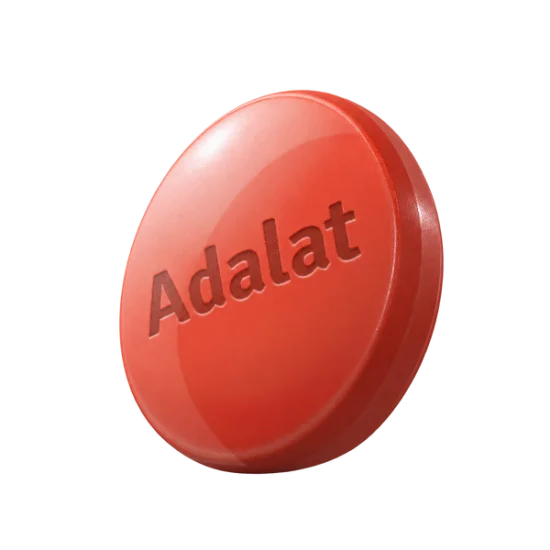
I started Adalat for high blood pressure and noticed flushing during the first week. It eased after that, and my home readings became steadier. The ankle swelling was annoying after long days standing, so my prescriber reviewed the dose.
24 Oct 2026
Adalat
Patients with hypertension or stable angina may be prescribed Adalat to improve blood-flow control. Adalat contains nifedipine, a calcium-channel blocker that relaxes arterial muscle, lowers vascular…
Patients with hypertension or stable angina may be prescribed Adalat to improve blood-flow control. Adalat contains nifedipine, a calcium-channel blocker that relaxes arterial muscle, lowers vascular resistance, and reduces the heart’s workload.
Overview
Adalat contains nifedipine, a calcium-channel blocker that relaxes arterial muscle, lowers vascular resistance, and reduces the heart’s workload.
Nifedipine Composition and Drug Class
The active ingredient in Adalat is nifedipine. Generic Adalat products also contain nifedipine, although the tablet design, release mechanism, strength, excipients, and approved uses can differ between products.
Formulation
The active ingredient in Adalat is nifedipine. Generic Adalat products also contain nifedipine, although the tablet design, release mechanism, strength, excipients, and approved uses can differ between products.
Adalat tablets are taken orally. Modified-release versions release nifedipine gradually rather than delivering the full amount immediately. This distinction matters because immediate-release and prolonged-release products cannot be switched casually.
Therapeutic indications
Adalat contains nifedipine, which belongs to the calcium-channel blocker class. It is used for hypertension, also called high blood pressure, and for stable angina, a form of chest pain linked to reduced blood flow to the heart. Nifedipine relaxes the smooth muscle in arterial walls, allowing blood vessels to widen and reducing the resistance against which the heart pumps.
For hypertension, Adalat lowers arterial resistance and may help reduce the risk associated with persistently raised blood pressure. For stable angina, it can reduce the frequency of exertional chest discomfort by improving coronary blood flow and reducing vascular workload.
Adalat is not an emergency treatment for sudden, severe, new, or prolonged chest pain. Chest pain with breathlessness, sweating, faintness, nausea, or pain spreading to the arm, jaw, back, or shoulder requires emergency medical assessment.
Directions for use
- Take Adalat orally as a tablet.
- Use the individually prescribed nifedipine dose.
- Take Adalat at the prescribed frequency and timing.
- Follow the prescribed instructions about taking it with meals and at a particular time of day.
- Continue treatment for the duration prescribed by the healthcare professional.
- Swallow modified-release tablets whole with water; do not crush, chew or split them unless specifically instructed.
- Do not double the next dose after a missed dose; follow the prescribed instructions for the missed dose.
- Do not change the strength or substitute another formulation without medical review, because products containing the same amount of nifedipine can have different release systems.
When not to use it
- Rifampicin: can substantially reduce nifedipine exposure and may weaken its blood-pressure effect. The combination is generally avoided because reliable nifedipine control may not be possible.
- Low blood pressure or cardiogenic shock: additional blood-vessel relaxation may be unsafe.
- Significant aortic stenosis: nifedipine requires careful specialist assessment.
- Known allergy to nifedipine or a tablet ingredient: Adalat should not be used.
Rifampicin can increase the breakdown of nifedipine in the body, lowering its concentration and reducing clinical control. This interaction is more serious than a minor food precaution.
Cardiovascular treatment guidance emphasises reviewing the complete medicine list before adjusting blood-pressure therapy.[2]
When this is not for you
You have a known nifedipine allergy, cardiogenic shock, or a clinician has advised against this treatment.
Unwanted effects
Common tolerability problems with nifedipine include headache, flushing, ankle swelling, dizziness, palpitations, and low blood pressure. These effects may be more noticeable after starting treatment or after a strength increase.
Ankle swelling deserves a proper review. It can be a nifedipine-related fluid effect and does not automatically mean that heart disease has suddenly worsened, but new or rapidly increasing swelling still needs assessment. Dizziness is also more likely after standing quickly, especially when the person is dehydrated or taking several blood-pressure medicines.
Common Adverse Effects
Headache and flushing may settle as the body adapts, although persistent symptoms can require a dose or formulation review. Ankle swelling may improve after a prescriber changes the treatment plan. Do not add a diuretic or stop Adalat solely to manage swelling.
Palpitations can occur because nifedipine changes vascular resistance and may produce a more noticeable heartbeat. Fainting, chest pain, severe breathlessness, or a sustained irregular heartbeat requires urgent assessment.
Urgent Symptoms and Medical Review
Seek emergency help for severe or prolonged chest pain, collapse, severe breathlessness, signs of stroke, or a serious allergic reaction involving swelling of the face or difficulty breathing.
Arrange prompt medical review for repeated faintness, very low blood-pressure readings with symptoms, worsening angina, marked ankle swelling, or a persistent fast heartbeat.

How it affects the body
A calcium-channel blocker limits the movement of calcium into vascular smooth muscle cells. Less calcium produces less muscle contraction. The result can be lower blood pressure and improved coronary blood flow. The clinical response and tolerability help determine which strength and formulation a prescriber selects. Nifedipine’s recognised uses and pharmacology are described in regulatory product information and cardiovascular guidance.[1]
Common mistakes
Several avoidable errors can reduce control or increase side effects:
- Doubling the next dose after a missed tablet.
- Crushing or chewing a modified-release tablet.
- Stopping Adalat suddenly because a home reading improved.
- Taking grapefruit products without considering the interaction.
- Failing to mention non-prescription medicines, herbal products, or supplements.
- Driving before understanding whether dizziness affects concentration.
- Treating new severe chest pain as routine angina.
Comparison
The alternatives below stay within nifedipine-based treatment. A generic nifedipine product may contain the same active ingredient as Adalat, while the release mechanism, tablet strength, excipients, and licensed use can differ.
| Option | Active ingredient and release | Substitution point |
|---|---|---|
| Adalat | Nifedipine; formulation depends on the prescribed product | Match the strength and release type |
| Generic Adalat | Nifedipine; release profile requires confirmation | Same ingredient does not guarantee identical administration |
| Other nifedipine products | Nifedipine; immediate or modified release may vary | Prescriber or pharmacist confirmation is needed |
The practical difference is usually formulation, dose, and patient response rather than the product name. Modified-release nifedipine requires careful substitution because changing the release pattern can affect blood-pressure control and adverse effects.
What doctors say
In clinical practice, doctors select nifedipine according to the diagnosis, blood-pressure pattern, heart rate, angina symptoms, age, organ function, and concurrent treatment. The aim is controlled blood pressure and symptom relief without troublesome dizziness, ankle swelling, or palpitations.
A clinician will usually care about the release type as much as the milligram strength. Switching from a long-acting product to another nifedipine formulation can alter the timing of exposure, even when the number of milligrams appears similar.
Patients often focus on a single reading. Prescribers usually assess a pattern from several readings, symptom timing, pulse, and adherence. A reading taken immediately after climbing stairs or after coffee may not represent the usual response.
Common questions
Is Adalat suitable during pregnancy or breastfeeding?
Nifedipine may be used during pregnancy when a prescriber considers blood-pressure treatment necessary, but the decision depends on the clinical situation and available alternatives. Breastfeeding requires an individual review because nifedipine can pass into breast milk in small amounts. The NHS and UK regulatory product information describe nifedipine use in pregnancy and lactation, while the EMA advises using the lowest suitable exposure when treatment is required.[3] The NHS reviewed this advice in 2024, and the EMA updated relevant product information in 2023.
Can Adalat affect driving, concentration, or machinery work?
Adalat can cause dizziness, headache, visual disturbance, or faintness, especially after starting treatment or changing strength. Driving and machinery work should wait until the person knows how the medicine affects alertness and balance. The HPRA product information identifies dizziness and related effects as relevant precautions for activities requiring concentration. HPRA guidance available in 2023 advises patients to assess these effects before driving.
Which diet, exercise, or habits can help or hinder Adalat treatment?
Avoid grapefruit and grapefruit juice unless a pharmacist or prescriber has confirmed that they are acceptable with the prescribed formulation. Regular suitable activity, lower salt intake, good sleep, and avoiding smoking support blood-pressure management, while heavy alcohol intake can worsen dizziness. The WHO links cardiovascular risk reduction with physical activity, tobacco avoidance, and dietary measures.[4] WHO guidance published in 2023 supports these lifestyle measures for cardiovascular risk reduction.
How long does an Adalat course last, and is long-term use appropriate?
Adalat may be prescribed for long-term control of hypertension or stable angina when the benefits remain appropriate. Treatment duration depends on blood-pressure readings, symptoms, tolerability, and the underlying cardiovascular condition. Do not stop long-term treatment abruptly because symptoms are controlled; the prescriber should decide whether a change is appropriate. NICE guidance published in 2023 supports regular review of ongoing hypertension treatment. The EMA product information also recommends reassessing treatment when clinical circumstances change.
Can alcohol be used while taking Adalat?
Alcohol can add to nifedipine-related dizziness, flushing, and low blood pressure. The effect may be stronger during the first days of treatment, after a dose increase, or when other blood-pressure medicines are taken. Avoid driving or machinery work if alcohol and Adalat together cause impaired balance, faintness, or reduced concentration. The NHS advised in 2024 that alcohol can worsen dizziness from blood-pressure medicines. HPRA product information from 2023 also recommends caution when nifedipine causes light-headedness.
Do you offer anonymous delivery?
Your order will be securely packed and shipped within 24 hours. This is exactly what your package will look like (images of an actual item sent). It has the size and look of a regular private letter (24x11x0.7 cm) and its contents cannot be seen.
Comparison
Sources
- HPRA (2023). Nifedipine-containing medicines — Summary of Product Characteristics (SmPC).
- NICE (2023). Hypertension in adults: diagnosis and management (NG136).
- HPRA (2023). Nifedipine-containing medicines — product information for healthcare professionals.
- WHO (2023). Cardiovascular diseases (CVDs) — fact sheet.
How Buyers Rate Adalat
Based on 3 reviews
The tablets helped my angina when walking uphill, but I felt light-headed after getting out of bed. I had been taking the dose with another blood-pressure medicine. Slowing down when standing helped, and the treatment was adjusted after review.
5 Nov 2026I missed one tablet and took two the next morning, which left me dizzy for several hours. I stopped doing that after getting advice. The medicine itself was manageable, but I needed a clearer routine.
22 Nov 2026