Skip to content
In Stock Ampicillin
Antibiotics

Ampicillin

Ampicillin is an aminopenicillin antibiotic for adults and children with a confirmed or strongly suspected susceptible bacterial infection. It works by disrupting bacterial cell-wall formation, while…

Guaranteed quality Original product
Delivery: from 4 days Discreet delivery
24/7 Support Always available
Active ingredient: Ampicillin
Select dosage:
Select pack Package Per tablet Price
€ 8.60 € 86.00
€ 4.90 € 172.00 € 98.00 Save 43%
€ 3.60 € 258.00 € 108.00 Save 58%
€ 1.98 € 516.00 € 119.00 Save 77%
€ 1.43 € 774.00 € 129.00 Save 83%
€ 1.18 € 1,032.00 € 141.00 Save 86%
€ 0.84 € 1,548.00 € 151.00 Save 90%
€ 0.60 € 2,322.00 € 162.00 Save 93%
Best value € 0.51 € 3,096.00 € 184.00 Save 94%
€ 8.00 € 80.00
€ 4.40 € 160.00 € 88.00 Save 45%
€ 3.27 € 240.00 € 98.00 Save 59%
€ 1.77 € 480.00 € 106.00 Save 78%
€ 1.28 € 720.00 € 115.00 Save 84%
€ 1.03 € 960.00 € 123.00 Save 87%
€ 0.88 € 1,440.00 € 158.00 Save 89%
€ 0.72 € 2,160.00 € 194.00 Save 91%
Best value Free Standard Delivery € 0.68 € 2,880.00 € 246.00 Save 91%

Free delivery on orders from € 200.00, free express delivery from € 300.00

Secure payment methods:
VISA AMEX JCB DISCOVER

Ampicillin is an aminopenicillin antibiotic for adults and children with a confirmed or strongly suspected susceptible bacterial infection. It works by disrupting bacterial cell-wall formation, while the dose is decided individually based on age, other medicines, and health conditions.

Overview

Adults and children with a confirmed or strongly suspected susceptible bacterial infection may be prescribed Ampicillin, an aminopenicillin antibiotic.

Formulation

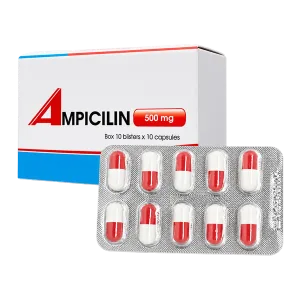
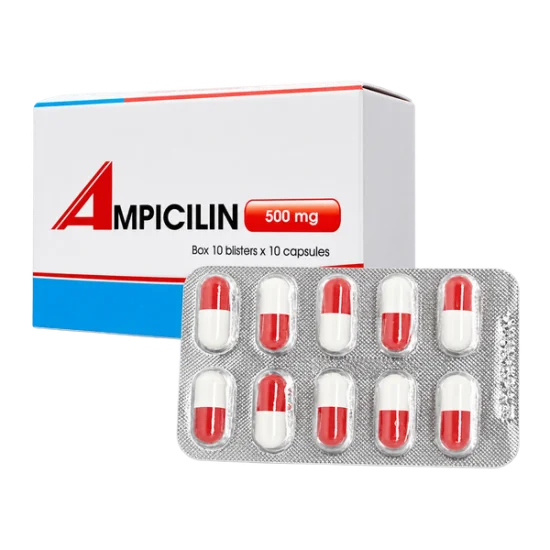
The product contains Ampicillin and is supplied as capsules for oral use. Ampicillin is an aminopenicillin antibiotic intended for susceptible bacterial infections. The pack is marked AMPICILIN and contains 10 blisters with 10 capsules each.

Therapeutic indications

Ampicillin is used only when the suspected organism is likely to be sensitive, or when microbiological testing supports its use. The European Medicines Agency's Summary of Product Characteristics (SmPC) for ampicillin describes antimicrobial susceptibility and local resistance patterns as key factors in antibiotic selection [1].

Antibacterial Spectrum and Clinical Indications

Ampicillin may be used for susceptible infections involving the:

  • Respiratory tract
  • Urinary tract
  • Gastrointestinal tract
  • Skin and soft tissues
  • Biliary system
  • Bloodstream, in selected clinical settings
  • Central nervous system, when an appropriate formulation and clinical setting are used

The exact indication depends on the site of infection, the identified organism, local resistance patterns, and the patient’s kidney function. Ampicillin does not treat viral illnesses such as influenza, most coughs caused by viruses, or uncomplicated viral sore throats.

A bacterial culture may be requested before treatment or during treatment when the infection is severe, recurrent, unusual, or not improving. Susceptibility testing helps determine whether the organism responds to Ampicillin rather than relying only on symptoms.

Directions for use

The product is supplied as capsules for oral use.

The product described on this page is an Ampicillin capsule. It is taken by mouth. The dose is decided individually, taking age, other medicines, kidney function, infection severity, and other health conditions into account.

  • Take each capsule at the prescribed interval.
  • Swallow it with water.
  • Take oral doses away from meals when possible.
  • Complete the prescribed course unless a clinician stops treatment because of an adverse reaction or a change in diagnosis.
  • Do not double the next dose after a missed dose.
  • Do not share capsules with another person.
  • Do not save leftover antibiotics for a later illness.

The appropriate treatment duration varies with the infection and clinical response. Stopping after early improvement can leave surviving bacteria behind and may allow the infection to return. Taking extra capsules does not make recovery faster and can increase adverse effects.

Route or form Clinical role Key practical point
Oral capsule Treatment of susceptible infections suitable for oral therapy Take with water and away from meals when possible
Oral liquid formulation Used when swallowing capsules is unsuitable Weight-based dosing requires an accurately measured volume
Injectable formulation Reserved for selected hospital or supervised settings Route and dose depend on infection severity and clinical assessment

The table includes formulations used in clinical practice; the product on this page is the oral capsule presentation.

Pediatric Dosing Adjustments

Children require weight-based calculations. A child’s dose may also change with age, kidney function, infection site, and the severity of illness. A capsule strength designed for an adult may be unsuitable for a young child who cannot swallow it safely or who requires a more precise weight-based amount.

For a child, never estimate a capsule fraction by eye. Paediatric antibiotic doses should be calculated from the child’s current weight and measured with a suitable formulation when greater precision is needed.

Kidney impairment can slow Ampicillin elimination and may require altered dosing intervals. Older adults may also need individual assessment because reduced kidney function can occur without obvious symptoms.

Missed Dose Management

Take a missed dose when remembered unless the next scheduled dose is close. In that situation, skip the missed dose and continue with the regular schedule. Two doses taken close together increase the chance of nausea, diarrhoea, and other adverse effects without reliably improving antibacterial activity.

Take an oral Ampicillin capsule with a full glass of water and keep the timing consistent. Food can reduce absorption, so oral doses are commonly taken on an empty stomach unless the prescriber gives different instructions.

When not to use it

Ampicillin is not suitable for a person with a previous severe hypersensitivity reaction to Ampicillin, penicillin, or another beta-lactam antibiotic unless a specialist has established a safe alternative approach. A history of a mild, non-specific rash still requires clinical review because the future risk depends on the original reaction.

It may also require dose adjustment or closer monitoring in people with:

  • Reduced kidney function
  • A history of antibiotic-associated colitis
  • Severe gastrointestinal disease
  • Liver disease with abnormal liver tests
  • A condition that increases the risk of bleeding or blood-count abnormalities
  • Previous severe skin reactions to medicines

Pharmacological Interferences

Important interaction issues include:

  • Allopurinol: concurrent use may increase the likelihood of an Ampicillin-associated rash.
  • Anticoagulants: changes in illness, diet, or gut flora may affect anticoagulation control in some patients, so monitoring may be needed.
  • Methotrexate: penicillin antibiotics may reduce methotrexate clearance in some circumstances, increasing toxicity risk.
  • Bacteriostatic antibiotics: medicines that inhibit bacterial growth may theoretically reduce the activity of a bactericidal beta-lactam in selected situations; the combination should be clinically justified.
  • Oral contraceptives: vomiting or severe diarrhoea can reduce contraceptive reliability. The routine interaction claim between antibiotics and combined hormonal contraception is not universal, but enzyme-inducing medicines and gastrointestinal upset require separate consideration.
  • Probenecid: it can reduce renal elimination of penicillin antibiotics and increase exposure.

Tell the prescriber about anticoagulants, methotrexate, allopurinol, probenecid, other antibiotics, and regular supplements before treatment is selected.

When this is not for you

This medicine may not be suitable if you have ever had a severe reaction to Ampicillin, penicillin, or another beta-lactam antibiotic. Tell the prescriber if you have kidney problems, previous antibiotic-associated colitis, severe gastrointestinal disease, liver disease, blood-count or bleeding problems, or a previous severe skin reaction to a medicine. Also report allopurinol, anticoagulants, methotrexate, probenecid, other antibiotics, and regular supplements before treatment.

Unwanted effects

The most frequent problems associated with oral Ampicillin involve the digestive system. Possible effects include nausea, loose stools, abdominal discomfort, vomiting, and diarrhoea. Mild symptoms may settle during treatment, but severe or persistent diarrhoea can indicate antibiotic-associated colitis.

A rash can occur. A mild rash may be caused by a sensitivity reaction, but some infections can also produce rashes during aminopenicillin treatment. A widespread rash, blistering, skin peeling, facial swelling, wheezing, or difficulty breathing requires urgent medical attention.

Other possible reactions include:

  • Headache
  • Dizziness
  • Oral or vaginal candidiasis
  • Temporary changes in liver blood tests
  • Changes in blood counts during prolonged or intensive treatment
  • Injection-site reactions when injectable formulations are used

A practical issue is the timing of diarrhoea. Loose stools during treatment do not always mean a serious complication, but watery diarrhoea with abdominal cramping, fever, blood, or persistence after treatment needs prompt medical assessment.

Avoid self-treating antibiotic-associated diarrhoea with anti-diarrhoeal medicines when there is fever, blood, severe pain, or repeated watery stool. These features need medical assessment rather than symptom suppression alone.

Hypersensitivity and Allergic Manifestations

Ampicillin can cause immediate or delayed hypersensitivity. A previous serious reaction to penicillin, such as anaphylaxis, angioedema, bronchospasm, or severe blistering rash, is highly relevant before treatment begins.

Anaphylaxis can develop rapidly. Symptoms may include throat tightness, breathing difficulty, faintness, facial or tongue swelling, widespread hives, or sudden weakness. Emergency help is required if these occur.

A delayed rash may appear several days after starting treatment. A rash with fever, mucosal sores, eye irritation, skin peeling, or blistering is medically urgent.

How it affects the body

Ampicillin belongs to the penicillin family of beta-lactam antibiotics. It is an aminopenicillin with bactericidal activity against susceptible bacteria. The active substance interferes with bacterial cell-wall construction, weakening the organism until it breaks down.

Ampicillin binds to penicillin-binding proteins, commonly called PBPs. These proteins help bacteria cross-link the peptidoglycan layers that give the cell wall its strength. When this process is blocked, actively multiplying bacteria become vulnerable to lysis.

Ampicillin can be useful when the organism remains sensitive to aminopenicillins. Resistance can develop through beta-lactamase production or changes in bacterial PBPs, so a similar-looking infection may require a different antibiotic.

Common mistakes

Several routine errors can make an otherwise suitable antibiotic course less useful:

  • Taking capsules only when symptoms feel severe
  • Taking doses at irregular times
  • Taking the capsule immediately after a large meal when absorption is important
  • Stopping once fever or pain improves
  • Doubling a dose after forgetting one
  • Using someone else’s remaining antibiotic
  • Ignoring repeated watery diarrhoea
  • Failing to mention kidney disease
  • Describing every past rash as a confirmed allergy without details
  • Assuming Ampicillin will treat a viral cough or cold

One overlooked issue is vomiting soon after a dose. Absorption may be incomplete, but repeating the capsule automatically can lead to an excessive amount. The appropriate response depends on timing, the person’s condition, and the treatment plan.

Another common problem is taking an oral dose with only a small sip of water, especially in someone who has difficulty swallowing. A full glass lowers the chance of the capsule sticking in the oesophagus and helps maintain regular administration.

Comparison

Ampicillin and amoxicillin are both aminopenicillins, so they share a beta-lactam mechanism. Ampicillin is also available in clinical settings through routes that allow treatment of serious infections, while oral amoxicillin is often selected for convenient outpatient treatment when the organism is susceptible.

Approach Mechanism Typical clinical distinction
Ampicillin Beta-lactam inhibition of bacterial cell-wall synthesis Used for susceptible infections when its spectrum and clinical setting are appropriate
Amoxicillin Beta-lactam inhibition of bacterial cell-wall synthesis Often chosen for oral treatment because of practical absorption and dosing characteristics
Non-beta-lactam antibiotic Mechanism varies by drug class Selected when resistance, allergy, or organism-specific factors limit penicillin use

Ampicillin is not automatically the best choice for every bacterial infection. A prescriber may select another agent because of resistance, a documented penicillin allergy, the infection site, kidney function, or interaction concerns.

The World Health Organization's AWaRe antibiotic book places antibiotic selection within antimicrobial stewardship: the narrowest suitable treatment should be used for the confirmed or most likely pathogen, with unnecessary exposure avoided [2].

What doctors say

In clinical practice, doctors usually assess three points before selecting Ampicillin: the likely organism, the infection site, and the patient’s ability to clear the medicine through the kidneys. Symptoms alone do not prove that a bacterial infection is present.

A physician will also ask about the previous antibiotic reaction in practical terms. “Penicillin allergy” can describe anything from mild nausea to life-threatening anaphylaxis, and those histories do not carry the same clinical meaning.

Ampicillin is most useful when the suspected bacteria are susceptible and the treatment plan is followed at regular intervals. If there is no improvement, worsening fever, new pain, breathing difficulty, or a new focal symptom, the diagnosis and antibiotic choice may need reassessment.

The Health Products Regulatory Authority's guidance on reporting suspected adverse reactions supports careful use of antibiotics and attention to national medicines-safety monitoring [3].

Write down the approximate time and symptoms of any previous penicillin reaction before an appointment. “I felt sick” and “I needed emergency treatment for swelling” lead to very different prescribing decisions.

Common questions

What should I do after a missed Ampicillin dose?

Take the missed dose when remembered unless the next scheduled dose is near; then skip it and return to the normal timetable. Do not take two capsules together to compensate. NHS. Medicines A to Z: antibiotics (2025) supports avoiding dose doubling because it raises adverse-effect risk without restoring the intended interval.

Which condition rules Ampicillin out completely?

A previous severe immediate allergy to penicillin or Ampicillin rules out routine use without specialist assessment. Examples include anaphylaxis, airway swelling, severe wheezing, or a rapidly progressive blistering skin reaction. The EMA Summary of Product Characteristics (SmPC) for ampicillin, published in 2024 continues to treat serious beta-lactam hypersensitivity as a major contraindication.

How is Ampicillin used in older adults?

Older adults may receive Ampicillin when the infecting organism is susceptible, but kidney function and concurrent medicines need review. Reduced renal clearance can increase exposure and may require an adjusted interval. The WHO AWaRe antibiotic book, published in 2022 support individual assessment rather than choosing a dose from age alone.

Which symptoms mean I should stop and seek urgent medical help?

Seek urgent help for breathing difficulty, facial or tongue swelling, faintness, widespread hives, blistering skin, skin peeling, or sores affecting the mouth or eyes. Severe watery or bloody diarrhoea with abdominal pain or fever also requires prompt assessment. HPRA guidance on reporting suspected adverse reactions, published in 2024 treats suspected severe allergic reactions and serious antibiotic-associated diarrhoea as reportable safety concerns.

Which habits can help or hinder the result?

Taking each dose at regular intervals and away from meals when possible can support more predictable absorption. Skipping doses, taking capsules only when symptoms return, or stopping early can reduce treatment success. The WHO AWaRe antibiotic book published in 2022 also support avoiding unnecessary antibiotic use and completing the individually prescribed course.

Can Ampicillin be used during pregnancy or breastfeeding?

Pregnancy and breastfeeding require an individual assessment of the infection, alternatives, and expected benefit. Penicillin antibiotics have long clinical experience, but the prescriber still needs to know about pregnancy, planned pregnancy, and breastfeeding before treatment. The BNF penicillin monograph reviewed in 2025 advises monitoring a breastfed infant for diarrhoea, oral thrush, or rash when a penicillin antibiotic is used.

Do you offer anonymous delivery?

Your order will be securely packed and shipped within 24 hours. This is exactly what your package will look like (images of an actual item sent). It has the size and look of a regular private letter (24x11x0.7 cm) and its contents cannot be seen.

Comparison

How the medicines for Antibiotics compare

Sources

  1. European Medicines Agency (2024). Summary of Product Characteristics (SmPC) — ampicillin
  2. World Health Organization (2022). The WHO AWaRe antibiotic book
  3. Health Products Regulatory Authority (2024). Guidance on reporting suspected adverse reactions

How Buyers Rate Ampicillin

Based on 5 reviews

Jonathan S., 44 Verified
Rating: 3 out of 5

He took oral Ampicillin for a confirmed urinary infection. The fever settled after several days, but he reported loose stools near the end of treatment and needed advice about hydration and when to seek help.

2 Nov 2026
Thomas V., 30 Verified
Rating: 3 out of 5

He used the capsules for a respiratory infection identified as bacterial. He noticed improvement during the first week, although taking doses away from meals was inconvenient during workdays.

7 Oct 2026
Matthew, 66 Verified
Rating: 3.5 out of 5

He had reduced kidney function and said the prescribed schedule was changed after his medicines were reviewed. His infection improved, but he felt mild nausea during the first few days.

24 Oct 2026
Lee, 45 Verified
Rating: 1.5 out of 5

He developed an itchy rash after starting treatment and stopped taking further capsules while seeking urgent medical advice. The reaction was assessed as a possible penicillin hypersensitivity, so future antibiotic choices required extra care.

15 Oct 2026
Ian, 61 Verified
Rating: 4.5 out of 5

He completed an Ampicillin course for a susceptible infection and felt better before the final doses. He admitted that he nearly stopped early, then continued after receiving specific instructions about relapse and incomplete treatment.

21 Oct 2026
Get our free app Shop faster and track your orders Install