Skip to content
In Stock Minocycline
Antibiotics

Minocycline

Acne vulgaris can involve persistent inflammatory spots, papules, and nodules that need treatment beyond topical care. Minocycline is an oral tetracycline antibiotic used for moderate-to-severe…

Guaranteed quality Original product
Delivery: from 4 days Discreet delivery
24/7 Support Always available
Active ingredient: Minocycline
Select dosage:
Select pack Package Per tablet Price
€ 4.30 € 129.00
€ 3.91 € 193.50 € 176.00 Save 9%
Free Standard Delivery € 3.73 € 258.00 € 224.00 Save 13%
Free Express Delivery € 3.54 € 387.00 € 319.00 Save 18%
Free Express Delivery € 3.46 € 516.00 € 415.00 Save 20%
Free Express Delivery € 3.36 € 774.00 € 604.00 Save 22%
Best value Free Express Delivery € 3.30 € 1,161.00 € 890.00 Save 23%
€ 10.50 € 105.00
Free Express Delivery € 10.23 € 315.00 € 307.00 Save 3%
Free Express Delivery € 9.60 € 630.00 € 576.00 Save 9%
Free Express Delivery € 8.90 € 945.00 € 801.00 Save 15%
Free Express Delivery € 8.24 € 1,260.00 € 989.00 Save 22%
Best value Free Express Delivery € 7.71 € 1,890.00 € 1,388.00 Save 27%

Free delivery on orders from € 200.00, free express delivery from € 300.00

Secure payment methods:
VISA AMEX JCB DISCOVER

Acne vulgaris can involve persistent inflammatory spots, papules, and nodules that need treatment beyond topical care. Minocycline is an oral tetracycline antibiotic used for moderate-to-severe inflammatory acne. It reduces bacterial protein synthesis and helps calm inflammation around acne lesions.

Overview

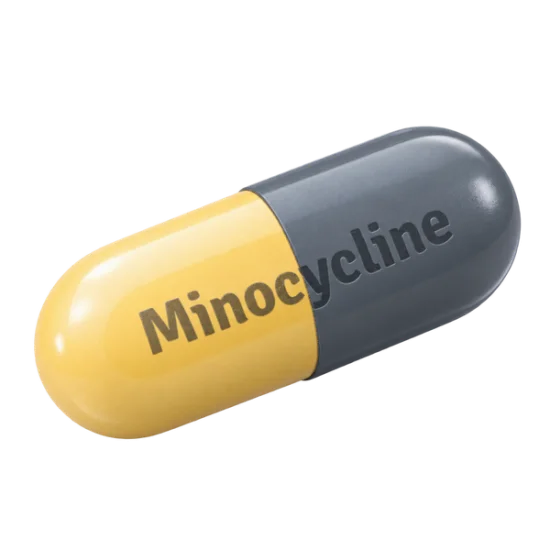
Minocycline belongs to the tetracycline antibiotics, a group used in dermatology and other bacterial infections. The active substance is minocycline. The product is supplied as capsules for oral administration.

Formulation

The active substance is minocycline, a tetracycline antibiotic. The product is supplied as capsules for oral administration.

Therapeutic indications

Minocycline belongs to the tetracycline antibiotics, a group used in dermatology and other bacterial infections. Its main dermatological use is moderate-to-severe acne vulgaris, especially when inflammatory lesions continue despite appropriate topical treatment.

Acne vulgaris develops through several processes: excess sebum, blocked follicles, abnormal shedding of skin cells, bacterial activity, and inflammation. Minocycline addresses the bacterial and inflammatory components, but it does not permanently change the tendency of the skin to form blocked pores.

The European Medicines Agency and national regulators classify tetracycline antibiotics as medicines that require careful antimicrobial use. Prescribers generally choose them for a defined course rather than indefinite maintenance treatment. The WHO antimicrobial stewardship framework also supports limiting antibiotic exposure to situations where the expected benefit justifies treatment [1].

Directions for use

Minocycline dosing is decided individually, taking age, other medicines, and health conditions into account. The prescriber also considers acne severity, previous treatment, kidney and liver status, pregnancy risk, and the planned duration of antibiotic therapy.

Key administration points include:

  • Take the prescribed capsule by mouth with plenty of water.
  • Remain upright after swallowing rather than taking it immediately before lying down.
  • Follow the prescribed schedule and course length.
  • Keep doses as evenly spaced as the prescribed regimen allows.
  • If a dose is missed, take it when remembered unless the next dose is near; do not double the amount.
  • Separate minocycline from iron, calcium, magnesium, aluminium, and zinc supplements when directed, because mineral binding can reduce tetracycline absorption.
  • Tell the prescriber about isotretinoin, anticoagulants, seizure medicines, and long-term supplements before treatment begins.

Milk and other calcium-containing foods can interfere with absorption for some tetracycline preparations. The exact separation period depends on the product and prescription, so the regimen should specify how to manage dairy products and mineral supplements.

The acne response usually develops gradually. A course that is stopped as soon as the first few spots improve may leave the inflammatory process active and can encourage treatment failure. Antibiotics are generally not used as indefinite acne maintenance; topical maintenance treatment is often considered after the oral course.

When not to use it

  • Pregnancy or planned pregnancy, unless a specialist has specifically assessed the situation.
  • Breastfeeding, because tetracyclines can enter breast milk and require an individual risk assessment.
  • Known allergy to minocycline or other tetracycline antibiotics.
  • Previous serious liver reaction linked to minocycline.
  • Active liver disease or unexplained abnormal liver tests.
  • Raised intracranial pressure, especially with current headaches or visual symptoms.
  • Use of oral isotretinoin, because the combination may increase the risk of intracranial hypertension.
  • Children under the age limits stated by the prescriber, because tetracyclines can affect developing teeth and bones.
  • Significant swallowing difficulty or a condition that makes remaining upright after swallowing impossible.

Antacids containing aluminium or magnesium, iron tablets, calcium supplements, and mineral-containing multivitamins can bind minocycline in the digestive tract. This may reduce absorption. Warfarin and other anticoagulants may require closer monitoring because tetracycline antibiotics can alter anticoagulant response.

When this is not for you

Minocycline may not be for you if you are pregnant or breastfeeding, have a tetracycline allergy, liver problems, raised intracranial pressure, or swallowing difficulties. It may also be unsuitable for children below the prescriber's age limit or if you take oral isotretinoin.

Unwanted effects

Minocycline is tolerated by many patients, but systemic exposure can affect several organs. Common complaints include nausea, stomach discomfort, diarrhoea, headache, dizziness, and a spinning sensation. Vestibular symptoms may be more noticeable soon after a dose or when standing quickly.

Skin and pigment changes can occur during longer treatment. Blue-grey or brown pigmentation may affect scars, gums, nails, teeth, or areas of previous inflammation. Such changes may persist after treatment, so new or worsening pigmentation deserves prompt medical review.

Seek urgent medical attention for:

  • Severe or persistent headache with blurred vision, double vision, or visual loss.
  • Facial swelling, breathing difficulty, widespread hives, or blistering skin.
  • Yellowing of the eyes or skin, dark urine, marked nausea, or pain beneath the ribs.
  • Severe watery or bloody diarrhoea during treatment or after it ends.
  • Fainting, severe weakness, confusion, or loss of coordination.
  • Joint pain with fever, rash, swollen glands, or other signs of a systemic reaction.

Rare but serious reactions include liver injury, drug-induced lupus-like illness, serum sickness-like reactions, severe hypersensitivity, and raised intracranial pressure, also called pseudotumor cerebri. The FDA prescribing information describes these risks and recommends prompt assessment when neurological or hepatic symptoms appear [2].

Photosensitivity is more strongly associated with some tetracyclines than others, yet patients using oral minocycline should still protect exposed skin from intense ultraviolet light. Sunscreen does not make prolonged midday exposure harmless.

Dizziness can make driving, cycling, or using machinery unsafe during the first days of treatment. Wait until you know how minocycline affects balance and concentration.

Minocycline can also cause benign changes in stool or tongue colour and may leave a metallic taste. These effects are usually less urgent than a rash with facial swelling, visual symptoms, or signs of liver inflammation.

How it affects the body

Minocycline enters susceptible bacterial cells and binds to the 30S ribosomal subunit. This interferes with the movement of transfer RNA during protein synthesis, so the bacteria cannot produce the proteins needed for growth and multiplication.

Propionibacterium acnes is the former name for Cutibacterium acnes, a bacterium associated with acne vulgaris. It contributes to the inflammatory environment inside blocked hair follicles, although acne is not caused by bacteria alone.

Reducing bacterial activity can lessen the signals that attract inflammatory cells into the follicle. Minocycline also has anti-inflammatory effects that may contribute to improvement in swollen, tender lesions. The medicine does not work by drying the skin immediately, and it should not be judged after only a few doses.

The biological sequence can be summarised as follows:

  • Minocycline reaches susceptible bacteria.
  • The drug binds to the bacterial 30S ribosomal subunit.
  • Protein synthesis is disrupted.
  • Bacterial growth and inflammatory stimulation decrease.
  • Red, tender lesions may gradually become less active.

Minocycline differs from retinoids because it acts systemically against bacterial and inflammatory processes, while retinoids mainly normalise follicular cell turnover. Benzoyl peroxide acts directly in the skin and does not create the same systemic exposure. These differences explain why dermatology treatment often combines an oral antibiotic with topical medicines during the initial phase.

Common mistakes

Several practical errors can reduce benefit or increase risk:

  • Taking the capsule just before lying down.
  • Swallowing it with only a small sip of water.
  • Taking it at the same time as iron, calcium, magnesium, aluminium, or zinc.
  • Stopping after a few clearer days without a planned review.
  • Using leftover antibiotics from an earlier course.
  • Applying capsule contents to the skin.
  • Ignoring persistent headache or visual disturbance.
  • Treating every skin mark as active acne and extending treatment without review.
  • Using harsh scrubs or alcohol-heavy products that worsen irritation.
  • Forgetting that topical antibiotic monotherapy can promote resistance.

One detail patients often miss is that dizziness may appear before any improvement in acne. A lack of early skin change does not justify taking extra capsules, while new balance problems do justify caution with driving.

Another common error is assuming that more frequent washing will speed recovery. Aggressive cleansing can damage the skin barrier and make redness, dryness, and stinging more noticeable.

Keep a short record of new headaches, visual changes, dizziness, diarrhoea, rash, or unusual pigmentation. Dates help the prescriber distinguish an early transient effect from a reaction that needs treatment stopped.

Comparison

Minocycline is one option within a wider acne treatment plan. The choice depends on lesion type, scarring risk, previous therapy, pregnancy status, concurrent medicines, and tolerance of systemic adverse effects.

Treatment category Main action Typical role in acne care
Minocycline Oral tetracycline antibiotic with antibacterial and anti-inflammatory activity Moderate-to-severe inflammatory acne requiring systemic treatment
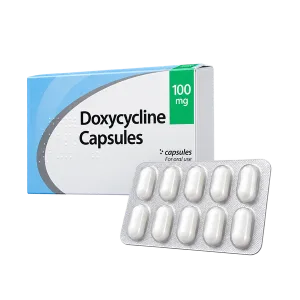
Doxycycline Oral tetracycline antibiotic with antibacterial and anti-inflammatory activity A common systemic option when an oral tetracycline is appropriate
Adapalene Topical retinoid that normalises follicular cell turnover Comedonal acne and maintenance after inflammatory disease improves
Benzoyl peroxide Topical antimicrobial and keratolytic action Inflammatory or mixed acne and reduction of antibiotic-resistance pressure
Clindamycin phosphate Topical lincosamide antibiotic Local inflammatory lesions, generally combined with benzoyl peroxide
Other retinoids Topical or systemic regulation of abnormal keratinisation Comedonal disease, persistent acne, or specialist treatment pathways

Doxycycline and minocycline share a tetracycline mechanism, but they do not have identical adverse-effect profiles. Minocycline has a stronger association with vestibular symptoms, pigmentation, and rare autoimmune reactions. Doxycycline can cause marked photosensitivity and oesophageal irritation.

Adapalene and other retinoids target blocked follicles rather than bacterial protein synthesis. Benzoyl peroxide works on the skin surface and can be useful alongside an oral antibiotic because it does not rely on the same antibacterial mechanism. Clindamycin phosphate is topical and may be used for inflammatory lesions, but antibiotic resistance is a reason to avoid antibiotic monotherapy.

The NICE acne guideline supports treatment plans that combine appropriate topical therapy with a limited course of oral antibiotic when inflammatory acne is more extensive or severe [3]. Minocycline is not automatically the best choice for every patient. Pregnancy, raised intracranial pressure, liver disease, previous tetracycline reactions, and the need to avoid systemic exposure can change the decision.

What doctors say

Dermatologists usually judge oral antibiotic treatment by the pattern of lesions, not by one isolated spot. Inflammatory papules, pustules, and deeper tender nodules respond differently from blackheads alone. Oral antibiotics have a clearer role when inflammation is widespread or topical treatment has not controlled it.

A practical clinical goal is visible reduction in new inflamed lesions, tenderness, and progression toward scarring. Existing scars will not disappear because bacterial activity has been reduced. Persistent nodules, rapidly worsening acne, or significant emotional distress may require a different specialist pathway.

Doctors also look for a maintenance plan before stopping an oral antibiotic. Adapalene, benzoyl peroxide, or another suitable topical treatment may help maintain improvement, depending on tolerance and pregnancy status. Repeated antibiotic courses without a maintenance strategy can lead to recurring disease and unnecessary antimicrobial exposure.

A clinician will usually review dizziness, headaches, visual symptoms, pigmentation, gastrointestinal effects, and any new rash during treatment. Liver or autoimmune symptoms require more than routine acne follow-up.

Common questions

Which symptoms mean stopping Minocycline and seeking urgent medical help?

Stop further doses and seek urgent medical assessment for severe headache with blurred or double vision, facial swelling, breathing difficulty, blistering rash, yellow skin, dark urine, or severe watery or bloody diarrhoea. These symptoms can indicate intracranial hypertension, serious hypersensitivity, liver injury, or antibiotic-associated colitis. The HPRA’s 2024 pharmacovigilance framework treats serious suspected adverse reactions as requiring prompt clinical evaluation. Minocycline safety information reviewed by the FDA also identifies neurological, hepatic, and hypersensitivity warning signs [4].

Can Minocycline capsules be split, crushed, or chewed?

Capsules should be swallowed whole with water unless a prescriber or pharmacist has given a specific alternative instruction for the exact formulation. Opening, crushing, or chewing can change how the contents contact the mouth and throat and may alter delivery characteristics. The advice applies to the capsules supplied for oral use, not to separately developed topical minocycline preparations. Product-specific administration instructions are set out in 2024 regulatory medicine information from bodies such as the HPRA.

How soon does the effect of Minocycline become noticeable?

Inflammatory tenderness may begin to lessen before the full reduction in new lesions becomes clear, but acne treatment commonly requires several weeks of consistent use. The response is assessed through fewer new inflamed lesions, less swelling, and reduced progression toward scarring rather than through immediate clearing. The 2021 NICE acne guideline recommends review of treatment response within an appropriate clinical timeframe rather than judging success after only a few days. Lack of early improvement does not justify taking additional capsules.

Which condition rules Minocycline out?

A history of raised intracranial pressure is a major reason for avoiding minocycline, especially when headaches or visual symptoms are present. Concurrent oral isotretinoin also requires avoidance or specialist management because the combination may increase intracranial-pressure risk. Pregnancy, significant liver disease, and a serious tetracycline allergy are other conditions that can rule out treatment. The EMA’s 2018 medicine-safety principles require these patient-specific risks to be considered before prescribing.

What is the best time of day to take Minocycline?

There is no universal clock time that suits every patient; the prescribed schedule should be followed at evenly spaced times where possible. Taking the capsule with a full glass of water and remaining upright is more important than choosing morning or evening. Mineral supplements and antacids should be separated according to the instructions for the specific regimen. The WHO’s 2023 antibiotic stewardship approach supports using the lowest suitable exposure for the defined treatment plan rather than changing timing to extend or intensify treatment [5].

Do you offer anonymous delivery?

Your order will be securely packed and shipped within 24 hours. This is exactly what your package will look like (images of an actual item sent). It has the size and look of a regular private letter (24x11x0.7 cm) and its contents cannot be seen.

Comparison

How the medicines for Antibiotics compare

Oral and topical delivery formulations

The product described here is an oral capsule. Oral minocycline distributes through the body, which allows treatment of acne affecting several areas, such as the face, chest, and back. Systemic exposure also explains why oral treatment can cause adverse effects beyond the skin.

Extended-release formulations release minocycline more gradually. Some clinical studies have associated modified-release administration with fewer vestibular complaints, such as dizziness or spinning sensations, than certain immediate-release regimens. The precise effect depends on the formulation, dose, and patient characteristics.

Formulation Main route and exposure Practical distinction
Oral minocycline capsules Systemic exposure after swallowing Treats inflammatory acne across several body areas but may cause systemic adverse effects
Extended-release oral minocycline Gradual oral release May reduce some peak-related vestibular symptoms in selected patients
Topical minocycline gel Local skin application Aims to concentrate treatment in acne-affected skin with less systemic exposure

The existence of topical research does not change the route of the capsules sold on this page. Capsules should be used orally, not opened and applied to the skin.

Do not empty capsule contents onto acne lesions. Oral capsules are formulated for swallowing, and applying the contents to skin does not reproduce the tested topical formulations.

Sources

  1. World Health Organization (2023). The WHO AWaRe Antibiotic Book: Antibiotic Choices for Common Bacterial Infections
  2. U.S. Food and Drug Administration (2017). Minocycline Hydrochloride Extended-Release Tablets: Prescribing Information
  3. National Institute for Health and Care Excellence (2021). Acne vulgaris: management — NICE Guideline NG198
  4. Health Products Regulatory Authority (2024). Pharmacovigilance and Adverse Reaction Reporting: Human Medicines
  5. European Medicines Agency (2018). Antimicrobial Resistance and the Use of Antibiotics in Humans

How Buyers Rate Minocycline

Based on 5 reviews

David, 44 Verified
Rating: 4 out of 5

The deep spots on my back became less painful first. I noticed mild dizziness after some doses, so I avoided driving until it settled. My skin improved gradually rather than overnight.

Several weeks 10 Oct 2026
Thomas P., 60 Verified
Rating: 4 out of 5

The capsules reduced the redness, but nausea bothered me during the first part of treatment. Taking them with plenty of water helped, although I still needed a review before continuing.

The first part of treatment 18 Oct 2026
Matthew, 31 Verified
Rating: 3.5 out of 5

New facial lesions were less frequent after a few weeks. I had expected old marks to disappear too, and that did not happen. The maintenance cream became more important once the course ended.

A few weeks 21 Oct 2026
Neil, 33 Verified
Rating: 2.5 out of 5

I developed a persistent headache with blurred vision. I stopped taking further capsules and obtained urgent medical advice. The acne was not the main issue at that point.

1 Nov 2026
Michael, 50 Verified
Rating: 3.5 out of 5

The course helped my chest more than my face. I had some stomach upset and found mineral supplements needed separate timing. A follow-up appointment clarified the schedule.

6 Nov 2026
Get our free app Shop faster and track your orders 3.8 · 291 reviews Install