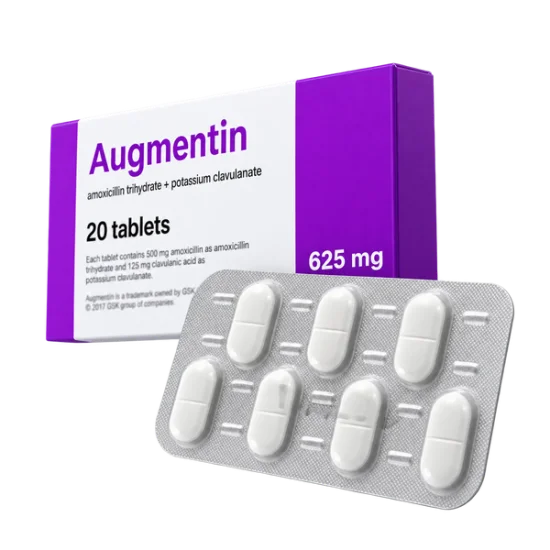
Took Augmentin after a dental infection caused facial swelling. The swelling began to ease after several days, and I completed the prescribed course. I had loose stools for part of the treatment, so taking the tablets with breakfast and dinner helped.
Part of the treatment 27 Oct 2026
Augmentin
Adults and adolescents with confirmed bacterial infections of the chest, sinuses, urinary tract, skin, or teeth may be prescribed Augmentin. These tablets combine amoxicillin with clavulanic acid to…
Adults and adolescents with confirmed bacterial infections of the chest, sinuses, urinary tract, skin, or teeth may be prescribed Augmentin. These tablets combine amoxicillin with clavulanic acid to overcome bacterial resistance mechanisms that can limit amoxicillin alone.
Overview
The tablet regimen is intended for use under a healthcare professional’s treatment plan and should be confirmed before starting.
Augmentin contains amoxicillin trihydrate and potassium clavulanate.
Formulation
Augmentin contains amoxicillin trihydrate and potassium clavulanate. Together, these substances are known as amoxicillin/clavulanate potassium, an antibacterial combination in the penicillin family. Its purpose is to treat susceptible bacterial infections, not viral illnesses.
The regimen for the chosen strength should be confirmed with a healthcare professional before starting treatment.
Role of amoxicillin in bacterial eradication
Amoxicillin is an aminopenicillin antibiotic. It interferes with bacterial cell-wall construction, causing susceptible bacteria to break down and die.
This action works only against bacteria. It will not shorten a viral cold, influenza, or most sore throats caused by viruses. The WHO places amoxicillin/clavulanic acid among antibiotics that require careful use because unnecessary exposure encourages antimicrobial resistance [1].
Function of clavulanic acid as a beta-lactamase inhibitor
Some bacteria produce beta-lactamase enzymes. These enzymes can destroy amoxicillin before it reaches its target.
Clavulanic acid binds to many beta-lactamase enzymes and blocks their activity. This protects amoxicillin and extends activity against bacteria that may resist amoxicillin alone. The trade-off is a greater likelihood of diarrhoea than with amoxicillin by itself.
Therapeutic indications
Clinicians prescribe Augmentin when the infection is likely bacterial and the expected organisms may produce beta-lactamase. The choice depends on the infection site, local resistance patterns, allergy history, kidney function, recent antibiotic exposure, and relevant guidance from the National Institute for Health and Care Excellence (NICE).
Common clinical uses include:
- Acute bacterial sinusitis.
- Middle-ear infections when broader bacterial cover is needed.
- Community-acquired lower respiratory infections, including some cases of bacterial pneumonia.
- Exacerbations of chronic bronchitis caused by susceptible bacteria.
- Skin and soft-tissue infections, including infected bites.
- Urinary tract infections when laboratory results support its use.
- Dental infections, including acute apical abscesses where drainage and dental treatment are also required.
Respiratory and sinus tract infections
Augmentin is often selected for bacterial sinus or chest infections when ordinary amoxicillin may not provide adequate cover. The combination is useful against certain beta-lactamase-producing organisms found in respiratory infections.
Antibiotics do not treat viral coughs or uncomplicated colds. A green nasal discharge alone does not prove that a bacterial infection is present. The HPRA product information describes amoxicillin/clavulanic acid as an antibacterial treatment for infections caused by susceptible bacteria [2].
Urinary tract, skin, and dental applications
For urinary tract infections, the best antibiotic depends on urine culture results, infection severity, kidney function, and local susceptibility data. Augmentin is not automatically the first choice for every UTI.
In dental practice, antibiotics may reduce spreading bacterial infection, facial swelling, fever, or lymph-node involvement. They do not remove the source of a tooth abscess. Drainage, root-canal treatment, or extraction may still be necessary.
Directions for use
- Dose: The amount for the 625 mg tablet regimen must be confirmed with a healthcare professional before starting.
- Frequency: The number of tablets and times per day must be confirmed with a healthcare professional.
- Timing: Take the tablet at the start of a meal unless a healthcare professional gives different instructions.
- Duration: The treatment duration must be confirmed with a healthcare professional.
- Route: Take by mouth as an oral tablet.
When not to use it
Augmentin is not for you if you have had an immediate severe allergy to amoxicillin, penicillin, or another beta-lactam antibiotic. It is also unsuitable if amoxicillin/clavulanic acid previously caused jaundice or liver dysfunction.
Extra assessment is needed for people with:
- A history of severe allergy to cephalosporins or penicillins.
- Significant liver disease.
- Reduced kidney function, because the regimen may need adjustment.
- Suspected infectious mononucleosis, where amoxicillin can cause a pronounced rash.
- Pregnancy or breastfeeding, where the prescriber weighs infection severity and treatment need.
- A history of antibiotic-associated colitis.
Tell the prescriber about all medicines, including anticoagulants, immunosuppressants, gout treatment, and non-prescription products. The FDA-approved prescribing information also warns about hypersensitivity, liver effects, and antibiotic-associated diarrhoea [4].
When this is not for you
The tablet form is not suitable for patients who cannot take penicillin-class antibiotics or who require hospital-based intravenous treatment.
Extra assessment is needed for people with:
- A history of severe allergy to cephalosporins or penicillins.
- Significant liver disease.
- Reduced kidney function, because the regimen may need adjustment.
- Suspected infectious mononucleosis, where amoxicillin can cause a pronounced rash.
- Pregnancy or breastfeeding, where the prescriber weighs infection severity and treatment need.
- A history of antibiotic-associated colitis.
Unwanted effects
Digestive effects are the most frequent drawback of Augmentin. Diarrhoea, nausea, vomiting, indigestion, and abdominal discomfort can occur because antibiotics affect normal gut bacteria as well as infection-causing bacteria.
Loose stools are often mild and settle after the course ends. Severe, persistent, watery, or bloody diarrhoea needs prompt medical assessment because antibiotic-associated colitis can occur during treatment or weeks afterwards.
Possible side effects include:
- Diarrhoea or soft stools.
- Nausea or vomiting.
- Abdominal discomfort.
- Oral or vaginal thrush.
- Mild skin rash or itching.
- Headache or dizziness.
- Temporary rises in liver enzymes.
Serious allergic reactions are uncommon but require urgent attention. Seek emergency care for facial, lip, tongue, or throat swelling; wheezing; breathing difficulty; collapse; or widespread hives. Stop taking Augmentin and obtain urgent advice if a rash has blisters, skin peeling, mouth sores, fever, or eye irritation.
Liver inflammation and jaundice can occur, sometimes after treatment has finished. Dark urine, pale stools, yellow skin, yellow eyes, or persistent upper abdominal pain require prompt assessment. The EMA describes hepatic reactions and severe cutaneous reactions among important identified risks for amoxicillin/clavulanic acid [3].
How it affects the body
Amoxicillin is an aminopenicillin antibiotic. It interferes with bacterial cell-wall construction, causing susceptible bacteria to break down and die.
Some bacteria produce beta-lactamase enzymes. These enzymes can destroy amoxicillin before it reaches its target.
Clavulanic acid binds to many beta-lactamase enzymes and blocks their activity. This protects amoxicillin and extends activity against bacteria that may resist amoxicillin alone.
Common mistakes
Taking Augmentin for viral symptoms is the most common misuse. Antibiotics do not work against viral coughs, influenza, or most uncomplicated sore throats, and unnecessary use contributes to resistance.
Other avoidable mistakes include:
- Taking doses at irregular intervals.
- Skipping doses once symptoms improve.
- Saving tablets for a future illness.
- Sharing antibiotics with another person.
- Doubling the next dose after forgetting one.
- Ignoring severe diarrhoea because it seems like a routine side effect.
- Failing to mention a past penicillin reaction.
- Starting allopurinol or anticoagulant treatment without reviewing interactions.
Comparison
Augmentin is a combination oral antibacterial approach: amoxicillin targets susceptible bacteria, while clavulanate helps counter beta-lactamase resistance. This differs from a single-ingredient antibiotic, which may not provide the same protection against those resistance mechanisms.
What doctors say
In clinical practice, doctors often choose Augmentin when an infection may involve beta-lactamase-producing bacteria, or when first-line amoxicillin is unlikely to cover the suspected organism. It is not a stronger choice for every infection. A narrower antibiotic is often preferred when it is expected to work.
Doctors also look for a clear response: reduced fever, less local pain, easier breathing, or improving swelling. Symptoms may take several days to settle, even when the antibiotic is working. A rapidly worsening infection, persistent fever, or new breathing difficulty needs reassessment rather than simply extending a course.
One detail patients often miss is the timing of delayed rashes. A rash appearing after several doses may be drug-related even if the first tablets caused no problem.
Common questions
Can I drink alcohol while taking Augmentin?
Alcohol does not have a direct dangerous interaction with amoxicillin/clavulanic acid in the way it does with certain other antibiotics. Drinking can worsen nausea, dizziness, diarrhoea, dehydration, and fatigue while you are recovering from infection. The HPRA advises attention to medicine-specific adverse effects, so avoiding alcohol is sensible if you feel unwell or have stomach symptoms. The practical approach in 2026 is to prioritise fluids, food, sleep, and recovery until the course is finished.
How long does an Augmentin course last, and is long-term use acceptable?
Course length depends on the infection site, severity, response, kidney function, and the regimen selected by the prescriber. Augmentin is usually used for a defined short course rather than as indefinite treatment. Longer treatment can raise the chance of diarrhoea, thrush, liver effects, and resistant bacteria. The EMA product information published in 2024 states that duration should be reviewed against the clinical response, with prolonged therapy requiring clinical reassessment. A prescriber should reassess treatment if symptoms fail to improve.
Can I drive, concentrate, or work with machinery while taking Augmentin?
Most people can drive or work normally if they feel well. Augmentin can occasionally cause dizziness, headache, nausea, or allergic symptoms that may impair concentration. Do not drive, cycle in traffic, operate machinery, or undertake safety-critical work if you feel dizzy, faint, unusually tired, or unwell. The HPRA’s 2025 medicine safety guidance supports avoiding hazardous tasks whenever a medicine causes symptoms that affect alertness.
What should I discuss with a doctor before starting Augmentin?
Discuss any past reaction to penicillin, amoxicillin, cephalosporins, or another antibiotic. Mention liver disease, kidney disease, glandular fever, pregnancy, breastfeeding, previous severe diarrhoea after antibiotics, and all regular medicines. Warfarin, allopurinol, probenecid, methotrexate, and mycophenolate need individual review. WHO antimicrobial stewardship principles, reaffirmed in 2023, support matching the antibiotic choice to the suspected infection and the patient’s risk factors.
What should I do if I miss an Augmentin dose?
Take the missed tablet when you remember unless it is nearly time for the next planned dose. If the next dose is due soon, skip the forgotten one and continue at the normal interval. Do not take two doses together or add an extra tablet later. The FDA prescribing information published in 2016 advises maintaining the intended schedule rather than doubling doses after a missed dose [5].
Do you offer anonymous delivery?
Your order will be securely packed and shipped within 24 hours. This is exactly what your package will look like (images of an actual item sent). It has the size and look of a regular private letter (24x11x0.7 cm) and its contents cannot be seen.
Comparison
Ampicillin
Augmentin Current
Bactrim
Cipro
Doxycycline
Sources
- World Health Organization (2023). WHO AWaRe classification of antibiotics for evaluation and monitoring of use.
- Health Products Regulatory Authority (2024). Augmentin: Summary of Product Characteristics.
- European Medicines Agency (2024). Amoxicillin/clavulanic acid: Product information.
- U.S. Food and Drug Administration (2016). AUGMENTIN prescribing information.
- U.S. Food and Drug Administration (2016). AUGMENTIN prescribing information: Patient counselling information.
How Buyers Rate Augmentin
Based on 3 reviews
Used it for a sinus infection that had not settled. My blocked nose and pressure improved gradually rather than overnight. I felt mildly nauseous on the first day when I took a tablet without food.
3 Nov 2026I had treatment for a chest infection and felt better by the end of the course, but diarrhoea was more troublesome than I expected. My INR was checked because I take warfarin, and my dose was monitored during the antibiotic course.
The antibiotic course 7 Oct 2026