I had the injection for a badly inflamed shoulder after physiotherapy had stalled. The ache was worse that evening, then settled over the next few days. I could sleep on that side again, but I still had to do the exercises rather than assuming the problem had gone.
The next few days 29 Oct 2026
Depo-Medrol
Depo-Medrol is a methylprednisolone acetate depot injection given by a qualified healthcare professional. It is used when corticosteroid treatment is appropriate for selected inflammatory, allergic…
Depo-Medrol is a methylprednisolone acetate depot injection given by a qualified healthcare professional. It is used when corticosteroid treatment is appropriate for selected inflammatory, allergic, joint, or soft-tissue conditions, with dosing tailored to the individual.
Overview
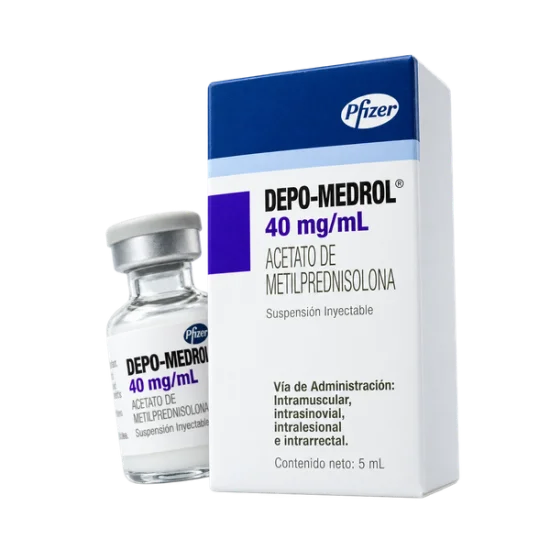
Depo-Medrol contains methylprednisolone acetate, a synthetic glucocorticoid corticosteroid. The supplied presentation is a 5 mL vial of injectable suspension.
Formulation
Depo-Medrol contains methylprednisolone acetate, a synthetic glucocorticoid corticosteroid. The supplied presentation is a 5 mL vial of injectable suspension.
The acetate ester makes methylprednisolone less soluble in water than oral corticosteroid formulations. After intramuscular, intra-articular, or soft-tissue injection, the suspension forms a local depot from which methylprednisolone is absorbed over time. It is a depot suspension.
The FDA prescribing information lists Depo-Medrol as a corticosteroid injection for conditions in which anti-inflammatory or immunosuppressive treatment is clinically indicated [1].
Therapeutic indications
Depo-Medrol may be used as part of treatment for inflammatory conditions when local or systemic corticosteroid therapy is appropriate. The intended route depends on the diagnosis, the body area involved, symptom severity, and the clinician’s treatment plan.
Clinical uses may include:
- inflammatory arthritis and painful inflamed joints;
- bursitis, tendinitis, and selected soft-tissue inflammatory disorders;
- severe allergic or inflammatory skin disorders;
- inflammatory eye conditions managed by specialists;
- respiratory, blood, gastrointestinal, kidney, or autoimmune diseases where systemic corticosteroid treatment is clinically justified;
- endocrine disorders requiring corticosteroid support.
For a joint injection, the goal is usually local reduction of inflammation and pain. For an intramuscular injection, the aim may be a more sustained systemic corticosteroid effect. These are different treatment approaches and should not be treated as interchangeable.
NICE includes corticosteroid injections among treatment options for selected inflammatory musculoskeletal presentations, with the decision based on diagnosis, comorbidity, and the expected balance of relief and adverse effects [2].
Directions for use
Depo-Medrol may be administered by intramuscular injection, intra-articular injection into a joint, injection into soft tissue, or intralesional injection for selected conditions. The correct route is part of the prescription decision.
The injection is not intravenous.
Clinical administration involves several safeguards:
- confirmation of the treatment indication and injection site;
- review of active infection, anticoagulant therapy, diabetes, blood pressure, and previous steroid reactions;
- sterile skin preparation and appropriate injection technique;
- avoidance of injection through infected skin or into a suspected infected joint;
- post-injection observation when clinically indicated.
A sudden increase in pain, heat, redness, fever, or inability to move the injected joint is not a routine post-injection flare. These symptoms need urgent clinical assessment because septic arthritis must be excluded.
Depo-Medrol is supplied here as a methylprednisolone acetate injectable suspension in a 5 mL vial. The concentration describes the amount of active substance in each millilitre; it does not determine a universal injection dose.
Dose selection is individual.
The amount injected, treatment interval, and route are chosen by the clinician according to the condition being treated, the size of a joint or tissue area where relevant, previous corticosteroid exposure, age, and concurrent illnesses. Dosing differs between strengths and between users, so there is no single amount that suits everyone.
A depot corticosteroid injection should never be shared between patients or reused outside a clinical setting. Sterility matters because joint and soft-tissue injections carry a small but serious risk of infection.

When not to use it
- known hypersensitivity to methylprednisolone acetate or another component of the injection;
- suspected infection in the joint;
- unstable joint anatomy;
- unrecognised fracture;
- untreated systemic fungal infection or significant active infection;
- poorly controlled diabetes, severe hypertension, heart failure, glaucoma, or cataracts;
- active or previous tuberculosis, hepatitis B exposure, or recurrent herpes infections;
- peptic ulcer disease, diverticulitis, or a history of gastrointestinal bleeding;
- osteoporosis, myasthenia gravis, seizure disorders, or major psychiatric illness;
- pregnancy or breastfeeding, where the expected benefit must be weighed against potential fetal or infant exposure.
Live vaccines may be unsuitable during immunosuppressive corticosteroid treatment. The timing depends on steroid exposure and the vaccine involved.
When this is not for you
This treatment is not for you if you have a known hypersensitivity to methylprednisolone acetate or another component of the injection. It should not be injected into a joint with suspected infection, unstable joint anatomy, or an unrecognised fracture.
Depo-Medrol also requires careful clinical review if you have an active infection, poorly controlled diabetes, severe hypertension, heart failure, glaucoma, cataracts, tuberculosis, hepatitis B exposure, recurrent herpes infections, peptic ulcer disease, diverticulitis, gastrointestinal bleeding, osteoporosis, myasthenia gravis, seizure disorders, or major psychiatric illness. Tell the clinician if you are pregnant or breastfeeding, or if you use live vaccines.
Unwanted effects
Depo-Medrol can provide meaningful anti-inflammatory relief, yet corticosteroids affect more than the inflamed area. The risk rises with higher cumulative exposure, repeated injections, systemic administration, and longer treatment courses.
Possible local effects include injection-site pain, temporary worsening of joint pain, skin thinning, pigment change, fat loss beneath the skin, tendon weakening, and infection. Repeated injection close to a tendon can increase the risk of tendon injury.
Systemic effects may include:
- increased appetite, indigestion, fluid retention, or raised blood pressure;
- mood change, anxiety, sleep disturbance, irritability, or low mood;
- raised blood glucose, especially in diabetes;
- increased susceptibility to infection or reduced visibility of infection symptoms;
- bruising, slower wound healing, acne, or skin thinning;
- muscle weakness and bone loss with repeated or prolonged corticosteroid exposure;
- visual changes, including blurred vision.
EMA safety communications identify corticosteroids as a possible cause of central serous chorioretinopathy, a retinal condition that can cause blurred or distorted vision [3].
Mood effects deserve direct attention. Some people sleep poorly or feel unusually energised soon after corticosteroid exposure, while others experience agitation or low mood. A history of severe depression, bipolar disorder, psychosis, or steroid-related psychiatric symptoms should be disclosed before treatment.
How it affects the body
Methylprednisolone is a synthetic glucocorticoid that reduces inflammatory signalling and suppresses excessive immune activity. This decreases the release and activity of inflammatory mediators, helping limit swelling, redness, itching, pain, and tissue irritation. The acetate formulation creates a depot that releases the corticosteroid gradually after injection.
Common mistakes
Several avoidable mistakes can reduce the benefit of Depo-Medrol or delay recognition of a complication.
- Treating a short-lived reduction in pain as proof that a joint or tendon has healed.
- Returning to heavy lifting, running, or repetitive strain immediately after a local injection.
- Forgetting to mention diabetes, anticoagulants, previous steroid reactions, or active infection symptoms.
- Using additional NSAID painkillers without considering stomach-bleeding risk.
- Ignoring visual disturbance, unusual mood changes, fever, or worsening redness around an injected area.
- Assuming every future flare should be treated with another injection rather than reassessing the cause.
Repeated injections into the same structure need a considered plan. The aim is symptom control with the lowest practical corticosteroid exposure, not serial injections without a diagnosis-led strategy.
Comparison
Depo-Medrol is designed for injection and depot release. Oral corticosteroids may be preferred where treatment needs frequent adjustment, while other injectable corticosteroid preparations may be chosen for different durations of action or clinical settings.
| Corticosteroid approach | Route and duration | Typical clinical role |
|---|---|---|
| Methylprednisolone acetate depot injection | Intramuscular, intra-articular, soft tissue, or intralesional; sustained release | Local inflammation or selected conditions needing a prolonged corticosteroid effect |
| Oral methylprednisolone | Tablets; shorter and easier to adjust | Conditions requiring flexible systemic dosing or a planned taper |
| Oral prednisolone | Tablets or liquid; systemic action with adjustable dosing | Broad systemic inflammatory and autoimmune indications |
An injection can be useful when targeted local treatment is needed or when oral treatment is not the preferred approach. Oral treatment allows dose changes from day to day, which can be an advantage when symptoms fluctuate or when a gradual reduction is required.
The main limitation of a depot injection is that it cannot be removed once administered. If adverse effects occur, exposure may persist while the medicine continues to release.
What doctors say
In clinical practice, doctors often reserve depot corticosteroid injections for clearly inflammatory problems rather than nonspecific pain alone. A painful joint does not automatically benefit from a steroid injection; the diagnosis matters.
Clinicians also consider whether infection, crystal arthritis, tendon rupture, nerve pain, or mechanical injury could be causing symptoms. Injecting corticosteroid into an infected joint or around a vulnerable tendon can worsen the outcome.
A common clinical expectation is relief over days rather than immediate resolution. The duration of benefit varies widely. Some people gain several weeks of reduced pain and stiffness, while others have only modest or short-lived improvement.
Common questions
What happens if Depo-Medrol is stopped, and does it need tapering?
A single local or intramuscular depot injection does not usually require a taper because there is no daily tablet dose to reduce. Tapering becomes relevant after prolonged systemic corticosteroid exposure, repeated courses, or treatment that has suppressed the body’s natural cortisol production. The FDA's 2023 prescribing information describes adrenal suppression as a risk of systemic corticosteroid therapy, especially with greater exposure or longer duration. The need for tapering depends on cumulative exposure and clinical context. A clinician should determine whether further steroid treatment needs gradual reduction.
Can alcohol be used while receiving Depo-Medrol?
Alcohol does not have a direct chemical interaction with methylprednisolone acetate, yet regular or heavy alcohol use can add to stomach irritation, blood-pressure effects, sleep disturbance, and blood-glucose changes. The concern is greater when NSAIDs are also used, because alcohol, NSAIDs, and corticosteroids can each contribute to gastrointestinal bleeding risk. NICE guidance from 2020 supports individual risk assessment when anti-inflammatory treatment is being considered for people with gastrointestinal or medical comorbidity . People with ulcer disease, liver disease, diabetes, or a prior gastrointestinal bleed should discuss alcohol use with the treating clinician.
Can Depo-Medrol be combined with NSAID painkillers?
NSAIDs such as ibuprofen and naproxen are sometimes used for pain, but combining them with a corticosteroid can increase the chance of dyspepsia, peptic ulceration, and gastrointestinal bleeding. The risk is higher in older adults and in people with a prior ulcer, anticoagulant treatment, or heavy alcohol intake. WHO medicines guidance published in 2023 highlights the need to monitor corticosteroid adverse effects in the context of other treatments . A clinician may choose an alternative pain strategy or prescribe stomach protection when NSAID use is necessary.
Can Depo-Medrol cause weight gain?
Weight gain can occur with systemic corticosteroid exposure because these medicines may increase appetite, promote fluid retention, and change fat distribution. It is more strongly associated with repeated or prolonged courses than with a single local injection, though individual sensitivity varies. The FDA's 2023 prescribing information lists metabolic and fluid-related corticosteroid effects among possible adverse reactions. New swelling of the ankles, rapid weight change, or worsening breathlessness needs clinical review because these symptoms may also reflect fluid retention.
Which symptoms mean Depo-Medrol should be stopped and urgent medical help sought?
Urgent assessment is needed for signs of a severe allergic reaction, such as facial swelling, breathing difficulty, widespread hives, or collapse. Fever, a hot swollen joint, rapidly worsening injection-site pain, or inability to bear weight can indicate infection. Sudden blurred vision, marked mood disturbance, black stools, vomiting blood, or severe abdominal pain also require urgent evaluation. EMA safety advice issued in 2017 includes visual symptoms among corticosteroid-related concerns that should be assessed promptly .
Do you offer anonymous delivery?
Your order will be securely packed and shipped within 24 hours. This is exactly what your package will look like (images of an actual item sent). It has the size and look of a regular private letter (24x11x0.7 cm) and its contents cannot be seen.
Comparison
Celebrex
Depo-Medrol Current
Sources
- U.S. Food and Drug Administration (2023). Depo-Medrol: methylprednisolone acetate injectable suspension, prescribing information.
- National Institute for Health and Care Excellence (2020). Rheumatoid arthritis in adults: management (NG100).
- European Medicines Agency (2017). Corticosteroids: risk of central serous chorioretinopathy.
How Buyers Rate Depo-Medrol
Based on 3 reviews
My knee was much less stiff after the injection and walking downstairs became easier. My blood sugar ran higher for several days, which I had been warned about, so I monitored it more often. The benefit lasted long enough for me to restart strengthening work.
Several days 5 Nov 2026It helped the pain in my elbow, although not as much as I expected. I went back to DIY work too quickly and the soreness returned. The clinician explained that the injection had reduced inflammation but had not made the tendon ready for heavy loading.
7 Oct 2026