I used Shallaki for nearly six weeks because my knees felt stiff after gardening. It did not change things overnight, but getting down the stairs in the morning became less awkward by the end of the first month. I still had bad days after working outside for hours.
Nearly six weeks 15 Oct 2026
Shallaki
Adults seeking botanical support for recurring joint stiffness, reduced flexibility, or discomfort during everyday movement may consider Shallaki tablets. Shallaki is an Ayurvedic preparation based…
Adults seeking botanical support for recurring joint stiffness, reduced flexibility, or discomfort during everyday movement may consider Shallaki tablets. Shallaki is an Ayurvedic preparation based on Boswellia serrata resin, traditionally used to support joint comfort and connective-tissue mobility through boswellic acids.
Overview
Shallaki is the Ayurvedic name for the resin obtained from Boswellia serrata, a small tree that grows in dry, mountainous areas of India. The resin is collected from the tree bark, dried, and prepared for use in traditional herbal practice. In English-language herbal literature, Boswellia serrata may also be called Indian frankincense.
Traditional Ayurvedic names include Salai Guggul, Salai Gum, and Boswellia Serrata Gum. Gond Kundru is another regional name used for the resin. These names describe the same botanical source rather than separate joint-support ingredients.
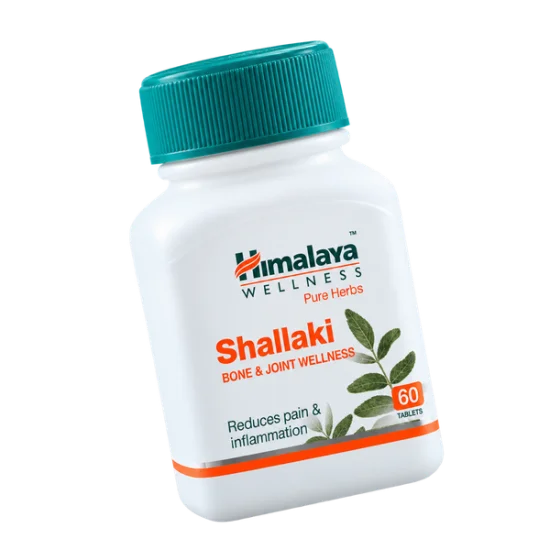
Shallaki is supplied here as tablets in a bottle containing 60 tablets. The product is intended for bone and joint wellness, with a focus on maintaining comfortable movement.
Formulation
Boswellia serrata resin contains naturally occurring compounds called boswellic acids.
Therapeutic indications
The product is intended for bone and joint wellness, with a focus on maintaining comfortable movement.
Shallaki is aimed at joint comfort and flexibility. Other botanical approaches may have different purposes, so choosing by mechanism is more useful than choosing by a broad “joint supplement” label.
For osteoarthritis, structured exercise, weight management where appropriate, and targeted medical treatment remain the main evidence-based measures. The World Health Organization identifies osteoarthritis as a major cause of pain and physical limitation, especially in older adults, and supports approaches that preserve function and participation. [3]
Directions for use
Shallaki comes as oral tablets in a bottle. The amount per intake is set individually for each person rather than being one fixed number, so the planned intake should reflect the advice given by the prescriber or healthcare professional who knows the person’s health history.
For routine use:
- Swallow the tablet whole with water.
- Take it during or shortly after a meal if herbal products tend to upset your stomach.
- Use it at a consistent time of day to make the routine easier to maintain.
- Do not double the next intake after a missed planned dose.
- Resume the usual schedule at the next planned time.
Taking a tablet with food is often more comfortable for people who experience nausea, reflux, or a warm sensation in the stomach after herbal preparations. A meal does not make the product work immediately, but it can reduce avoidable digestive discomfort.
When not to use it
Use requires individual medical advice in the following situations:
- Pregnancy or breastfeeding.
- Planned surgery or a recent operation.
- Use of anticoagulants, antiplatelet medicines, or regular anti-inflammatory medicines.
- Active stomach ulcer disease, recurrent gastrointestinal bleeding, or severe reflux symptoms.
- Significant liver or kidney disease.
- A new diagnosis of inflammatory arthritis, gout, infection, or unexplained joint swelling.
Boswellia preparations may affect inflammatory pathways and may not suit every medicine regimen. The European Medicines Agency advises that herbal products can have pharmacological activity and interaction potential, even when they are used for self-care. [4]
When this is not for you
This is not for you if you have had an allergic reaction to Boswellia serrata, Shallaki resin, or another ingredient in the tablet formulation.
Unwanted effects
Shallaki is generally used as a well-tolerated botanical supplement. Some people can develop mild digestive effects, such as nausea, loose stools, stomach discomfort, heartburn, or reduced appetite. These effects are more likely to be troublesome when a tablet is taken without food.
Stop using Shallaki and seek urgent medical care for swelling of the lips or face, wheezing, widespread hives, fainting, or severe abdominal pain. These symptoms can indicate a significant allergic reaction or another condition that needs prompt assessment.
People with long-standing joint discomfort sometimes overlook a key distinction: stiffness that improves after moving is different from a suddenly swollen, red, intensely painful joint. A hot joint, fever, inability to bear weight, or pain after a fall needs medical evaluation.
How it affects the body
These compounds have been studied for their effects on inflammatory signalling pathways, including 5-lipoxygenase activity, which is involved in producing inflammatory mediators called leukotrienes. Lower leukotriene activity may support joint comfort in people with inflammatory stiffness. [1]
Connective tissues include tendons, ligaments, cartilage, and the tissue surrounding joints. They depend on normal movement, muscle strength, body weight, and recovery after activity. Shallaki does not rebuild damaged cartilage, yet its botanical constituents may help support comfort and flexibility when stiffness limits ordinary movement.
Research on boswellia extracts in knee osteoarthritis has reported improvements in pain and physical function for some participants. Study results vary because extracts differ in resin concentration and boswellic-acid content, so benefits are not identical for every preparation or person. [2]
Common mistakes
Several avoidable habits make it hard to judge whether Shallaki is helping.
- Expecting a major change after one or two tablets.
- Taking it inconsistently, then attributing normal symptom fluctuation to the supplement.
- Combining several herbs, pain medicines, and anti-inflammatory products without reviewing possible interactions.
- Using it to manage a swollen or acutely injured joint instead of arranging assessment.
- Stopping prescribed arthritis treatment because a botanical supplement seems helpful.
- Ignoring persistent indigestion, skin rash, or changes in bowel habit after starting.
One detail patients often miss is that activity level changes joint symptoms. A long walk, a change in footwear, cold weather, poor sleep, or a heavy day of lifting can influence stiffness more than the supplement taken that morning.
Comparison
Shallaki is aimed at joint comfort and flexibility. Other botanical approaches may have different purposes, so choosing by mechanism is more useful than choosing by a broad “joint supplement” label.
| Approach | Main role | Expected pattern |
|---|---|---|
| Shallaki / Boswellia serrata | Supports comfort, flexibility, and movement through boswellic-acid activity | Gradual benefit with regular use |
| Ashwagandha | Adaptogenic herb used for stress response and fatigue | Not targeted to joint inflammation |
| Simple pain-relieving medicines | Symptom relief for pain | Often faster, but with different safety considerations |
Ashwagandha is sometimes grouped with Ayurvedic wellness products, yet it is not a like-for-like substitute for Shallaki. Its traditional use centres on stress adaptation and sleep-related wellbeing, whereas Shallaki is used for musculoskeletal comfort.
What doctors say
In clinical practice, doctors usually treat Shallaki as supportive rather than curative. It may suit an adult with mild joint stiffness who wants a botanical addition to an established movement plan, especially when discomfort is affecting walking, gardening, or rising after rest.
Doctors also look for the reason behind the pain. Osteoarthritis, rheumatoid arthritis, tendon injury, gout, nerve pain, and referred pain from the back can feel similar at first. Shallaki may support comfort, but it does not replace assessment of progressive symptoms, loss of strength, joint deformity, or persistent night pain.
A realistic expectation is gradual change over several weeks of regular use. Some people notice easier movement; others notice little difference. That variation is one reason clinicians favour measurable goals, such as walking for longer without stopping or needing fewer rest breaks.
Common questions
Can older adults use Shallaki?
Older adults may use Shallaki when it fits their medical history and regular medicines. The main issue is not age alone; it is the higher likelihood of taking anticoagulants, anti-inflammatory medicines, blood-pressure treatment, or several supplements at once. The WHO’s 2023 osteoarthritis information highlights that joint symptoms become more common with age and benefit from an approach that protects mobility and independence. Review medicine interactions before starting if you take regular treatment. A pharmacist can also help identify interaction risks.
Is Shallaki suitable during pregnancy or breastfeeding?
Shallaki should be avoided during pregnancy and breastfeeding unless a clinician specifically advises its use. Human safety data for Boswellia serrata supplements in these situations are limited, and herbal traditions do not provide the same level of reassurance as well-designed pregnancy studies. The EMA’s 2011 herbal quality guidance stresses the need for appropriate safety assessment of herbal preparations, including their use in vulnerable groups. Choose a clinician-led approach for pregnancy-related pain or swelling.
What should be discussed with a doctor before starting Shallaki?
Discuss the cause and duration of your joint symptoms, all regular medicines, past allergic reactions, digestive conditions, and any planned surgery. Mention whether the joint is swollen, hot, unstable, or painful at night, because these features can point to a condition needing diagnosis. The HPRA advises consumers to consider interactions and safety information when using herbal products, especially alongside prescribed medicines. The EMA published related herbal-product quality guidance in 2011. Also explain what result you hope to achieve, such as easier walking or less morning stiffness.
What happens if Shallaki is stopped, and does it need tapering?
Shallaki does not usually require tapering because it is not known to cause dependence or withdrawal in the way some prescription medicines can. You can stop it if it causes side effects, if a clinician advises stopping, or if it is not meeting a practical goal. The Cochrane Review published in 2014 assessed oral herbal therapies for osteoarthritis and found that study quality and formulations varied, which supports reassessing benefit rather than continuing indefinitely without a clear result. Continue any prescribed arthritis treatment unless the prescriber changes it.
Which condition rules out self-treatment with Shallaki?
A hot, red, rapidly swollen joint with fever rules out self-treatment with Shallaki and requires urgent medical assessment. This presentation can occur with joint infection or an acute crystal arthritis attack, and delaying care can risk joint damage. The WHO's 2023 materials on musculoskeletal health emphasise early assessment when pain is severe or function changes quickly. Shallaki is not an appropriate response to these urgent symptoms.
What should I do if the expected result does not come?
First, assess whether the tablets were taken consistently for a reasonable trial period and whether the goal was specific, such as walking farther or feeling less stiff after sitting. If there is no meaningful change, do not increase the amount on your own. Speak with a doctor about the diagnosis, exercise plan, footwear, body mechanics, and medicines that may better match the source of pain. Evidence reviewed in Arthritis Research & Therapy in 2008 suggests that Boswellia outcomes depend on the preparation studied and do not guarantee the same response for every user.
Do you offer anonymous delivery?
Your order will be securely packed and shipped within 24 hours. This is exactly what your package will look like (images of an actual item sent). It has the size and look of a regular private letter (24x11x0.7 cm) and its contents cannot be seen.
Comparison
Celebrex
Depo-Medrol
Medrol
Shallaki Current
Sources
- Arthritis Research & Therapy (2008). A double blind, randomized, placebo controlled study of the efficacy and safety of 5-Loxin for treatment of osteoarthritis of the knee.
- Cochrane (2014). Oral herbal therapies for treating osteoarthritis.
- World Health Organization (2023). Osteoarthritis.
- European Medicines Agency (2011). Guideline on quality of herbal medicinal products/traditional herbal medicinal products.
How Buyers Rate Shallaki
Based on 3 reviews
I took the tablets with breakfast for about a month. My hands felt a bit easier first thing in the morning, although the effect was mild. I had heartburn when I took one before food, so taking it after breakfast suited me better.
About a month 26 Oct 2026I tried Shallaki during a period of recurring ankle stiffness after running. I did not notice enough change after three weeks to continue, although I had no stomach problems. Reducing hill runs and doing calf-strength work made the bigger difference for me.
Three weeks 10 Nov 2026