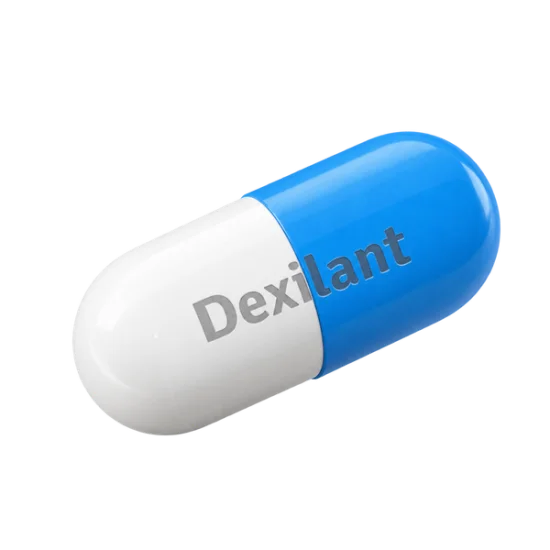
I used Dexilant during a reflux flare that had been disturbing my sleep. The burning settled gradually rather than immediately, and I found that avoiding late meals made as much practical difference as taking the capsule regularly.
Two weeks 25 Oct 2026
Dexilant
Adults with gastro-oesophageal reflux disease (GERD) or acid-related oesophageal irritation may be prescribed Dexilant to reduce stomach-acid exposure. Dexilant belongs to the proton pump inhibitor…
Adults with gastro-oesophageal reflux disease (GERD) or acid-related oesophageal irritation may be prescribed Dexilant to reduce stomach-acid exposure. Dexilant belongs to the proton pump inhibitor class and is used for reflux symptoms, heartburn, and healing of erosive oesophagitis.
Overview
Dexilant is an oral modified-release capsule used in acid-related gastrointestinal conditions. Its active ingredient is dexlansoprazole, and it belongs to the proton pump inhibitor class.
Formulation
Dexilant is an oral modified-release capsule containing dexlansoprazole as its active ingredient. Dexlansoprazole belongs to the proton pump inhibitor class and is used to reduce exposure to stomach acid in acid-related gastrointestinal conditions.
Therapeutic indications
Dexilant is associated with the management of GERD, erosive oesophagitis, and heartburn caused by gastric-acid exposure. GERD occurs when stomach contents move upwards into the oesophagus and produce symptoms or tissue irritation.
Erosive oesophagitis is a more advanced form of acid-related injury. Repeated exposure can damage the oesophageal lining, causing inflammation and small erosions. Symptoms may include burning behind the breastbone, sour-tasting reflux, discomfort when swallowing, or the sensation that food passes slowly.
| Condition | Main treatment goal |
|---|---|
| GERD | Reduce reflux-related symptoms and acid exposure |
| Erosive oesophagitis | Support healing of acid-damaged oesophageal tissue |
| Heartburn | Reduce recurrent burning linked to gastric acid |
Stomach ulcers require a separate clinical assessment. Acid suppression can form part of ulcer treatment, but the underlying cause may involve Helicobacter pylori, anti-inflammatory medicines, or another gastrointestinal disorder. Dexilant should not be assumed to be sufficient treatment for every ulcer.
Chest discomfort also needs careful interpretation. Heartburn can feel similar to cardiac pain, yet pressure spreading to the arm, jaw, back, or shoulder, together with breathlessness, sweating, faintness, or nausea, requires urgent medical assessment rather than self-treatment for reflux.
The National Institute for Health and Care Excellence recommends structured assessment and acid-suppression treatment for appropriate patients with reflux symptoms, while persistent or atypical symptoms may require investigation [2].

Directions for use
Dexilant is taken orally as a capsule. The correct amount differs between strengths and between users, so there is no single amount that suits everyone. Treatment choice depends on the diagnosis and the severity of acid-related injury. Previous treatment response, age, liver function, and the intended treatment phase also influence the regimen. The prescribed strength reflects this assessment. The regimen may change after clinical review.
Dexilant is available in different capsule strengths. The prescriber determines which strength and regimen are appropriate for healing treatment, symptom control, or maintenance treatment.
Administration principles include:
- swallow the capsule whole with water;
- take it at the time prescribed;
- do not take extra capsules to compensate for incomplete symptom relief;
- do not shorten or extend the course without a treatment decision;
- if a dose is missed, take it when remembered unless the next scheduled dose is close;
- skip the missed dose when the next dose is due soon rather than doubling.
A treatment course for erosive oesophagitis may differ from treatment for symptomatic GERD. Maintenance therapy can also differ from initial healing therapy. Patients with significant liver impairment may require a different approach because the medicine is processed through the liver.
The Irish Health Products Regulatory Authority (HPRA) expects prescription medicines to be used according to their authorised clinical information and individual prescribing instructions.
Dexilant delayed-release capsules can generally be taken with or without food. The capsule should still be swallowed whole and taken at a consistent time. Food does not remove the need to follow the prescribed schedule, and a heavy meal should not be used to test whether the medicine is working. The FDA product information from 2022 describes administration without dependence on a meal, while the prescribed regimen remains the deciding instruction for the individual patient.
When not to use it
Dexilant is not for you if you have a serious allergy to dexlansoprazole or another proton pump inhibitor, or if a clinician has identified a contraindication. Particular caution applies to people with:
- a previous serious allergic reaction to dexlansoprazole or another proton pump inhibitor;
- severe liver impairment;
- a history of low magnesium or other electrolyte disturbance;
- osteoporosis or a high risk of fractures;
- symptoms suggesting gastrointestinal bleeding;
- unexplained weight loss or progressive swallowing difficulty.
Medication interactions also matter. Acid suppression can alter absorption of medicines that require a strongly acidic stomach environment. Dexilant may also interact with medicines processed through hepatic enzyme systems, including some anticoagulants, antiretroviral medicines, immunosuppressants, and certain antifungal treatments.
Tell the prescriber about all medicines and supplements being used, especially:
- warfarin or another anticoagulant;
- methotrexate at high doses;
- tacrolimus;
- digoxin;
- medicines used to prevent HIV infection;
- medicines requiring acidic gastric conditions for absorption.
When this is not for you
Pregnancy and breastfeeding require an individual treatment decision. The balance between symptom control, disease severity, alternative treatments, and available safety information should guide use.
Unwanted effects
Common adverse effects reported with proton pump inhibitor treatment include headache, abdominal discomfort, diarrhoea, constipation, nausea, vomiting, and flatulence. These effects are often mild, though persistent or severe diarrhoea requires medical attention because proton pump inhibitor treatment has been associated with intestinal infection risk.
Longer treatment can influence nutrient absorption and mineral balance in susceptible people. Clinicians may pay closer attention to magnesium, vitamin B12, iron, and bone health when treatment is prolonged or when other risk factors are present. The risk depends on duration, underlying health, and concurrent medicines.
Seek urgent medical help for:
- swelling of the face, lips, tongue, or throat;
- breathing difficulty or widespread blistering rash;
- black stools or vomiting blood;
- severe, persistent watery diarrhoea;
- new difficulty swallowing;
- unexplained weight loss;
- severe chest pain or faintness.
One practical detail is easy to miss: ongoing heartburn can coexist with a serious condition, so progressive swallowing difficulty should not be repeatedly managed as ordinary reflux. Another is that diarrhoea after starting treatment should not automatically be dismissed as a harmless adjustment if it becomes frequent or severe.
The U.S. Food and Drug Administration prescribing information includes safety information for dexlansoprazole, including warnings related to prolonged treatment, electrolyte disturbance, infection, and possible nutrient deficiency [1].
How it affects the body
Its therapeutic action is linked to suppression of acid secretion in the stomach, which reduces the amount of acid reaching the oesophagus and allows irritated tissue to heal.
Proton pump inhibitors act on the acid-producing cells of the stomach. They reduce the activity of the final acid-secretion pathway rather than simply neutralising acid that is already present. This makes them different from antacid products, which act mainly within the stomach contents.
Common mistakes
Several practical errors can reduce treatment benefit:
- chewing or crushing the modified-release capsule;
- taking an additional dose because heartburn has not improved immediately;
- stopping after one comfortable day despite a prescribed healing course;
- continuing treatment indefinitely without reassessing the original diagnosis;
- combining several acid-control products without checking the total regimen;
- ignoring difficulty swallowing or unexplained weight loss;
- assuming that every episode of chest burning is reflux;
- overlooking late meals, alcohol, smoking, or a personal food trigger.
Large meals close to bedtime can worsen nocturnal reflux. Lying down soon after eating may also increase symptoms in susceptible people. Weight reduction can improve reflux in people whose symptoms are associated with excess body weight, while smoking cessation may reduce reflux-related irritation and improves general gastrointestinal health.
Exercise is usually compatible with reflux treatment, though vigorous activity immediately after a large meal can provoke symptoms. A food diary can be useful when it records timing, portion size, symptoms, and body position rather than simply creating a long list of prohibited foods.
Comparison
Dexilant belongs to the proton pump inhibitor category. Other acid-control approaches work through different mechanisms and may suit different symptom patterns.
| Approach | Main action and clinical role |
|---|---|
| Dexilant-type proton pump inhibitor | Suppresses the final stage of gastric-acid secretion |
| H2-receptor antagonist | Reduces acid stimulation through histamine-receptor blockade |
| Antacid or alginate | Neutralises acid or forms a surface barrier for shorter-term relief |
Proton pump inhibitors are generally used when reflux is frequent, when symptoms have caused oesophageal injury, or when simpler relief has not controlled the condition. H2-receptor antagonists may be used in selected situations, though acid suppression can weaken with repeated regular use. Antacids and alginates can provide more immediate symptom relief but do not replace healing treatment for erosive oesophagitis.
What doctors say
In clinical practice, doctors usually separate three questions: what symptoms are present, whether the oesophagus has been injured, and how long acid suppression is needed. The strength and duration of treatment should match that assessment.
A physician will usually expect symptoms to improve progressively rather than disappear after the first capsule. Healing of oesophageal irritation can take longer than relief of burning. Continuing treatment beyond the intended course without review may expose a patient to avoidable long-term risks.
Doctors also look for symptoms that do not fit uncomplicated reflux. Anaemia, repeated vomiting, food impaction, painful swallowing, gastrointestinal bleeding, and unintentional weight loss require investigation. These symptoms should not be masked indefinitely with acid suppression.
The World Health Organization supports rational medicine use based on an appropriate diagnosis, a suitable medicine, and a regimen matched to the individual patient [3].
Common questions
Can the Dexilant capsule be split, crushed, or chewed?
The modified-release capsule should be swallowed whole rather than split, crushed, or chewed. Its dual delayed-release design depends on controlled release in the gastrointestinal tract. The FDA prescribing information from 2022 describes the capsule as a delayed-release formulation and provides administration instructions for preserving that design. If swallowing is difficult, the appropriate alternative depends on the specific formulation and should be arranged through the prescriber or dispensing pharmacist.
How long does a Dexilant course last, and is long-term use acceptable?
Treatment length depends on whether the goal is healing erosive oesophagitis, controlling GERD symptoms, or maintaining remission. Long-term use can be appropriate for selected patients, but it should be reviewed periodically because prolonged proton pump inhibitor treatment can be associated with nutrient deficiency, low magnesium, infection risk, and fracture concerns. NICE guidance from 2019 supports reviewing ongoing acid-suppression therapy and using the lowest suitable treatment intensity. A course should not be extended automatically after symptoms improve.
Which diet, exercise, or habits can help or hinder the result?
Smaller meals, avoiding food close to bedtime, remaining upright after eating, stopping smoking, and limiting personal triggers can reduce reflux burden. Common triggers include large fatty meals, alcohol, coffee, chocolate, and spicy food, although responses differ between individuals. Gentle activity is usually compatible with treatment, while vigorous exercise immediately after eating may worsen symptoms. The WHO’s rational-use principles from 2002 support combining medicine with practical measures that address the condition without creating unnecessary restrictions.
Can Dexilant affect driving, concentration, or work with machinery?
Dexilant is not generally used as a sedative, and many adults can drive and work normally while taking it. Headache, dizziness, visual disturbance, or feeling unwell can occur and may make driving or machinery work unsafe for that person. The HPRA product information for dexlansoprazole from 2024 advises attention to individual medicine effects and safe operation of machinery. Do not drive if symptoms or a suspected adverse reaction affect alertness, coordination, or vision.
What happens when Dexilant is stopped, and does it need tapering?
Stopping a proton pump inhibitor after extended treatment can lead to rebound acid secretion in some people. Reflux symptoms may return temporarily even when the original condition has improved. The need for tapering depends on the treatment duration, strength, diagnosis, and risk of recurrence. NICE guidance from 2025 supports planned review and step-down decisions rather than abrupt changes made without considering the reason for treatment.
Should Dexilant be taken with food or on an empty stomach?
Dexilant delayed-release capsules can generally be taken with or without food. The capsule should still be swallowed whole and taken at a consistent time. Food does not remove the need to follow the prescribed schedule, and a heavy meal should not be used to test whether the medicine is working. The FDA product information from 2022 describes administration without dependence on a meal, while the prescribed regimen remains the deciding instruction for the individual patient.
Which symptoms mean stopping Dexilant and seeking urgent medical help?
Urgent assessment is needed for facial or throat swelling, breathing difficulty, severe rash, vomiting blood, black stools, severe chest pain, fainting, or rapidly progressive difficulty swallowing. Persistent watery diarrhoea also needs prompt medical review, especially if accompanied by fever, dehydration, or abdominal pain. These symptoms can indicate an allergic reaction, bleeding, infection, cardiac disease, or another condition requiring immediate evaluation. The FDA prescribing information from 2022 highlights the need to act on serious gastrointestinal and allergic reactions and other clinically significant adverse effects.
Do you offer anonymous delivery?
Your order will be securely packed and shipped within 24 hours. This is exactly what your package will look like (images of an actual item sent). It has the size and look of a regular private letter (24x11x0.7 cm) and its contents cannot be seen.
Sources
- U.S. Food and Drug Administration (2022). DEXILANT (dexlansoprazole) delayed-release capsules: Prescribing Information.
- National Institute for Health and Care Excellence (2019). Gastro-oesophageal reflux disease and dyspepsia in adults: investigation and management.
- World Health Organization (2002). Promoting rational use of medicines: core components.
How Buyers Rate Dexilant
Based on 3 reviews
I had been dealing with heartburn most evenings and noticed improvement during the first week. I still had occasional symptoms after large meals, so I stopped treating the medicine as permission to eat close to bedtime.
One week 3 Nov 2026The treatment helped the burning, but I developed loose stools after several days and contacted my doctor. The symptoms improved after the treatment plan was reviewed, so I would not ignore persistent diarrhoea.
Several days 7 Oct 2026