Formulation
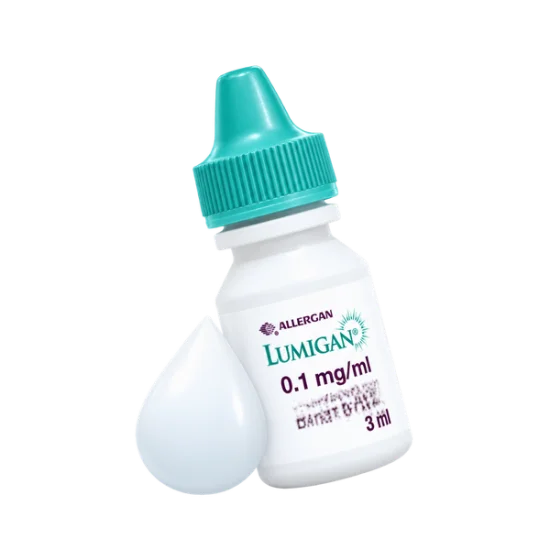
The Lumigan supplied on this page is a bottle of ophthalmic drops containing bimatoprost. The amount used per application is determined individually rather than being one fixed amount for every person. The bottle volume is 3 ml.
The formulation can be summarised as follows:
- Active ingredient: bimatoprost.
- Amount per application: set individually for each person.
- Dosage form: ophthalmic solution.
- Route: application into the affected eye or eyes.
- Pack format: 3 ml bottle.
Treatment should follow the formulation prescribed for the individual patient.
Lumigan is not an eyelash treatment in this context. Eyelash growth can occur as an unwanted effect of ocular bimatoprost exposure, but the product’s therapeutic use is reduction of intraocular pressure.
Directions for use
For intraocular pressure control, the amount per intake is set individually rather than being one fixed number for every person. The usual clinical pattern for bimatoprost ophthalmic treatment is one drop in the affected eye or eyes once daily, commonly in the evening, when prescribed for that purpose.
Use follows these practical steps:
- Wash and dry the hands.
- Remove contact lenses before applying the drop.
- Tilt the head back and gently pull the lower eyelid down.
- Place the prescribed drop into the pocket between the lower eyelid and the eye.
- Avoid touching the eye, eyelashes, or skin with the bottle tip.
- Close the eye gently instead of blinking repeatedly.
- Press lightly at the inner corner of the closed eye for about one minute.
- Wait at least five minutes before applying another ophthalmic medicine.
- Replace contact lenses only after the interval specified for the product or by the prescriber.
Nasolacrimal occlusion means gently pressing the inner corner of the eye after instillation. This can reduce drainage into the nose and throat, which may limit systemic exposure and reduce an unpleasant taste.
Do not apply extra drops to compensate for a missed application. If the next scheduled dose is close, skip the missed dose and return to the usual schedule. Doubling the application does not produce a predictable improvement in pressure control and may increase local irritation.
Aiming at the lower-eyelid pocket is easier than aiming directly at the cornea. If the drop lands on the cheek, do not automatically repeat it; repeat only when you are certain that no drop entered the eye.
When more than one eye medicine is prescribed, spacing the products prevents the second drop from washing out the first. Ointments are generally applied after liquid drops because ointment can interfere with penetration of later solutions.
When this is not for you
Bimatoprost may worsen or reactivate inflammation in susceptible eyes. Patients with a history of uveitis or cystoid macular oedema need an individual risk assessment rather than routine self-directed use.
Pregnancy data are limited. Use during pregnancy is generally considered only when the expected benefit justifies potential risk. Bimatoprost may pass into breast milk in small amounts, so breastfeeding requires an individual decision based on the mother’s eye condition and the infant’s needs.
People with asthma, slow heart rate, low blood pressure, or heart-conduction problems should mention these conditions when other ophthalmic medicines are being considered. These conditions do not automatically prevent Lumigan use, but they may affect the wider treatment plan.
Unwanted effects
Local effects are more common than body-wide effects because Lumigan is applied directly to the eye. The product information for bimatoprost identifies conjunctival hyperaemia, or eye redness, among the frequent reactions reported with treatment [2].
Possible effects include:
- Eye redness or a bloodshot appearance.
- Itching, irritation, burning, or a foreign-body sensation.
- Dry-eye symptoms or watery eyes.
- Darkening of the skin around the eyelids.
- Gradual darkening of the iris, which may be permanent.
- Longer, thicker, or darker eyelashes.
- Periorbital fat reduction, which can make the upper eyelid look more hollow.
- Blurred vision shortly after application.
- Headache or dizziness in some patients.
Iris pigmentation is more likely in eyes with mixed colouring and develops gradually. It may not reverse after treatment stops. Eyelash changes usually develop over weeks or months and may lessen after discontinuation, although individual changes vary.
Periorbital fat atrophy can alter the appearance of the eyelid area. A patient may notice a deeper upper-eyelid crease or a more hollow appearance rather than an obvious rash. This cosmetic change should be reported during an eye review, especially if it progresses.
Rare but serious reactions can include cystoid macular oedema, intraocular inflammation, significant allergic reactions, or marked visual disturbance. The risk may be higher in people with particular eye conditions or after certain eye procedures.
If one eye becomes much redder than the other, compare the two eyes in the same lighting and record when the difference began. A gradual mild redness is different from sudden pain with reduced vision.
A drop that causes short-lived blurred vision may make driving unsafe immediately after use. Wait until vision has returned to normal before driving or operating equipment.
How it affects the body
Bimatoprost is a synthetic prostamide analogue. After application to the eye, it improves the movement of aqueous humour out of the eye. This lowers the pressure that can gradually damage the optic nerve in glaucoma.
Role as a Prostaglandin Analogue
Bimatoprost increases aqueous humour outflow through two routes:
- The trabecular meshwork, which is the main drainage structure at the front of the eye.
- The uveoscleral pathway, which allows fluid to leave through tissues around the ciliary body.
This dual effect distinguishes prostamide-based treatment from medicines that mainly reduce fluid production. Lumigan is therefore classified as an ocular hypotensive and an antiglaucoma treatment rather than a general eye lubricant. The European Medicines Agency describes bimatoprost ophthalmic treatment as an option for lowering intraocular pressure in glaucoma and ocular hypertension [1].
Common mistakes
The following habits can reduce the benefit of ophthalmic treatment:
- Applying the drop more often than prescribed.
- Touching the bottle tip against the eye or lashes.
- Blinking forcefully after instillation.
- Skipping doses because pressure is not felt.
- Applying different eye drops back-to-back without spacing.
- Keeping contact lenses in during application.
- Stopping after redness or eyelash changes without arranging a treatment review.
- Using an old bottle after the recommended in-use period.
- Sharing the bottle with another person.
- Repeating a dose when the patient is unsure whether the first drop entered the eye.
A contaminated bottle tip can introduce microorganisms into the solution or onto the ocular surface. Keeping the tip away from fingers, lashes, and skin is more useful than wiping it with tissue, which may damage the tip or leave fibres behind.
A phone alarm linked to the evening routine can reduce missed applications. Place the reminder after tooth-brushing or another fixed habit, but keep the bottle away from children and avoid storing it where heat or direct sunlight is strong.
Comparison
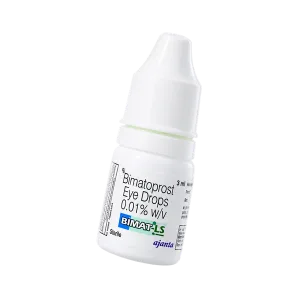
Generic bimatoprost eye drops use the same active pharmaceutical ingredient as Lumigan. Their inactive ingredients, bottle design, preservative system, and drop size can differ. These differences may affect comfort without changing the intended pressure-lowering mechanism.
Other prescription prostaglandin or prostamide-related options include:
| Treatment category |
Main action |
Typical clinical distinction |
| Bimatoprost ophthalmic solution |
Increases aqueous humour outflow |
Used for glaucoma or ocular hypertension |
| Latanoprost ophthalmic solution |
Increases uveoscleral outflow |
Often used as once-daily pressure-lowering treatment |
| Travoprost ophthalmic solution |
Increases aqueous humour outflow |
Another prostaglandin analogue option |
Latanoprost and travoprost are active ingredients in their own right. They are not interchangeable with bimatoprost without a prescribing decision. A change may be considered when pressure control, redness, pigmentation changes, eyelid changes, or tolerance becomes an issue.
Generic equivalents may be clinically suitable, yet the patient may notice a different drop sensation or surface irritation because excipients are not identical. A change in bottle or formulation should be treated as a treatment change, not merely a packaging change.
What doctors say
In clinical practice, ophthalmologists usually judge Lumigan by three measures: intraocular pressure, optic-nerve appearance, and visual-field results. A patient may feel no difference while the treatment is protecting vision, so symptom relief is not a reliable measure of success.
The American Academy of Ophthalmology describes glaucoma management as a long-term process that combines pressure control with monitoring of the optic nerve and visual field [3]. Doctors often adjust treatment when pressure remains above the target range, when progression appears, or when redness and eyelid changes become unacceptable.
One common prescribing mistake is to treat a missed dose by applying several drops at once. The safer approach is to resume the next planned application. Another is to stop treatment because the eyes feel comfortable; glaucoma can progress silently.
A doctor may also ask about the time of day when the drop is used, whether the bottle tip touches the eye, and whether another drop is applied immediately afterward. These small details can explain apparent treatment failure.