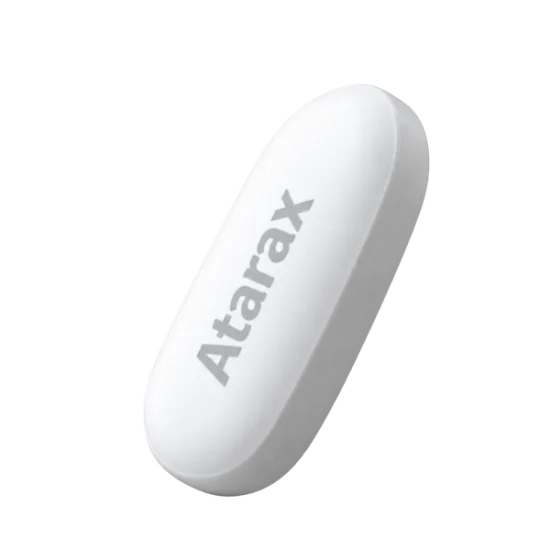
I used Atarax for intense itching at night. The first tablet made me sleepy within the evening, and I slept without scratching, but I felt heavy-headed the next morning. Taking it earlier helped.
2 Nov 2026
Atarax
Hydroxyzine in Atarax blocks histamine signals and calms overactive nervous-system activity. The tablets are used for allergic itching, hives, and short-term anxiety-related tension in adults and…
Hydroxyzine in Atarax blocks histamine signals and calms overactive nervous-system activity. The tablets are used for allergic itching, hives, and short-term anxiety-related tension in adults and, where prescribed, children.
Overview
Atarax contains hydroxyzine, a first-generation antihistamine with sedative and anxiolytic properties. Hydroxyzine is classified as a sedating antihistamine. Its anxiolytic action means that it can reduce feelings of nervous tension without belonging to the benzodiazepine class.
Formulation
Atarax is supplied as tablets. Its active pharmaceutical ingredient is hydroxyzine, and generic hydroxyzine tablets use the same active substance. The clinical effect depends on the prescribed strength, the individual dose, kidney and liver function, age, and other medicines being taken.
A syrup formulation may exist in some healthcare settings, but the product described on this page is the tablet form. Tablet dosing should not be converted to a liquid volume without a prescriber or pharmacist calculating the equivalent amount.
Therapeutic indications
Hydroxyzine tablets may be prescribed for:
- Histamine-related itching and allergic skin reactions.
- Hives, also called urticaria.
- Itching linked with eczema or dermatitis.
- Short-term anxiety or tension.
- Sedation before a medical procedure when specifically prescribed.
Dermatological Applications and Itching Relief
Atarax can reduce itching when histamine contributes to the symptoms. This includes hives, some allergic rashes, contact dermatitis, and itch associated with eczema. It does not remove every cause of itching, so persistent symptoms still require assessment of the underlying skin condition.
Hydroxyzine is often useful at night because its sedative effect may help a person sleep through an itching cycle. Scratching can damage the skin barrier and intensify irritation, so reducing night-time scratching may support recovery alongside appropriate skin care.
Atarax does not treat a bacterial, fungal, or viral skin infection. It also does not replace treatment directed at inflammation, scabies, severe eczema, or another confirmed cause of persistent pruritus.
Skin reactions need urgent attention when swelling affects the lips, tongue, or throat, or when breathing becomes difficult. A sedating antihistamine should not be relied upon as the only response to suspected anaphylaxis.
Management of Anxiety and Sedation
Hydroxyzine can provide short-term relief from anxiety-related tension through its central nervous system depressant effect. It may be selected when a clinician wants an anxiolytic option without prescribing a benzodiazepine. Unlike benzodiazepines, hydroxyzine is not associated with the same controlled-drug dependence pattern, although sedation and misuse of any medicine still require caution. The intended benefit is short-term symptom control. Review is needed if sedation limits normal activities.
Atarax is not a universal treatment for every anxiety disorder. Persistent generalised anxiety, panic symptoms, trauma-related anxiety, or depression may require psychological therapy or a longer-term treatment plan. The medicine can reduce symptoms for a period, but it does not address every cause of anxiety.
The FDA prescribing information for hydroxyzine describes its use for anxiety and its sedative effects, while NICE guidance supports diagnosis-based treatment and warns about drowsiness and additive central nervous system depression.[2]

Directions for use
Dosage and Administration
The dose per intake is set individually. Use the prescribed amount and frequency for the reason Atarax was selected.
- Swallow the tablet with water.
- Take it at the time directed for the symptom being treated.
- Avoid driving or hazardous work until the personal response is known.
- Do not take an additional dose because itching or anxiety has not eased quickly.
- If a dose is missed, take it when remembered unless the next scheduled dose is close.
- Do not double the next intake to compensate for a missed dose.
- Do not stop a planned course abruptly without confirming the intended duration.
Alcohol, opioid pain medicines, sleeping tablets, sedating antidepressants, and other medicines that slow the brain can intensify drowsiness. Combining several sedatives can impair breathing, coordination, and judgement.
When not to use it
Atarax is not suitable for everyone. It should not be used when a person has:
- A known allergy to hydroxyzine, cetirizine, aminophylline, or a related component.
- Known QT prolongation or a history of torsades de pointes.
- A significant heart-rhythm disorder.
- Severe bradycardia or important electrolyte imbalance.
- Current treatment with medicines known to prolong the QT interval, unless a specialist has assessed the combination.
- Pregnancy or breastfeeding without a specific clinical decision.
- Severe kidney or liver impairment without an adjusted treatment plan.
When this is not for you
Atarax is not for you if you have a contraindication, an unresolved heart-rhythm risk, or no clinician-approved plan for its use.
Medicines that can increase sedation include opioids, sleep medicines, sedating antidepressants, antipsychotics, some anticonvulsants, and alcohol. Medicines with anticholinergic effects can increase dry mouth, constipation, blurred vision, confusion, or difficulty passing urine.
Unwanted effects
The most familiar adverse effect is drowsiness. Other possible effects include dry mouth, headache, dizziness, blurred vision, constipation, difficulty urinating, nausea, and reduced concentration. These effects reflect antihistamine and anticholinergic activity.
Older adults may be more vulnerable to confusion, falls, urinary retention, and prolonged sedation. People with glaucoma, prostate-related urinary problems, or significant constipation need specific assessment before treatment.
Serious reactions require urgent medical attention. These include fainting, a fast or irregular heartbeat, severe breathing difficulty, facial swelling, or an extensive blistering rash. Hydroxyzine has been linked with QT-interval prolongation, a change in the heart’s electrical recovery that can trigger dangerous rhythm disturbances in susceptible people.
One practical problem is next-day impairment. A person may sleep normally yet still react slowly the following morning. This is relevant to early driving, childcare, working at height, and machinery operation.
How it affects the body
Pharmacological Profile and Mechanism of Action
Hydroxyzine blocks H1 histamine receptors, reducing the signalling responsible for itching, redness, and some allergic skin reactions. It also acts within the central nervous system, which can produce drowsiness and a calming effect.[1]
Receptor Activity and Central Nervous System Effects
H1 receptors help transmit the effects of histamine. When hydroxyzine blocks these receptors, histamine has less influence on skin nerve endings and small blood vessels. This can reduce the urge to scratch and soften the skin symptoms associated with hives or dermatitis.
The same medicine crosses into the brain more readily than newer, non-sedating antihistamines. That explains the practical trade-off: Atarax may relieve itching and tension, but it can also impair alertness, slow reactions, and cause next-day grogginess.
The European Medicines Agency has highlighted heart-rhythm precautions for hydroxyzine-containing medicines. Risk is higher in people with QT prolongation, certain cardiovascular conditions, electrolyte disturbances, or interacting medicines.
Metabolic Pathway and Conversion to Cetirizine
Hydroxyzine is processed in the liver, with cetirizine among its metabolites. This relationship helps explain why hydroxyzine and cetirizine share antihistamine activity, although their clinical profiles are different. Hydroxyzine enters the brain more readily and is more sedating, while cetirizine is designed to produce less central nervous system penetration.
Common mistakes
Common Patient Mistakes
Several mistakes can make Atarax feel unsuitable or less useful:
- Taking it with alcohol and then assuming the severe drowsiness is an allergy.
- Driving after the first tablet because the person does not yet feel sleepy.
- Repeating a dose too soon when itching has not settled.
- Combining it with another sedating antihistamine without checking the active ingredients.
- Using it for weeks without reviewing persistent anxiety or recurrent hives.
- Ignoring palpitations, fainting, or severe dizziness.
- Crushing tablets or changing the dose without a specific instruction.
- Treating a swollen throat or breathing difficulty with Atarax alone instead of seeking emergency care.
A common misunderstanding is that a non-benzodiazepine medicine cannot cause meaningful impairment. Hydroxyzine can still slow reactions and reduce alertness, even though its dependence profile differs from benzodiazepines.
Comparison
Comparative Analysis with Alternative Agents
| Treatment category | Main clinical role | Sedation and dependence profile |
|---|---|---|
| Hydroxyzine | Itching, hives, selected short-term anxiety states | Sedation is common; benzodiazepine-type dependence is not the usual pattern |
| Non-sedating antihistamine | Allergic rhinitis and many daytime allergy symptoms | Less central sedation; limited role in anxiety |
| Benzodiazepine anxiolytic | Acute severe anxiety or panic in selected cases | Sedation, tolerance, withdrawal, and dependence risks |
| Long-term anxiety treatment | Ongoing anxiety disorders | Usually not immediate; chosen according to diagnosis and treatment plan |
Cetirizine is a less-sedating antihistamine related to hydroxyzine through metabolism, but it is used mainly for allergy symptoms rather than anxiety. Its lower brain penetration generally produces less sedation, although some people still feel tired after taking it.
Buspirone is a non-benzodiazepine treatment for generalised anxiety that is used on a planned schedule rather than for immediate sedation. Trazodone and tricyclic antidepressants may have sedative properties, yet they belong to different drug classes and carry different monitoring requirements.
Atarax may suit a short period of itching or tension when sedation is acceptable. A non-sedating antihistamine may fit daytime allergy symptoms better. A benzodiazepine may be reserved for carefully selected situations because dependence and withdrawal require closer control.
What doctors say
Doctor Perspectives
In clinical practice, doctors usually judge Atarax by symptom relief and functional impact rather than by sedation alone. A calmer patient who cannot stay awake, drive, or work safely may need a different treatment plan.
Prescribers also distinguish short-term symptom control from long-term anxiety treatment. Hydroxyzine can help during a limited period, but recurring anxiety deserves assessment for an underlying disorder, depression, medication effect, or substance-related trigger.
The HPRA, EMA, and MHRA safety guidance places emphasis on individual cardiac risk and avoiding combinations that increase QT prolongation. A doctor may therefore choose another option when a patient has cardiovascular risk, takes several interacting medicines, or has unexplained fainting.
For itching, doctors assess the skin pattern, duration, sleep disruption, and possible trigger. Atarax can reduce the urge to scratch, but a persistent rash may need a separate anti-inflammatory, antimicrobial, or diagnostic approach.
Common questions
Is Atarax suitable during pregnancy or breastfeeding?
Hydroxyzine should not be used during pregnancy or breastfeeding unless a clinician has decided that its expected benefit justifies the potential risk. Sedation and other effects may affect the pregnant person, the developing baby, or a breastfed infant. The EMA's 2015 hydroxyzine safety review includes reproductive and cardiac risk considerations. A planned pregnancy, positive pregnancy test, or breastfeeding status should be reported before treatment begins.
Can alcohol be used with Atarax?
Alcohol can add to hydroxyzine-related drowsiness, dizziness, impaired coordination, and slowed reactions. The combination is also more concerning when opioids, sleeping tablets, sedating antidepressants, or other central nervous system depressants are present. The FDA's 2016 hydroxyzine prescribing information warns about potentiation of central nervous system depression. Avoiding alcohol during treatment is the safest practical approach.
What is the best time of day to take Atarax?
The suitable time depends on whether the target symptom is daytime itching, night-time itching, anxiety, or procedure-related sedation. A dose intended to reduce night-time scratching is often scheduled in the evening, while a daytime dose may interfere with work, driving, or study. The HPRA's 2023 safety information advises attention to hydroxyzine-related impairment and individual risk factors.[3] The first intake should be planned when alertness is not essential.
Do diet, exercise, or daily habits affect the result?
Alcohol and sedating substances can worsen unwanted effects, while regular sleep and a consistent routine may make symptom changes easier to judge. For itch, gentle skin care, avoiding known irritants, and keeping nails short can reduce scratching-related damage. Exercise is appropriate when the person is alert and steady, but strenuous activity should wait if dizziness or sedation occurs. These measures support symptom management but do not replace treatment of an underlying skin or anxiety disorder. NICE guidance on anxiety, updated in 2023, also supports addressing the underlying disorder rather than relying on sedating medicines alone.
How long does one dose of Atarax keep working?
The duration varies with the dose, age, kidney function, liver function, symptom being treated, and other medicines. Drowsiness may last longer than the desired relief, especially in older adults or people with reduced clearance. The FDA's 2016 label and the EMA's 2015 safety information support individual assessment rather than assuming the same duration for every person. Do not shorten the interval between doses because the effect seems to be fading.
How does Atarax differ from cetirizine by mechanism?
Both medicines have antihistamine activity, but hydroxyzine enters the central nervous system more readily and therefore produces more sedation. Cetirizine is a metabolite of hydroxyzine and is generally used as a less-sedating allergy treatment. The EMA's 2015 hydroxyzine review emphasises dose and cardiac-risk precautions that remain relevant when choosing between antihistamine options. Atarax may be selected when an additional calming or sedative effect is clinically useful, while cetirizine is more often chosen for daytime allergy control.
Do you offer anonymous delivery?
Your order will be securely packed and shipped within 24 hours. This is exactly what your package will look like (images of an actual item sent). It has the size and look of a regular private letter (24x11x0.7 cm) and its contents cannot be seen.
Comparison
Allegra
Atarax Current
Claritin
Sources
- European Medicines Agency (2015). Hydroxyzine-containing medicinal products — referral under Article 31 of Directive 2001/83/EC.
- U.S. Food and Drug Administration (2016). Vistaril (hydroxyzine pamoate) prescribing information.
- Health Products Regulatory Authority (2023). Hydroxyzine-containing medicines: safety information for healthcare professionals.
How Buyers Rate Atarax
Based on 4 reviews
It reduced the itching from my rash after a few days. I became unsteady when I stood up during the first week, so my prescriber reviewed the dose and my other medicines.
7 Oct 2026Atarax took the edge off a short period of anxiety and helped me settle at night. I did not like the dry mouth, and it was unsuitable before early work because my concentration felt slower.
17 Oct 2026The tablets helped during an allergic flare, but the effect did not solve the cause of the rash. I needed further assessment when the symptoms kept returning.
25 Oct 2026